
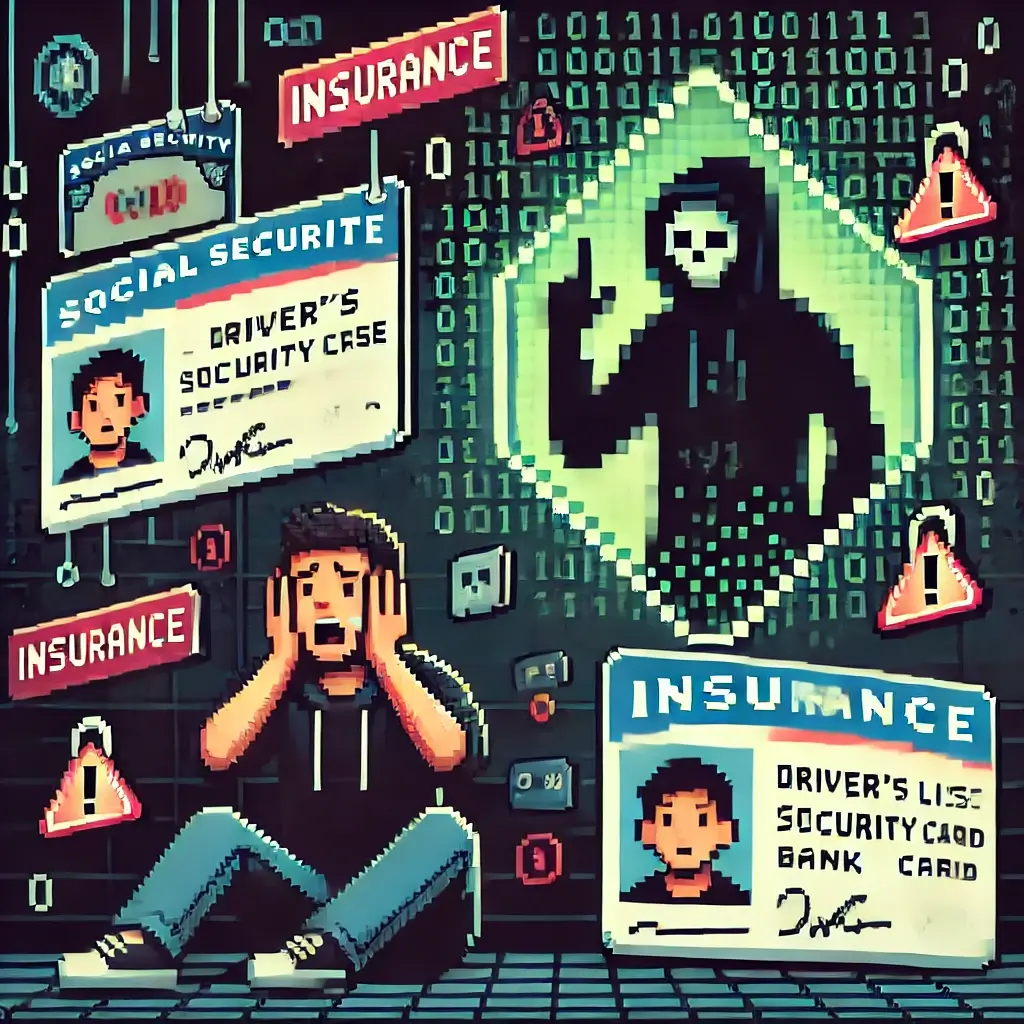
The Shocking Truth: What 1 in 5 Identity Theft Insurance Policies Cover (and Don’t!)
Alright, let’s get real for a second. You probably think identity theft is something that only happens to “other people,” right?
Maybe some poor soul who clicks on every sketchy link or leaves their wallet in a public restroom.
But here’s a gut punch for you: did you know that roughly **1 in 5 Americans** has been a victim of identity theft?
That’s right. One in five. That’s not some statistical anomaly; that’s your neighbor, your cousin, heck, maybe even *you* without realizing it yet!
The thought alone is enough to send shivers down your spine, isn’t it?
The sheer terror of waking up one day to find your bank account drained, your credit score in tatters, or even worse, a criminal racking up debt in *your name* while you’re left holding the bag.
It’s like a financial horror movie, and unfortunately, it’s playing out in real life every single day.
So, what’s a savvy, peace-of-mind-seeking individual like yourself to do?
Enter: **identity theft insurance.**
Now, before you roll your eyes and dismiss it as just another insurance product designed to separate you from your hard-earned cash, let’s talk turkey.
Is it a magic shield against all digital dangers?
Not quite.
But can it be a lifeboat when your financial world feels like it’s sinking faster than the Titanic?
Absolutely.
In this no-holds-barred guide, we’re going to pull back the curtain on identity theft insurance.
We’ll dive deep into what it *actually* covers, what it definitely *doesn’t*, and whether it’s truly worth the investment for you.
No jargon, no fluff, just the honest truth from someone who’s seen the messy aftermath of identity theft up close and personal.
Ready to protect your financial future? Let’s go!
Table of Contents
What is Identity Theft Insurance, Anyway?
Okay, let’s break it down. Think of identity theft insurance not as a magic force field that prevents your identity from being stolen (because, let’s be honest, nothing can do that 100%).
Instead, it’s more like a really good, highly specialized personal assistant who steps in when the unthinkable happens.
It’s there to help you pick up the pieces, navigate the labyrinthine process of recovery, and potentially recoup some of the financial losses you might incur.
In essence, it’s a policy designed to mitigate the financial fallout and the immense time commitment required to restore your good name and credit after someone else has used your personal information for their nefarious gains.
It’s distinct from general fraud protection offered by banks or credit card companies.
While those are great and absolutely necessary, they often have limitations on what they cover and how much legwork they’ll do for you.
Identity theft insurance goes that extra mile, providing a more comprehensive safety net when a thief decides to wear your financial skin.
It can be a standalone policy, or sometimes, you’ll find it bundled with homeowner’s or renter’s insurance, or even offered as a benefit with certain credit cards or banking accounts.
Always, always, *always* check the fine print to see what exactly you’re getting and what the limits are.
You don’t want to find out during a crisis that your “coverage” is about as helpful as a screen door on a submarine.
The Shocking Truth: What Identity Theft Insurance Actually Covers
This is where the rubber meets the road. What exactly can you expect identity theft insurance to cover when your world is turned upside down?
While policies vary, most reputable ones will focus on the financial and logistical burden of recovery. Let’s dig into the typical coverages.
Reimbursement for Financial Losses
This is often the big draw for many people, and understandably so.
Imagine finding out someone opened a credit card in your name and maxed it out, or worse, drained your savings account.
Identity theft insurance can provide reimbursement for direct financial losses due to identity theft.
This might include:
- Unauthorized electronic funds transfers from your bank accounts.
- Fraudulent charges on your credit cards (after any applicable bank/credit card fraud protection).
- Costs incurred from re-filing loan applications or other credit-related documents due to fraudulent activity.
- Losses from medical identity theft (e.g., if someone uses your insurance to get medical treatment).
- Some policies might even cover losses from tax fraud where someone files a tax return in your name to steal your refund.
It’s not a blank check, though. There will be policy limits, usually stated as a maximum amount the insurer will pay out (e.g., $10,000 or $25,000).
And yes, there’s usually a deductible, just like with car or home insurance, meaning you’ll pay a certain amount out-of-pocket before the insurance kicks in.
Recovery Expenses
This is often the unsung hero of identity theft insurance.
The time and money you spend trying to fix the mess can be monumental.
Think about it: endless phone calls, certified mail, notarizing documents, taking time off work, and possibly even paying for childcare while you’re on the phone with three different credit bureaus.
Identity theft insurance can help with these “hidden” costs, which can quickly add up:
- Postage and shipping costs for sending certified letters and documents to creditors, banks, and government agencies.
- Notary and filing fees for official documents.
- Costs for long-distance calls made to resolve your case.
- Charges for retrieving public records or police reports related to the theft.
- Fees for credit reports and scores that you might need to pull to monitor the situation.
These might seem small individually, but trust me, when you’re battling a sophisticated identity thief, these administrative costs can become a real pain in your wallet.
Legal Fees and Expert Help
Sometimes, identity theft gets so complicated that you need professional help. This isn’t just about calling your bank; it’s about navigating a legal minefield.
Many policies will cover:
- Attorney fees for defending you against lawsuits filed by creditors or collection agencies as a result of the identity theft.
- Fees for identity theft restoration specialists or case managers. These folks are like your personal detectives; they’ll handle much of the legwork, from contacting creditors to filling out forms and disputing fraudulent accounts. This is arguably one of the most valuable aspects, as it saves you countless hours and immense stress.
- Costs associated with criminal defense if you’re wrongly accused of crimes committed by the identity thief. (It happens! Imagine getting pulled over for a crime committed by someone using your stolen ID.)
Having a restoration specialist on your side can feel like a superhero swooping in when you’re at your most vulnerable.
Lost Wages
This is one that often surprises people, but it makes perfect sense when you think about the time commitment involved.
Imagine having to take days, even weeks, off work to deal with the fallout of identity theft.
Many policies will reimburse you for lost wages due to time off work directly related to resolving your identity theft case.
This typically applies to time spent:
- Making phone calls during business hours to banks, credit card companies, and government agencies.
- Meeting with law enforcement officials.
- Attending legal proceedings.
- Visiting government offices (e.g., DMV to get a new ID).
There will be limits, of course, usually a daily maximum and an overall maximum (e.g., $200 per day for up to 5 days).
Credit Monitoring and Alert Services
While not strictly “insurance” in the traditional sense of reimbursement, many identity theft protection plans (which often include insurance) offer robust monitoring services.
These services typically include:
- **Credit Monitoring:** Alerts you to significant changes on your credit reports with all three major bureaus (Experian, Equifax, TransUnion). This includes new accounts opened, inquiries, address changes, and public records.
- **Dark Web Monitoring:** Scans the illicit corners of the internet where stolen personal information is often bought and sold (e.g., Social Security numbers, bank account details, driver’s license numbers).
- **Public Records Monitoring:** Alerts if your name appears on criminal records, court documents, or address changes.
- **Financial Account Monitoring:** Tracks activity on your bank accounts, credit cards, and investment accounts.
- **Identity Verification Alerts:** Notifies you if attempts are made to use your identity for things like utility applications, change of address requests, or new employment.
These monitoring services are crucial for early detection, which can significantly reduce the damage an identity thief can inflict.
Think of it as having an alarm system for your personal data.
They might not stop a determined thief, but they’ll sure as heck let you know someone’s trying to break in, giving you a chance to react quickly.
What Identity Theft Insurance Won’t Cover: The Hard Truths
Now, let’s talk about the cold, hard reality of what identity theft insurance often *doesn’t* cover.
Just like any insurance, it has its limits and exclusions. Knowing these can save you a lot of heartache and false hope.
Direct Financial Losses (Before the Theft)
This is a big one. Identity theft insurance is designed to cover losses *resulting from* identity theft.
It generally won’t cover:
- Money you lost through a scam or phishing attempt where you willingly (even if unknowingly) gave away your money. For example, if you wired money to a scammer who posed as your bank, that’s typically not covered because it’s a direct financial loss due to a scam, not identity theft.
- Losses from unauthorized transactions if your credit card or bank account provider already covers those losses under their zero-liability or fraud protection policies. The identity theft insurance usually kicks in *after* those primary protections have been exhausted or if there are gaps.
It’s important to understand this distinction. Identity theft is about someone *impersonating* you to gain financial benefit, not about you being tricked into giving away money.
Business Losses
Most standard identity theft insurance policies are designed for personal use.
They won’t cover losses incurred by your business due to a data breach or identity theft targeting your company.
If you’re a business owner, you’ll need a separate **cyber liability insurance** policy to cover such risks.
Don’t confuse the two; they serve very different purposes.
Losses Due to Your Negligence
This can be a tricky area, but generally, if you were grossly negligent with your personal information, the insurer might deny a claim.
Examples might include:
- Lending your Social Security number or bank account details to someone you know, who then misuses it.
- Failing to report a lost or stolen wallet/ID in a timely manner, and substantial fraud occurs during that delay.
- Knowingly participating in illegal activities that lead to your identity being compromised.
While insurers typically don’t expect you to be a cybersecurity expert, they do expect you to take reasonable precautions.
Non-Financial Damages
Identity theft can cause immense emotional distress, reputational damage, and even physical harm (in rare cases).
However, identity theft insurance typically does not cover:
- Pain and suffering.
- Emotional distress or mental anguish.
- Reputational damage (e.g., if a thief commits crimes in your name and it harms your public image).
Its primary focus is on the measurable financial and administrative costs of recovery.
Pre-Existing Identity Theft
Just like health insurance won’t cover a pre-existing condition you knew about before you bought the policy, identity theft insurance won’t cover identity theft that occurred *before* your policy’s effective date.
It’s designed to protect you from future incidents, not to help you clean up past messes you were already aware of.
This is why getting coverage *before* an incident occurs is crucial.
Is Identity Theft Insurance Worth It? A Frank Discussion
Ah, the million-dollar question (or perhaps the $100-a-year question!).
Is identity theft insurance truly worth the recurring premium?
This isn’t a simple yes or no answer, my friend.
It largely depends on a few factors: your risk tolerance, your current protections, and how much you value peace of mind (and time!).
Look, the truth is, many banks and credit card companies offer fantastic fraud protection.
If someone makes an unauthorized charge on your credit card, you’re usually not liable for it, thanks to regulations like the Fair Credit Billing Act (FCBA) in the U.S.
Debit card fraud protection isn’t quite as robust under the Electronic Fund Transfer Act (EFTA), but banks still have strong policies.
So, why would you need *additional* identity theft insurance?
Here’s the kicker: it’s not just about the money stolen.
It’s about the **time, effort, and sheer frustration** of cleaning up the mess.
Imagine spending hundreds of hours on the phone, writing letters, disputing accounts, and trying to clear your name. Many people simply don’t have that kind of time or energy.
That’s where the restoration services and expert help offered by identity theft insurance really shine.
They can literally take that burden off your shoulders, acting as your personal advocate in a crisis.
Consider this:
- **Do you have elderly parents or relatives?** They are often prime targets for scams and identity theft, and having a policy that offers robust restoration can be invaluable.
- **Are you extremely busy?** If you literally don’t have hours to spend on the phone fighting with creditors, the restoration services alone might be worth the cost.
- **Do you have a complex financial life?** More accounts, more investments, more potential attack vectors.
- **Are you concerned about non-credit fraud?** Things like medical identity theft, tax identity theft, or criminal identity theft often aren’t covered by basic bank fraud protection.
- **Do you value proactive monitoring?** The alerts from credit and dark web monitoring can give you an early warning system, potentially minimizing damage.
If you’re someone who is hyper-vigilant about your financial statements, checks your credit reports regularly, and feels confident handling a financial crisis on your own, then maybe the added cost isn’t for you.
But for those who want that extra layer of security and, more importantly, the invaluable help with recovery, identity theft insurance can be a surprisingly smart investment.
It’s like having a dedicated fire department for your financial life. You hope you never need them, but when the flames start, you’ll be eternally grateful they’re there.
How to Choose the Right Identity Theft Insurance Policy
Okay, so you’re leaning towards getting some identity theft protection. Smart move!
But how do you pick a good policy from the sea of options out there? It’s not as simple as picking a flavor of ice cream.
Here’s what you should be looking for:
Coverage Limits
This is the maximum amount the policy will pay out for covered losses and expenses.
Policies often range from $10,000 to $1 million.
While a higher limit sounds great, consider your actual risk and what losses you’d realistically incur.
For most individuals, $25,000 to $100,000 in coverage is usually sufficient to cover lost wages, legal fees, and financial losses not covered by other fraud protections.
Don’t just pick the highest number; understand what it actually applies to.
Deductibles
Just like other insurance, this is the amount you pay out of pocket before the insurance kicks in.
Some policies have no deductible, while others might have a $100 or $250 deductible.
A lower deductible typically means a higher premium, and vice-versa.
Balance the monthly cost with what you’re comfortable paying if you ever have to file a claim.
Restoration Services
This, for me, is the non-negotiable feature.
Look for policies that offer **full-service identity restoration** with a dedicated case manager.
These are the angels who will handle the endless phone calls, paperwork, and disputes on your behalf.
Some services just give you a checklist; others do the heavy lifting.
Make sure it’s the latter.
Monitoring Features
Beyond basic credit monitoring, look for comprehensive monitoring that includes:
- **Dark Web monitoring:** Crucial for catching stolen data sold online.
- **Social Security Number (SSN) monitoring:** Alerts for new accounts opened with your SSN.
- **Change of address alerts:** Prevents mail forwarding scams.
- **Non-credit fraud monitoring:** Medical ID fraud, tax fraud, criminal record alerts.
The more eyes you have on your data, the better your chances of early detection.
Cost vs. Value
Compare premiums, but don’t let price be the *only* factor.
A super cheap policy with minimal coverage and no restoration support might be a waste of money.
A slightly more expensive policy that provides robust coverage and, critically, hands-on assistance during recovery, is often a far better value.
Read reviews, check out independent comparisons, and get quotes from a few different providers.
Some highly-rated providers in the U.S. include:
Remember, it’s not about being paranoid; it’s about being prepared. Just like you have car insurance even if you’re a safe driver, identity theft insurance is about protecting yourself from something largely out of your control.
Proactive Steps to Protect Yourself: Because An Ounce of Prevention Is Worth a Ton of Cure
Even with the best identity theft insurance, the best defense is a good offense.
These proactive steps can significantly reduce your risk of becoming a victim in the first place.
Think of them as your daily security drills.
Freeze Your Credit: This is, hands down, the single most effective thing you can do. A credit freeze restricts access to your credit report, making it incredibly difficult for identity thieves to open new accounts in your name. It’s free, and you can easily freeze and unfreeze your credit with each of the three major credit bureaus (Equifax, Experian, TransUnion) whenever you need to apply for credit.
Monitor Your Accounts Regularly: Don’t wait for your statement. Log into your bank accounts, credit card accounts, and investment accounts frequently to spot any unauthorized activity immediately. The faster you catch it, the easier it is to resolve.
Use Strong, Unique Passwords and Two-Factor Authentication (2FA): This should be a no-brainer by now. Use long, complex passwords for every online account, and enable 2FA wherever possible. Think of 2FA as a second lock on your door; even if a thief gets your password, they’re stopped at the second hurdle.
Be Wary of Phishing and Scams: That email from “your bank” asking you to click a suspicious link? That urgent text message about a package delivery you didn’t order? Delete them. Don’t click on links or open attachments from unknown senders. Always go directly to the company’s official website or app if you need to verify something.
Shred Sensitive Documents: Don’t just toss old bank statements, credit card offers, or medical bills into the trash. Invest in a cross-cut shredder and shred anything that contains personal information before disposal.
Secure Your Mail: If you have a mailbox that isn’t secure, consider getting a locked mailbox, or better yet, opt for electronic statements and bill pay whenever possible to reduce the amount of sensitive information arriving in your physical mailbox.
Be Careful on Public Wi-Fi: Public Wi-Fi networks are often unsecured, making it easy for hackers to snoop on your activity. Avoid conducting sensitive transactions (like online banking or shopping) on public Wi-Fi. If you must, use a Virtual Private Network (VPN).
Review Your Medical Bills and Explanation of Benefits (EOB): Medical identity theft is a growing problem. Scrutinize your EOBs for services you didn’t receive or diagnoses that aren’t yours. This could indicate someone is using your medical identity.
Be Mindful of Social Media Sharing: Think twice before sharing your birth date, pet’s name, or even your vacation dates on social media. Identity thieves often piece together this kind of information to guess passwords or answer security questions.
Keep Your Software Updated: Ensure your operating system, web browser, and antivirus software are always up-to-date. These updates often include crucial security patches that protect against known vulnerabilities.
No single step guarantees absolute safety, but combining these practices creates a robust defense, making you a much harder target for identity thieves.
And when things inevitably go wrong (because, let’s face it, even the best defenses can be breached), that’s when your identity theft insurance becomes your ultimate backup plan.
The Bottom Line on Identity Theft Insurance
So, there you have it. The full, unvarnished truth about identity theft insurance.
It’s not a silver bullet that makes you immune to the ever-present threat of identity theft.
No, it’s something much more practical and, dare I say, comforting: it’s a safety net.
It’s peace of mind knowing that if your financial world crumbles due to someone else’s malicious actions, you won’t have to face the overwhelming burden of recovery all by your lonesome.
It’s having a team of experts ready to roll up their sleeves and fight for your financial freedom while you focus on rebuilding and moving forward.
Given that roughly **1 in 5 Americans** has already experienced this nightmare, ignoring the threat of identity theft is like driving without seatbelts; you might be fine, but if things go sideways, you’ll deeply regret not having that extra layer of protection.
Whether you opt for a standalone policy, check your existing insurance bundles, or rely on robust credit card protections, the key is to be informed and proactive.
Understand your risks, know what’s covered, and take the necessary steps to safeguard your identity.
Because in this digital age, your identity is one of your most valuable assets, and protecting it is not just a suggestion—it’s a necessity.
Stay safe out there, and here’s to keeping your identity, and your sanity, intact!
Disclaimer: This article provides general information and is not financial or legal advice. Always consult with a qualified professional for personalized advice regarding your specific situation. Insurance policy details can vary significantly, so always read your policy documents carefully.
Identity theft, Insurance, Protection, Financial security, Recovery
📊 Understand Tax Brackets 💡 Unlock Your Financial Future 🔍 Deep Value Investing Guide