
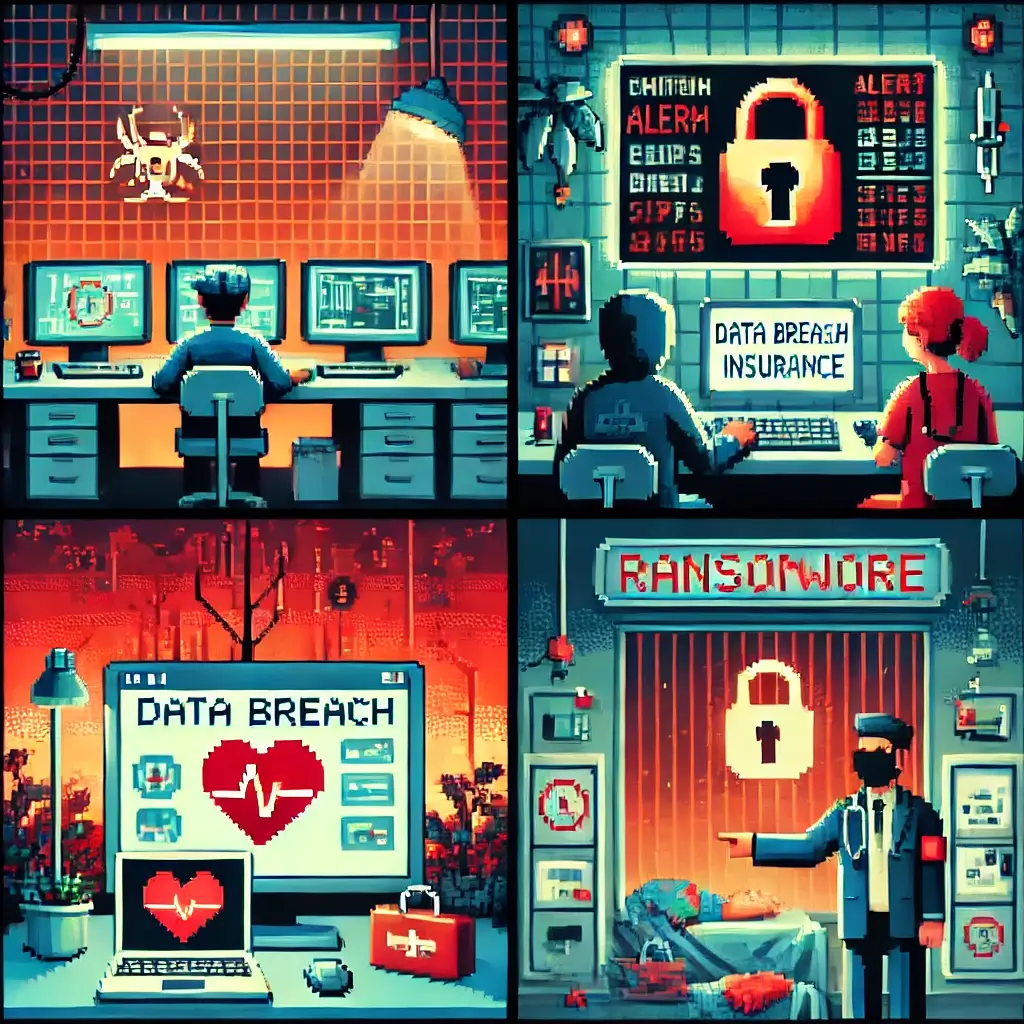
Stop the Bleed: Why 40% of Healthcare Startups Die Without Data Breach Insurance!
Hey there, fellow innovators and healthcare pioneers!
Ever lie awake at night, staring at the ceiling, wondering if all your hard work could vanish in a digital puff of smoke?
If you’re running a healthcare startup, that fear isn’t just paranoia – it’s a very real, very present danger.
We’re talking about data breaches, and believe me, they are the stuff of nightmares for any business, especially one entrusted with sensitive patient data.
And here’s a sobering statistic to kick us off: did you know that roughly 40% of startups never recover after a major data breach?
Let that sink in for a moment.
You pour your heart, soul, and every last penny into building something incredible, only for it to be undone by a cyberattack.
It’s not just about losing data; it’s about losing trust, losing your reputation, and potentially losing your entire business.
But fear not, because there’s a critical shield that far too many healthcare startups overlook: **Data Breach Insurance**.
Think of it as your digital life vest in the stormy seas of cybersecurity threats.
In this post, we’re going to deep dive into why data breach insurance isn’t just a good idea, but an absolute necessity for your healthcare startup.
We’ll talk about the terrifying costs of a breach, how to pick the right policy, and why penny-pinching here could cost you everything.
So, grab a coffee (or something stronger, if you prefer!) and let’s get serious about protecting your dream.
Table of Contents
The Grim Reality: Data Breaches Are Not “If,” But “When”
Let’s clear something up right away:
The question isn’t whether your healthcare startup will experience a cyberattack, but when.
Seriously, it’s not a matter of “if,” but “when.”
In today’s interconnected world, cybercriminals are constantly evolving, finding new and insidious ways to exploit vulnerabilities.
And healthcare organizations, from massive hospital systems to nimble new startups, are right in their crosshairs.
Why?
Because healthcare data is a goldmine.
It’s not just credit card numbers – it’s personal health information (PHI), social security numbers, medical histories, and even biometric data.
This kind of information can be used for sophisticated identity theft, insurance fraud, and even blackmail.
It’s far more valuable on the dark web than a simple credit card number.
Think about it like this: your startup is a brand new, shiny car with a full tank of premium gas, sitting on a busy street.
You wouldn’t leave it unlocked with the keys in the ignition, would you?
Yet, many startups, perhaps due to budget constraints or simply an “it won’t happen to me” mentality, are essentially doing just that with their most valuable asset – their data.
A recent report by IBM revealed that the average cost of a data breach globally hit an all-time high, and guess what industry consistently ranks among the most expensive for breaches?
You guessed it: healthcare.
We’re talking millions of dollars, folks.
And for a lean startup, that kind of hit can be an existential threat.
So, let’s ditch the wishful thinking and embrace the reality: robust cybersecurity measures are essential, but they are not foolproof.
You need a safety net, a contingency plan for when the inevitable happens.
That safety net, my friends, is comprehensive **data breach insurance**.
Why Healthcare is a Prime Target for Cybercriminals (It’s Not Just About Money!)
Okay, so we’ve established that healthcare data is valuable.
But let’s unpack *why* it’s such a juicy target for cybercriminals, beyond just its monetary worth on the black market.
It’s a multi-faceted problem:
High Value of Data
As mentioned, PHI is incredibly rich data.
It can include names, addresses, birth dates, social security numbers, medical records, insurance information, and more.
This allows criminals to open new lines of credit, file false tax returns, obtain prescription drugs, or even commit medical identity theft, which can be incredibly hard to detect and even harder to clean up for the victims.
Legacy Systems and Digital Transformation
Many parts of the healthcare industry, especially older institutions, still rely on outdated legacy systems that are notoriously difficult to secure and patch.
While startups often start with more modern tech stacks, they are also rapidly building and integrating new systems, sometimes prioritizing speed over security due to tight deadlines and limited resources.
This rapid digital transformation can inadvertently create new vulnerabilities.
Interconnectedness
The healthcare ecosystem is highly interconnected.
Hospitals share data with clinics, labs, pharmacies, insurance providers, and increasingly, with digital health startups offering innovative solutions.
This vast network of data sharing creates more entry points for attackers.
A breach in one smaller, less secure entity can easily ripple through the entire chain.
Human Error and Insider Threats
No matter how sophisticated your technology, humans remain the weakest link.
Phishing attacks, accidental data disclosures, lost devices, or even disgruntled employees can lead to a breach.
Healthcare professionals are often focused on patient care, not cybersecurity protocols, making them susceptible to social engineering tactics.
Ransomware’s Darling
Healthcare organizations are particularly vulnerable to ransomware attacks because downtime can literally mean life or death.
This makes them more likely to pay a ransom to restore critical systems quickly, making them attractive targets for these lucrative attacks.
Cybercriminals know this and exploit it mercilessly.
So, as a healthcare startup, you’re not just a small fish in a big pond; you’re a small fish swimming in shark-infested waters with a target on your back.
Understanding these unique vulnerabilities is the first step toward effective protection, and **data breach insurance** is a non-negotiable part of that protection.
The Mind-Boggling Costs of a Data Breach (Spoiler: It’s More Than Just Fines!)
Alright, let’s talk brass tacks: what does a data breach *really* cost?
If you’re thinking, “Oh, a few fines, maybe some IT repair costs,” then you’re missing the bigger, much scarier picture.
The financial ramifications of a breach are multi-layered and can cripple even well-established companies, let alone a growing startup.
Direct Financial Costs
Investigation and Forensics: You need to figure out what happened, how, and who was affected. This requires expert cybersecurity firms, which don’t come cheap. Think hundreds of thousands to millions.
Notification Costs: Under HIPAA and various state laws, you’re legally obligated to notify every affected individual. This means postage, call centers, and potentially setting up dedicated websites for information. Multiply that by thousands or even millions of patients.
Credit Monitoring Services: Often, you’ll have to offer free credit monitoring and identity theft protection to affected individuals for a period (e.g., 1-2 years). This adds up incredibly fast.
Legal Fees and Settlements: Get ready for lawsuits. Class-action lawsuits from affected individuals, regulatory fines (HIPAA violations are brutal!), and potentially even lawsuits from business partners whose data was compromised through your systems.
Regulatory Fines: HIPAA, GDPR, CCPA… the list goes on. Non-compliance after a breach can result in staggering fines that could bankrupt a startup.
System Downtime and Lost Revenue: While you’re busy dealing with the breach, your systems might be down, operations halted, and revenue streams drying up. Every hour of downtime is lost income and productivity.
Ransomware Payments: If it’s a ransomware attack, you might face the agonizing decision of whether to pay the ransom to regain access to your systems and data. While often advised against, for a healthcare entity, the pressure can be immense.
Indirect and Intangible Costs (The Real Killers)
Reputational Damage and Loss of Trust: This is often the most devastating. Healthcare is built on trust. If patients can’t trust you with their most sensitive information, they’ll go elsewhere. Referrals will dry up, and new patient acquisition will become exponentially harder.
Loss of Competitive Advantage: Competitors will use your breach against you. They’ll highlight their own security measures, siphoning off your existing and potential clients.
Employee Morale and Turnover: Dealing with a breach is incredibly stressful for employees. They might face public scrutiny, increased workloads, and a sense of failure. This can lead to low morale and high turnover, losing valuable talent.
Increased Future Insurance Premiums: If you survive a breach, expect your cybersecurity insurance premiums to skyrocket, making future protection even more expensive.
Diversion of Resources: Your team, which should be innovating and growing the business, will be entirely consumed by breach response, diverting critical resources away from core operations.
As you can see, the costs spiral far beyond what most people imagine.
This is precisely why **data breach insurance** isn’t an optional luxury; it’s a foundational safeguard for any healthcare startup hoping to survive and thrive in this digital age.
It helps cushion the financial blow, allowing you to focus on recovery and rebuilding trust, rather than facing immediate bankruptcy.
What Exactly is Data Breach Insurance, Anyway?
Okay, so we’ve established the “why.”
Now let’s talk about the “what.”
**Data breach insurance**, often referred to as cyber liability insurance or cybersecurity insurance, is a specialized type of insurance policy designed to protect businesses from the financial fallout of data breaches and other cyber incidents.
It’s distinct from general liability insurance, which covers physical injuries or property damage, and even professional liability insurance, which covers errors and omissions in your services.
Think of it as a comprehensive safety net specifically tailored for the digital risks your business faces.
It’s there to pick up the pieces when your digital defenses are inevitably breached.
It’s not just about covering the financial costs; it often provides access to a network of experts who can guide you through the chaotic aftermath of a breach, something invaluable when you’re under immense pressure.
Many policies will cover both first-party costs (expenses you incur directly) and third-party costs (expenses related to claims or lawsuits from others).
We’ll dive deeper into the specific coverages in a moment, but for now, understand that this isn’t some niche, obscure product.
It’s a rapidly evolving and increasingly critical part of any robust risk management strategy, especially for businesses handling sensitive data like healthcare startups.
It helps mitigate the financial ruin that a significant cyberattack could bring, allowing your startup to weather the storm and focus on getting back to what you do best: innovating in healthcare.
Without it, you’re essentially gambling your entire business on the impossible bet that your systems will *never* be compromised.
And let me tell you, that’s a bet no smart entrepreneur should ever make, especially not in the volatile world of cybersecurity.
Picking the Perfect Policy: Your Startup’s Armor Against Cyber Threats
Choosing the right **data breach insurance** policy can feel like navigating a maze, especially with all the jargon and different offerings out there.
But don’t worry, I’m here to simplify it for you.
Think of it like buying a custom-fitted suit of armor – it needs to fit your startup’s specific risks and needs perfectly.
Assess Your Risk Profile
Before you even look at policies, understand your own risk.
What kind of data do you handle? How much of it? Where is it stored? What are your existing cybersecurity measures?
Do you have a robust incident response plan in place?
Are your employees trained on cybersecurity best practices?
The more you understand your vulnerabilities, the better you can articulate your needs to an insurer.
Work with a Specialist Broker
This is crucial.
Don’t just go with your general business insurance agent unless they have specific, deep expertise in cyber insurance, especially for the healthcare sector.
A specialist broker will understand the nuances of HIPAA, HITECH, and other relevant regulations, and they’ll know which insurers truly specialize in healthcare cyber coverage.
They can help you tailor a policy that genuinely covers your unique risks.
Understand the Application Process
Applying for cyber insurance isn’t like applying for auto insurance.
Insurers will ask detailed questions about your IT infrastructure, security protocols, employee training, incident response plans, and more.
Be prepared to provide thorough and accurate information.
Failing to disclose critical information could invalidate your policy later.
Scrutinize the Exclusions
This is where the devil hides.
Read the fine print carefully, or better yet, have your specialist broker walk you through every exclusion.
Some policies might exclude certain types of attacks (e.g., state-sponsored attacks), or require very specific security measures to be in place (e.g., multi-factor authentication, regular backups).
Make sure you can meet these requirements.
Don’t Just Focus on the Premium
It’s tempting to go for the cheapest option, especially for a startup on a tight budget.
However, a cheaper premium often means less comprehensive coverage, higher deductibles, or more exclusions.
The cost of a breach far outweighs the savings on a bare-bones policy.
Prioritize adequate coverage over minimal cost.
Consider Incident Response Services
Many top-tier policies offer access to pre-approved breach response teams, including forensic investigators, legal counsel, and public relations specialists.
This can be a lifesaver during a crisis, as it provides immediate access to experts who know exactly what to do, saving you precious time and reducing panic.
It’s like having a SWAT team on retainer, ready to deploy at a moment’s notice.
Choosing the right **data breach insurance** is a strategic decision that reflects your commitment to protecting your patients, your reputation, and your future.
Don’t rush it, and don’t try to do it alone.
Key Coverage Components You CANNOT Live Without
When you’re sifting through different **data breach insurance** policies, certain coverage components are absolutely non-negotiable for a healthcare startup.
These are the core protections that will save your bacon when a cyber disaster strikes.
Let’s break them down:
1. Breach Response Costs (First-Party Coverage)
This is your immediate crisis management fund.
It covers the direct expenses associated with responding to a breach, including:
Forensic Investigation: Costs to hire cybersecurity experts to identify the cause, scope, and extent of the breach, and to help contain it.
Legal Counsel: Fees for attorneys specializing in data privacy and cybersecurity to advise on legal obligations, notification requirements, and potential liabilities.
Notification Costs: Expenses for notifying affected individuals, regulators, and other required parties (e.g., printing and postage, call center services, dedicated websites).
Credit Monitoring & Identity Theft Services: Costs to provide credit monitoring, identity theft restoration services, or other similar benefits to affected individuals.
Public Relations & Crisis Management: Hiring PR firms to manage your reputation, craft public statements, and minimize negative publicity.
2. Business Interruption and Extra Expense (First-Party Coverage)
What happens if your systems are down for days or weeks due to a cyberattack?
This coverage compensates you for:
Loss of Net Profit: Income you lose directly as a result of a covered cyber incident that disrupts your operations.
Extra Expenses: Additional costs incurred to continue operations during the interruption (e.g., temporary staff, rental of equipment, outsourcing services).
3. Cyber Extortion Coverage (First-Party Coverage)
This is crucial given the prevalence of ransomware.
It covers expenses related to extortion threats, including:
Ransom Payments: Reimbursement for monies or cryptocurrency paid to extorters (though always consult law enforcement and your insurer before paying).
Negotiation Expenses: Costs to hire experts who specialize in negotiating with cybercriminals.
4. Regulatory Fines & Penalties (Third-Party Coverage)
This is a big one for healthcare.
It covers fines and penalties imposed by regulatory bodies (like the Department of Health and Human Services for HIPAA violations) as a direct result of a covered cyber incident.
This can be a game-changer, as these fines can be astronomical.
5. Network Security & Privacy Liability (Third-Party Coverage)
This is your defense against lawsuits from affected parties.
It covers legal costs and settlement amounts resulting from:
Failure to Protect Data: Claims arising from the unauthorized access, theft, or disclosure of personal or confidential information.
Network Security Failures: Claims arising from denial-of-service attacks, virus transmission, or other security failures that impact third parties.
6. Media Liability (Often Included or Endorsed)
If your startup has a public-facing website, blog, or social media presence, this covers claims of defamation, intellectual property infringement, or copyright infringement related to your online content.
Always remember that the specifics of each policy can vary wildly.
Work with your broker to ensure your chosen **data breach insurance** policy includes robust coverage in all these critical areas, tailored specifically for the unique risks of a healthcare startup.
Don’t compromise on these essentials; they are the bedrock of your cyber resilience strategy.
Real-World Scenarios: How Data Breach Insurance Saves the Day
Okay, enough with the abstract.
Let’s talk about how **data breach insurance** actually plays out in real-life, terrifying scenarios that could hit your healthcare startup.
These aren’t hypothetical; they’re happening daily.
Scenario 1: The Phishing Nightmare
Imagine this: One of your diligent but tired employees clicks on a seemingly legitimate email, unknowingly downloading malware that gives hackers access to your patient database.
Suddenly, 50,000 patient records, including names, addresses, and sensitive medical histories, are exposed.
Without Data Breach Insurance:
You’re scrambling to find a forensic firm, paying exorbitant emergency rates.
Your legal team advises immediate patient notification, costing thousands in postage and setting up a dedicated call center.
You’re facing potential HIPAA fines that could bankrupt your company.
Patients are filing class-action lawsuits, demanding compensation for identity theft and emotional distress.
Your reputation is in tatters, new patient inquiries dry up, and your venture capitalists are having serious doubts.
With Data Breach Insurance:
You immediately call your insurer, who connects you with their pre-approved, expert forensic team.
The policy covers the costs of investigation, legal counsel, and patient notification.
It also covers the credit monitoring services you offer to affected patients.
Regulatory fines from HIPAA are largely covered, preventing a catastrophic financial hit.
Your insurer’s PR team helps craft sensitive communications, preserving some trust.
While still a headache, the financial burden is vastly reduced, allowing you to focus on system hardening and regaining trust, not fighting for survival.
Scenario 2: The Ransomware Shutdown
A sophisticated ransomware attack locks down all your critical systems, encrypting patient scheduling, billing, and electronic health records.
A pop-up demands a multi-million dollar cryptocurrency payment to restore access.
Every minute your systems are down, patient care is impacted, and revenue is lost.
Without Data Breach Insurance:
You’re facing the impossible choice: pay the exorbitant ransom with your own limited funds (and no guarantee of data return), or rebuild everything from scratch, which could take weeks or months.
Your business grinds to a halt, losing all revenue during the downtime.
The “extra expenses” of trying to operate manually or set up temporary systems are crushing.
Your employees are frustrated, demoralized, and potentially looking for jobs elsewhere.
The patient exodus is immediate and severe.
With Data Breach Insurance:
Your policy kicks in, potentially covering the ransom payment (after consultation with law enforcement and the insurer’s negotiation experts).
It covers business interruption, reimbursing you for lost profits and extra expenses incurred during the downtime.
Expert incident responders are on site, working to restore your systems efficiently.
You can allocate resources to recovery efforts rather than agonizing over impossible financial decisions.
While disruptive, the financial impact is managed, and your startup has a fighting chance to get back on its feet.
Scenario 3: The Rogue Employee
A disgruntled former employee, with residual access or knowledge of a vulnerability, deliberately steals a database of patient referral information and threatens to leak it to your competitors unless you pay them off.
Without Data Breach Insurance:
You’re navigating a legal minefield, dealing with potential blackmail and the threat of severe reputational damage.
The costs of legal action against the employee, combined with proactive patient notification (even if the data hasn’t been leaked yet), are immense.
The damage to employee morale and internal trust is severe.
With Data Breach Insurance:
Your policy covers the legal fees associated with managing the insider threat and any potential extortion demands.
It provides resources for forensic investigation to understand the extent of the theft and potential exposure.
Should a leak occur, notification costs and subsequent liability are covered.
This allows you to address the internal threat legally and systematically, rather than panicking about the financial fallout.
These scenarios highlight a crucial truth: **data breach insurance** isn’t just a piece of paper; it’s a lifeline.
It’s the difference between navigating a crisis with expert support and financial backing, versus facing total collapse alone.
Beyond Insurance: Building a Fortress Around Your Data
While **data breach insurance** is absolutely vital, it’s crucial to understand that it’s just one piece of the puzzle.
Think of it like this: you wouldn’t drive a car without seatbelts just because you have car insurance, would you?
No!
Insurance is there for when, despite all your precautions, something still goes wrong.
The best defense against a data breach is a proactive, multi-layered cybersecurity strategy.
Here are some essential measures your healthcare startup should be implementing, regardless of your insurance policy:
1. Robust Cybersecurity Infrastructure
Invest in strong firewalls, intrusion detection/prevention systems, and up-to-date antivirus/anti-malware solutions.
Regularly patch and update all software and operating systems to fix known vulnerabilities.
Consider multi-factor authentication (MFA) for all user accounts, especially those with access to sensitive data.
2. Data Encryption
Encrypt all sensitive data, both in transit and at rest.
This means encrypting data on your servers, in cloud storage, on laptops, and when it’s being sent between systems.
Even if a hacker gains access, encrypted data is much harder to exploit.
3. Regular Backups and Disaster Recovery Plan
Implement a robust data backup strategy.
Regularly back up all critical data to an offsite, secure location, and test your ability to restore data from these backups frequently.
Having a well-tested disaster recovery plan can significantly reduce downtime after an attack.
4. Employee Training and Awareness
Your employees are your first line of defense, but also your biggest vulnerability.
Conduct regular, mandatory cybersecurity awareness training.
Teach them about phishing, social engineering, strong password practices, and how to handle sensitive data securely.
Run simulated phishing tests to gauge their preparedness.
5. Access Controls and Least Privilege
Implement strict access controls.
Employees should only have access to the data and systems absolutely necessary for their job functions (the “least privilege” principle).
Regularly review and revoke access for departed employees immediately.
6. Incident Response Plan
This is critical.
Develop a detailed incident response plan *before* a breach occurs.
Who does what? Who do you notify? What are the communication protocols?
Practice this plan regularly with drills.
Having a clear, rehearsed plan will significantly reduce chaos and minimize damage during an actual incident.
7. Regular Security Audits and Penetration Testing
Hire external experts to conduct regular security audits and penetration tests.
These “ethical hackers” will try to find vulnerabilities in your systems before malicious actors do, giving you a chance to fix them.
8. Vendor Management
If you use third-party vendors (cloud providers, software vendors, billing services), ensure they have robust security measures in place and that your contracts include data privacy and security clauses.
A breach at a third-party vendor can still impact your data and reputation.
By implementing these measures alongside your **data breach insurance**, you’re not just hoping for the best; you’re actively preparing for the worst while building the most resilient healthcare startup possible.
It’s about smart, comprehensive risk management that lets you sleep a little sounder at night.
Frequently Asked Questions About Data Breach Insurance
Q: Is Data Breach Insurance mandatory for healthcare startups?
A: While not always legally mandatory (depending on your specific state and services), it is practically essential.
HIPAA regulations enforce strict data protection, and the financial penalties and reputational damage from a breach can be catastrophic without insurance.
Many business partners or investors may also require you to have it.
Q: How much does Data Breach Insurance cost for a healthcare startup?
A: The cost varies significantly based on several factors: the size of your startup, the volume and sensitivity of data you handle, your existing cybersecurity posture, your industry (healthcare is typically higher), the amount of coverage, and the deductible.
Premiums can range from a few thousand dollars annually for very small operations to tens of thousands or more for larger, more complex startups.
It’s an investment, not an expense!
Q: Does general liability insurance cover data breaches?
A: Almost never.
General liability policies are designed for physical bodily injury or property damage and typically have explicit exclusions for cyber risks.
You need a specific **data breach insurance** or cyber liability policy to cover these digital threats.
Q: What are the common reasons a claim might be denied?
A: Claims can be denied for various reasons, including material misrepresentation on your application (e.g., falsely stating you have certain security measures in place), failure to adhere to policy conditions (e.g., not regularly patching systems as required), or the incident falling under a specific policy exclusion.
This is why reading the fine print and being honest in your application is crucial.
Q: Can I get Data Breach Insurance if my cybersecurity is not perfect?
A: Most insurers understand that “perfect” cybersecurity is an unattainable ideal.
However, they will assess your current measures and may require you to implement certain baseline security practices (e.g., MFA, regular backups) as a condition of coverage.
They want to see that you are actively trying to mitigate risks.
Q: Does Data Breach Insurance cover both first-party and third-party costs?
A: Yes, comprehensive policies typically cover both.
First-party costs are those directly incurred by your business (e.g., forensics, notification, business interruption), while third-party costs relate to claims or lawsuits from others (e.g., regulatory fines, privacy lawsuits from affected individuals).
Final Thoughts: Don’t Be a Statistic!
If you’ve made it this far, congratulations!
You’re clearly serious about protecting your healthcare startup, and that’s exactly the mindset you need in today’s digital landscape.
We’ve talked about the grim reality that data breaches aren’t a matter of “if,” but “when.”
We’ve delved into why healthcare is such a lucrative target for cybercriminals, and we’ve explored the truly mind-boggling financial and reputational costs that can follow a breach.
Remember that terrifying statistic? **40% of startups don’t recover after a major data breach.**
Don’t let your innovative healthcare startup become another casualty in the relentless cyber war.
**Data breach insurance** is not a luxury; it’s a fundamental pillar of risk management for any organization handling sensitive patient information.
It’s your financial safety net, your crisis management team on speed dial, and your peace of mind all rolled into one.
Don’t wait until it’s too late, until the headlines are screaming about *your* company’s breach.
Take action now.
Research, consult with a specialist broker, assess your needs, and secure the right **data breach insurance** policy.
Your patients, your employees, your investors, and your future self will thank you for it.
Stay safe out there, and keep innovating!
—
Want to learn more about cybersecurity best practices or explore insurance options?
Check out these trusted resources:
Healthcare startup, data breach, cyber insurance, HIPAA, patient data