
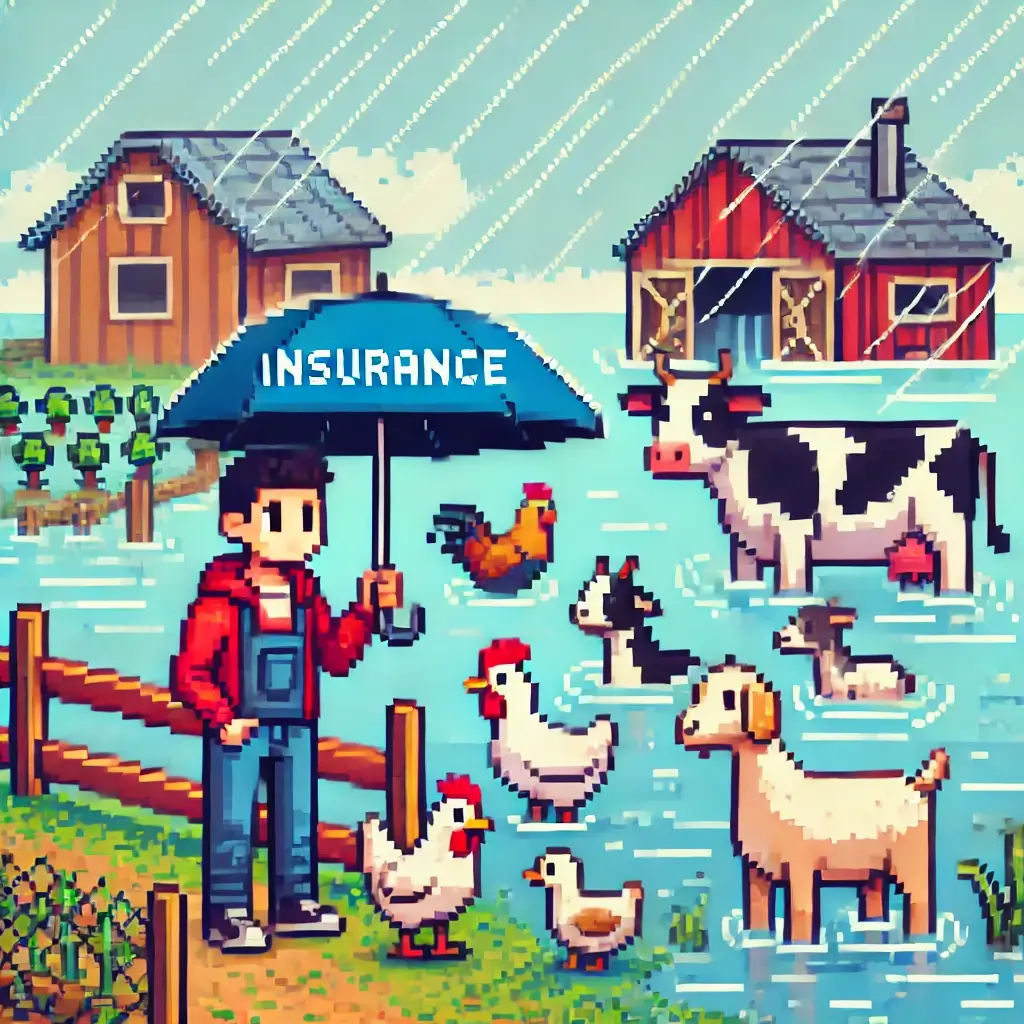
Don’t Get Fleeced! 3 Critical Reasons Why Livestock Insurance is Your Farm’s Secret Weapon!
Hey there, fellow animal lover!
So, you’ve decided to take the plunge into the wonderful, chaotic, and utterly rewarding world of hobby farming.
Maybe you’ve got a couple of cows, a flock of sassy chickens, or perhaps some adorable goats bouncing around your acreage.
It’s a dream, right?
Fresh eggs, homegrown meat, the satisfying cluck and moo of happy animals.
But let’s be real, even on the most idyllic small farm, Mother Nature and plain old bad luck can throw some serious curveballs.
And when those curveballs involve your beloved animals, it’s not just an emotional hit; it’s a financial one too.
That’s where livestock insurance waltzes in, looking like your knight in shining armor, or perhaps, your sturdy farm boot, ready to stomp out potential financial disaster.
“Insurance?” you might be thinking, “For my few sheep? Isn’t that just for massive industrial farms?”
And that, my friend, is where many hobby farmers miss a trick.
You see, whether you have 5 chickens or 500, those animals represent a significant investment of time, money, and heart.
Losing even one can sting, but losing several due to unforeseen circumstances can be devastating to your budding agricultural enterprise.
Imagine, for a moment, a nasty storm sweeps through, or an unexpected disease breaks out among your herd.
Without livestock insurance, you’re not just mourning the loss of your animals; you’re also facing the grim reality of replacing them out of your own pocket.
Ouch, right?
This isn’t just about financial protection, though.
It’s about peace of mind.
It’s about knowing that even when things go sideways – and on a farm, they will – you have a safety net.
It means you can keep pursuing your passion without constant worry that one bad day could derail your entire farming dream.
So, buckle up, grab a cup of coffee (or a glass of fresh milk, if you’re already milking!), because we’re about to dive deep into why livestock insurance isn’t just a good idea for hobby farmers, it’s an absolute game-changer.
We’ll talk about what it covers, what to look for, and how to make sure your precious animals are protected.
Trust me, your future self (and your future bank account) will thank you.
Ready?
Let’s get those animals covered!
Table of Contents
What is Livestock Insurance Anyway? (And Why You Need It!)
Okay, let’s start with the basics.
You insure your car, your house, maybe even your health.
Why? Because life happens, right?
Things break, accidents occur, and bills pile up.
Livestock insurance is pretty much the same concept, but for your animals.
It’s a specialized type of agricultural insurance designed to protect farmers from financial losses due to the death or injury of their livestock.
And yes, that includes your small herd of alpacas, your prize-winning show goat, or your brood of heritage chickens.
It’s not just for the mega-dairies with thousands of cows!
Think of it as a safety net specifically woven for your animal assets.
Because let’s face it, livestock are living, breathing investments.
They contribute to your farm’s productivity, whether it’s through milk, eggs, fiber, meat, or simply being part of your sustainable ecosystem.
When something happens to them, it’s not just sad; it’s a direct hit to your bottom line.
For hobby farmers, this hit can be even more pronounced because each animal often represents a larger percentage of your total “herd” or “flock.”
Losing one out of five cows is a much bigger deal, proportionally, than losing one out of five hundred.
This is precisely why livestock insurance is so vital, even for smaller operations.
It safeguards your investment, allows you to recover financially from unexpected losses, and helps ensure the continuity of your farming efforts.
It means a sudden illness or accident doesn’t automatically mean you have to dig deep into your savings or, even worse, give up on your farming dreams.
Consider it an essential piece of your farm’s risk management puzzle.
Because while we all hope for sunny days and healthy animals, being prepared for the unexpected is just plain smart farming.
The Grim Reality: Common Risks Every Farmer Faces
I know, I know, it’s not the most cheerful topic, but understanding the risks is the first step to mitigating them.
Every farmer, from the largest commercial operation to the smallest backyard setup, deals with a unique set of challenges.
And when it comes to livestock, these risks can be downright heartbreaking and financially crippling.
Let’s talk about some of the common culprits:
1. Disease Outbreaks: The Silent Killer
This is probably every farmer’s biggest nightmare.
One sick animal can quickly turn into a widespread outbreak, decimating your entire flock or herd.
Think about highly contagious diseases like avian influenza in chickens, foot-and-mouth disease in cattle, or even more common ailments like pneumonia.
These can spread rapidly, leading to significant losses, culling, and expensive veterinary bills.
It’s not just the initial loss; it’s the potential for a complete wipeout of your livestock.
It’s like a bad domino effect, and without insurance, those dominos can hit your bank account hard.
2. Accidents and Injuries: Farm Life Happens
Animals, bless their hearts, aren’t always the most graceful creatures.
A cow can slip on ice and break a leg.
A sheep can get tangled in fencing.
A horse might injure itself while running in a pasture.
These accidents can lead to severe injuries requiring expensive veterinary care, or, tragically, euthanasia.
Even simple things like bloat or hardware disease (animals ingesting foreign objects) can be fatal and costly to treat.
It’s not malicious, it’s just, well, farm life.
3. Predation: The Uninvited Guests
Depending on where your farm is located, predators can be a constant threat.
Coyotes, wolves, bears, even domestic dogs gone wild can wreak havoc on chickens, sheep, goats, and even calves.
It’s a brutal reality of living close to nature.
One night, and your chicken coop could be empty, or your sheep flock severely depleted.
It’s a stark reminder that you’re not just farming, you’re also part of a larger ecosystem, sometimes a very hungry one.
4. Natural Disasters: Mother Nature’s Fury
Floods, blizzards, wildfires, tornadoes – these aren’t just headlines; they’re potential farm destroyers.
Animals can be directly killed or injured by these events, or they can suffer from exposure, lack of food/water, or damaged shelters.
Remember that time a massive snowstorm trapped your animals in the barn without power?
Or the sudden flood that swept through your pasture?
These events are unpredictable and can wipe out years of hard work in a single terrifying moment.
5. Theft: The Heartbreaking Loss
While less common than other risks, livestock theft does happen.
Valuable breeding animals or even market animals can be targeted.
It’s a violation and a significant financial loss.
You work hard to raise these animals, and to have them stolen is a true gut punch.
Feeling a bit grim?
Don’t worry, this isn’t meant to scare you into hiding in your barn.
It’s simply to underscore that these risks are real and present for every farmer, regardless of scale.
And it’s precisely why having a robust livestock insurance policy isn’t a luxury; it’s a necessity for sound farm management.
It transforms the “what if” into “I’m covered.”
Decoding the Jargon: Types of Livestock Insurance Policies
Alright, so you’re convinced you need livestock insurance.
Great!
But like any insurance, it’s not a one-size-fits-all product.
There are different types of policies, each designed to cover specific risks or types of animals.
Understanding these options will help you choose the best fit for your unique hobby farm.
Let’s break down the common ones:
1. Mortality Insurance (The “Life Insurance” for Animals)
This is probably the most common type of livestock insurance, and it’s pretty much what it sounds like: it covers the death of your animal.
Just like life insurance for people, it pays out a predetermined amount if your insured animal dies from a covered peril.
What are those perils?
Typically, it includes death due to:
Accidents (e.g., injuries, slips, falls)
Illness or disease (often with some exclusions for pre-existing conditions or certain highly contagious diseases, so read the fine print!)
Fire
Lightning
Predation (sometimes this is an add-on or specific to certain policies)
Theft
This type of policy is usually taken out on individual, high-value animals – think breeding stock, show animals, or particularly valuable dairy cows.
It’s less common for a whole flock of broiler chickens, for instance, unless you have a very specific, high-value rare breed.
2. Specific Peril Coverage (A La Carte Protection)
Sometimes called “named peril” coverage, this policy only covers losses caused by specific events listed in the policy.
It’s like ordering from a menu – you pick and choose what you want covered.
This can be more affordable than broader mortality insurance, especially if you’re only concerned about a few key risks specific to your area or operation.
For example, you might only want coverage for fire, lightning, and transportation risks.
The downside? If something happens that isn’t explicitly named in your policy, you’re out of luck.
It requires you to be very clear about the risks you face and to be comfortable with what’s *not* covered.
3. Economic Loss Coverage (For Productivity Loss)
This is a more specialized type of insurance, often more relevant to larger commercial operations, but it’s good to know about.
It doesn’t just cover the death of an animal but also the economic loss resulting from an animal’s inability to produce.
For example, if a dairy cow becomes infertile or can no longer produce milk due to injury or illness, this policy might cover the lost income.
For hobby farmers, this might apply if you rely heavily on specific animals for milk, fiber, or breeding and their productivity loss significantly impacts your farm’s output or financial viability.
4. Transit/Transportation Insurance (On the Move Protection)
If you frequently transport your animals – to shows, sales, or between pastures – this is worth considering.
It covers loss or injury to livestock while they are being transported.
Think about accidents on the road, or injuries sustained during loading and unloading.
It’s often an add-on to a mortality policy or a standalone option for those who move their animals a lot.
5. Herd/Flock Coverage (For Your Many Beasts)
This is where it gets interesting for hobby farmers with multiple animals of similar value, like a flock of chickens, a small herd of pigs, or a group of meat goats.
Instead of insuring each animal individually (which can be cost-prohibitive for lower-value animals), you can insure the entire group.
The policy usually kicks in if a certain percentage of the herd or flock is lost, or if the total value of the lost animals exceeds a certain threshold.
This is incredibly practical for operations where individual animal value is lower, but collective loss is a significant concern.
It’s the “power in numbers” approach to insurance.
Confused yet?
Don’t be!
The key takeaway is that options exist, and a good insurance agent specializing in farm insurance can walk you through them.
They’ll help you assess your risks, the value of your animals, and your budget to craft a policy that truly protects your specific farm.
It’s not about buying every type of coverage; it’s about buying the *right* coverage for *your* needs.
One Size Doesn’t Fit All: Tailoring Your Policy to Your Hobby Farm
Here’s the thing about hobby farming:
no two farms are exactly alike.
You might have dairy goats and a few backyard chickens, while your neighbor has a small herd of beef cattle.
This diversity means that a cookie-cutter insurance policy simply won’t cut it.
You need a policy that’s as unique as your farm, tailored to your specific animals, risks, and goals.
So, how do you go about custom-fitting your livestock insurance?
1. Inventory Your Animals (Seriously, Get Specific!)
Before you even talk to an agent, get a clear, detailed inventory of your livestock.
How many do you have of each species?
What’s their estimated value?
Are they breeding stock, production animals (milk, eggs, wool), or just pets?
Do you have any particularly valuable animals with unique genetics or show records?
Knowing this information upfront will make the conversation with your agent much more productive and ensure you’re not over- or under-insuring.
Think of it as knowing exactly what’s in your barn before you decide how to lock it up.
2. Assess Your Risks (Play the “What If” Game)
Go back to that list of common risks we discussed.
Which ones are most relevant to *your* farm?
Are you in an area prone to floods or wildfires?
Do you have a significant predator problem?
Are your animals particularly susceptible to certain diseases common in your region?
Are you buying new animals frequently, increasing transit risk?
The more honest you are about your potential vulnerabilities, the better you can inform your insurance choices.
It’s like figuring out which leaky spots in your roof need patching first.
3. Understand Valuation (What’s Your Animal Really Worth?)
This is crucial.
How will your animals be valued in the event of a loss?
Some policies pay out based on the animal’s fair market value at the time of loss, while others might be for an “agreed value” (a value you and the insurer agree upon when you purchase the policy).
For high-value breeding stock or show animals, agreed value policies are often preferred because their market value can fluctuate wildly based on genetics and performance.
For more common production animals, fair market value might be perfectly adequate.
Make sure you understand how the payout will be calculated so there are no surprises later.
You don’t want to think your prize cow is worth $5,000 only to find out the policy will only cover $2,000.
4. Consider Add-ons and Riders (Extra Layers of Protection)
Many policies offer optional coverages, often called “riders” or “endorsements,” that you can add for specific needs.
These might include:
Loss of use (e.g., if a dairy cow can no longer produce milk)
Coverage for offspring (for breeding animals)
Specific disease coverage (beyond general illness)
Emergency veterinary care (for non-fatal injuries or illnesses)
Think of these as the extra sprinkles on your insurance donut – not always necessary, but sometimes they make it even better, especially if you have a specific concern.
5. Don’t Forget Deductibles and Premiums (The Cost-Benefit Analysis)
Like any insurance, there will be a premium (what you pay) and a deductible (what you pay before the insurance kicks in).
Generally, a higher deductible means a lower premium, and vice-versa.
Consider your budget and your risk tolerance.
Are you comfortable paying a larger amount out-of-pocket if a loss occurs in exchange for lower monthly payments?
This is where your personal financial situation and risk assessment come into play.
It’s all about finding that sweet spot where you’re adequately protected without breaking the bank.
Working with an experienced farm insurance agent is crucial here.
They’re not just selling you a policy; they’re helping you build a custom risk management plan for your animals.
They know the ins and outs of policies and can guide you through the process, making sure you get exactly what your unique hobby farm needs.
Don’t be afraid to ask questions, no matter how silly they might seem!
Finding Your Flock: Choosing the Right Livestock Insurance Provider
So, you’re ready to start shopping for livestock insurance.
Awesome!
But with so many insurance companies out there, how do you pick the right one?
It’s not like buying a new tractor where you can kick the tires (please don’t kick the insurance agent).
You need a provider that understands the nuances of farming, especially hobby farming, and one that will be there when you actually need them.
Here’s what to look for:
1. Specialization in Agricultural Insurance (They Speak Your Language)
This is key.
You wouldn’t go to a general practitioner for brain surgery, right?
The same applies to insurance.
Look for companies and agents who specialize in farm and ranch insurance, specifically livestock.
They’ll have a deeper understanding of the unique risks you face, the terminology, and the specific types of coverage available.
They won’t look at you funny when you talk about “hardware disease” or “freshening.”
They’ll get it.
A general insurance agent might try to fit you into a square hole with a round peg, and that rarely works out well in the long run.
2. Reputation and Financial Stability (Will They Pay When It Matters?)
An insurance policy is only as good as the company backing it.
Do some digging.
Check out their reputation for handling claims.
Are they known for being fair and efficient, or do they drag their feet?
Look at their financial ratings from independent agencies like A.M. Best.
You want a company that’s financially sound and will be around to pay out your claim years down the line if needed.
Because let’s be honest, you’re buying insurance hoping you never need it, but if you do, you want them to deliver.
3. Customer Service and Accessibility (Can You Reach Them?)
When you have a question or, heaven forbid, a claim, you want to be able to reach a real person who understands your situation.
How responsive are their agents?
Do they offer clear communication?
Are they available when you need them, not just during banker’s hours?
A good relationship with your agent can make a world of difference when you’re under stress.
You’re not just buying a piece of paper; you’re buying a service, and good service matters.
4. Customization Options (Flexibility is Key)
As we discussed, your farm is unique.
Does the provider offer flexible policies that can be tailored to your specific needs?
Can you add riders or adjust coverage levels as your farm grows or changes?
A “take it or leave it” approach to policies might indicate they’re not the best fit for the dynamic nature of hobby farming.
5. References and Reviews (What Do Other Farmers Say?)
One of the best ways to vet an insurance provider is to hear from other farmers.
Ask around in local farming communities, online forums, or even ask the agent for references.
Personal testimonials can provide invaluable insight into a company’s reliability and customer satisfaction.
It’s like asking your neighbor which brand of tractor they recommend – real-world experience is priceless.
Don’t just jump at the first quote you get.
Shop around, compare policies, and ask lots of questions.
A little bit of due diligence upfront can save you a lot of headaches and heartaches down the road.
Finding the right livestock insurance provider is almost as important as finding the right veterinarian – they’re both crucial partners in the health and success of your farm.
Here are some reliable sites that can help you get started on your research:
National Association of Insurance Commissioners (NAIC)
American Farm Bureau Federation Financial Services
When Disaster Strikes: Understanding the Claim Process
Nobody wants to file an insurance claim.
It usually means something bad has happened.
But when it comes to livestock insurance, knowing how the claim process works can significantly reduce stress during an already difficult time.
Being prepared means you can focus on the welfare of your remaining animals and the recovery of your farm, rather than scrambling to understand paperwork.
Here’s a simplified guide to what usually happens:
1. Immediate Action (Don’t Delay!)
As soon as a covered event occurs (e.g., an animal dies or sustains a serious injury), notify your insurance agent or the company directly.
Most policies have a strict timeframe for reporting losses, often within 24-48 hours, especially for mortality claims.
Delaying can jeopardize your claim.
This isn’t the time to procrastinate – it’s time to pick up the phone!
They might also advise you on immediate steps to take, like contacting a vet or preserving evidence.
2. Documentation, Documentation, Documentation! (Your Best Friend)
This is where your meticulous record-keeping pays off.
For a livestock claim, you’ll likely need:
Veterinary records: Diagnosis, treatment, prognosis, and cause of death, if applicable.
Identification: Ear tags, brands, microchips, photos – anything that confirms the identity of the animal.
Purchase records: Receipts, bills of sale, breeding records to establish the animal’s value.
Photos/Videos: Document the scene, the injury, or the deceased animal. A picture is worth a thousand words (and potentially thousands of dollars in a claim).
Police reports: If theft or a malicious act is involved.
Witness statements: If applicable.
The more evidence you have, the smoother the process will be.
It’s like building a case, and you want to be the best darn detective on your farm.
3. The Adjuster’s Visit (The Inspector Cometh)
For significant losses, the insurance company will likely send an adjuster to your farm.
Their job is to investigate the claim, verify the loss, and assess the damage or cause of death.
Be prepared to show them around, answer their questions honestly, and provide all requested documentation.
They’re not there to trick you; they’re there to verify the facts, but being organized and cooperative will certainly help.
4. Valuation and Settlement (The Nitty-Gritty)
Once the adjuster completes their investigation, they’ll determine the value of your loss based on your policy’s terms (agreed value vs. fair market value).
They’ll then present a settlement offer.
Review this offer carefully.
If you have questions or disagree with the valuation, now is the time to discuss it with your agent and the adjuster.
Don’t be afraid to advocate for yourself, especially if you have strong evidence to support a higher valuation.
5. Payment (A Sigh of Relief)
Once you agree to the settlement, the insurance company will issue payment.
This financial relief can be critical for replacing lost animals, covering veterinary expenses, or simply keeping your farm afloat after a devastating event.
It’s the moment when all that upfront planning and premium payment truly pay off.
Remember, your insurance agent is your primary contact throughout this process.
They can guide you, clarify terms, and help you navigate the paperwork.
Don’t hesitate to lean on their expertise!
Filing a claim is never fun, but with the right preparation and understanding, it can be a manageable process that ultimately helps your farm recover and thrive.
It’s about turning a potentially catastrophic situation into a temporary setback.
Livestock Insurance: An Investment, Not an Expense
By now, I hope you’re starting to see livestock insurance not as just another bill, but as a critical investment in the future of your hobby farm.
It’s easy to look at insurance premiums and think, “That’s money I could spend on new fencing, or a better feed mix, or maybe just a really nice steak dinner!”
And yes, those things are important.
But consider this:
What’s the cost of *not* having it?
Imagine losing a significant portion of your herd or flock to disease, a predator, or a natural disaster.
Without insurance, you’re looking at a 100% out-of-pocket expense to replace those animals, not to mention the lost income from their products (milk, eggs, meat, fiber).
For a hobby farmer, that could be enough to completely derail your passion, forcing you to scale back or even abandon your farming dreams altogether.
It’s like walking a tightrope without a safety net.
Sure, you might make it across just fine, but what if you don’t?
The peace of mind alone that comes with knowing your animals are protected is invaluable.
It allows you to focus on the joy of farming, on nurturing your animals, and on expanding your knowledge and skills, rather than constantly worrying about financial ruin from an unexpected event.
Think of it as simply being a responsible steward of your farm and its inhabitants.
Just as you provide them with good food, clean water, and shelter, providing them with insurance is another layer of protection that benefits everyone – especially you!
So, take the time.
Do your research.
Talk to a knowledgeable farm insurance agent.
Get those quotes.
And invest in the security and longevity of your hobby farm.
Because protecting your animals means protecting your dream.
Happy farming!