Don’t Gamble Your Business: 3 Catastrophic Risks Environmental Liability Insurance Shields Small Manufacturers From
Hello, my friend.
Let me tell you something that’s probably keeping you up at night, even if you don’t realize it.
You’re a small manufacturer, a business owner, a creator.
You’ve poured your blood, sweat, and tears into building your company from the ground up.
You have employees who depend on you, a community you’re a part of, and a legacy you’re trying to build.
But what if I told you there’s a silent, lurking beast hiding in your back lot, or even in the very walls of your factory, that could wipe it all away in a single, devastating moment?
I’m talking about environmental liability.
I’ve sat across from too many good people, just like you, who thought their standard Commercial General Liability (CGL) policy was enough.
They thought, “Hey, I’ve got insurance. I’m covered.”
But then a tank leaks. A pipe bursts. A past owner’s mess is discovered, and they’re suddenly facing fines, cleanup costs, and legal fees that make your average lawsuit look like a parking ticket.
That’s the moment they realize they’ve been playing a high-stakes game of poker with their entire business, and they just lost.
Let’s not let that happen to you.
I’m here to pull back the curtain on this often-misunderstood, yet absolutely critical, piece of the insurance puzzle.
Think of this as a no-nonsense guide, written by someone who has seen the good, the bad, and the truly ugly side of manufacturing without proper protection.
We’ll talk straight, use real-world examples, and give you the tools you need to sleep soundly at night.
So, let’s get into it.
Here’s what we’re going to cover today:
Click here for the Table of Contents
Table of Contents
The Million-Dollar Problem: Why Your Standard CGL Isn’t Enough to Protect Your Small Manufacturing Business
You’ve probably heard this a million times: “Your CGL policy protects you from general liability claims.”
And that’s true.
It’s the workhorse of your insurance portfolio, covering things like a customer slipping on a wet floor or a fire causing damage to a neighboring building.
But here’s the dirty little secret that almost all CGL policies have: they have a massive, gaping hole when it comes to environmental issues.
They contain something called a “pollution exclusion.”
It’s usually tucked away in the fine print, and it’s brutally simple: the policy explicitly excludes coverage for bodily injury or property damage arising out of the discharge, dispersal, release, or escape of pollutants.
It’s an “oops, sorry, not us” clause written in legal jargon.
Think about that for a second.
You’re a manufacturer.
You work with chemicals, solvents, paints, oils, and other materials that, if released into the environment, are considered pollutants.
A small spill, a leaky drum, a rusty underground tank—any of these could be the trigger.
And in that moment, your CGL policy—the one you thought had your back—will turn its head and walk away.
This is where environmental liability insurance (ELI) steps in.
It’s not an optional luxury; it’s a non-negotiable safety net for any small manufacturing business owner who doesn’t want to lose everything.
It’s like having a parachute specifically designed for the one thing your main parachute won’t protect you from.
So, with that in mind, let’s break down the three biggest risks that ELI is designed to protect you from.
Risk #1: The Unexpected Catastrophe – Sudden and Accidental Spills that Can Bankrupt You
Picture this: It’s a Tuesday morning.
You’re sipping your coffee, checking emails, and feeling good about the week ahead.
Then, the phone rings.
It’s your floor manager, and his voice is a frantic mess.
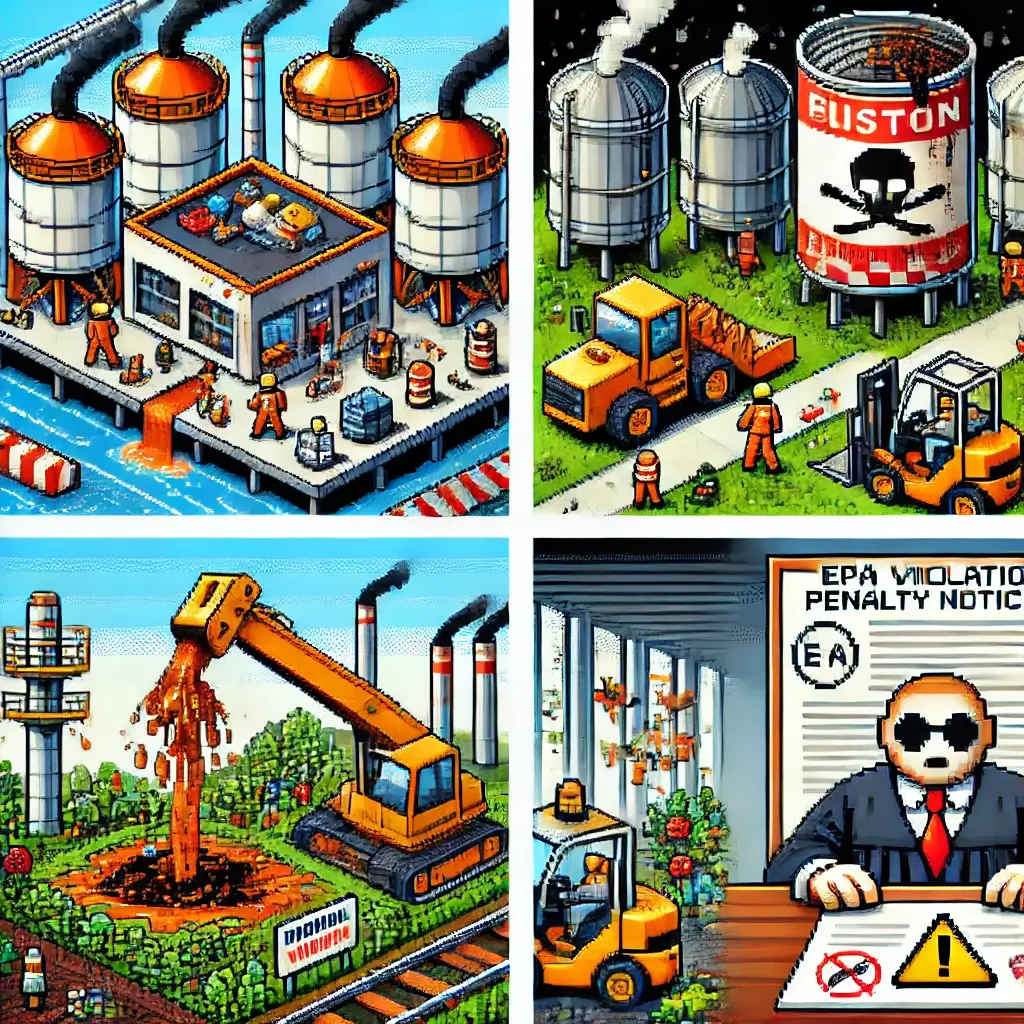
A forklift operator, swerving to avoid a stack of pallets, has accidentally pierced a 55-gallon drum of industrial solvent.
The solvent is pouring across the floor, seeping into a nearby drain, and now, alarmingly, a small puddle is forming outside the building.
This, my friends, is a sudden and accidental pollution event.
It happens in a flash.
It’s not something you planned for, but it’s now your problem.
And it’s a huge problem.
Immediately, you’re looking at a laundry list of costs.
First, you’ve got to stop the bleeding.
Emergency response teams, hazmat crews, and cleanup specialists.
These aren’t cheap.
Then, you have to clean up the mess inside and outside your facility.
This could involve soil remediation, groundwater testing, and a ton of other expensive procedures.
And if the solvent has leached into a local creek or pond?
Well, now you’ve got a whole new level of trouble.
A standard CGL policy won’t cover a penny of this.
ELI, on the other hand, is built for exactly this scenario.
It covers the emergency response costs, the site cleanup expenses, and even the defense costs if you’re sued by a third party (like a local farmer whose well was contaminated).
It’s the safety net that stops a single moment of bad luck from becoming the end of your business.
For a closer look at what the EPA considers a reportable spill and the legal ramifications, you can check out their official site. Learn More about EPA Regulations
Risk #2: The Ghosts of Christmas Past – Old Skeletons Hiding in Your Property’s Closet
Here’s a story I’ve seen play out more times than I care to count.
A small manufacturer buys a property, a nice little industrial building that has been around for a few decades.
They do their due diligence, get an inspection, and everything looks clean.
Years pass.
Business is good.
Then, they decide to renovate or expand.
During the excavation, they hit something.
An old, rusted underground storage tank, a relic from the previous owner’s operations decades ago.
The tank is leaking.
And now, the soil is saturated with old, forgotten chemicals.
The EPA, or state environmental agency, comes knocking.
Under strict liability laws, particularly under something like the Superfund Act (CERCLA) in the US, the current owner is often held responsible for the cleanup, regardless of who caused the pollution or when it happened.
I’m not kidding.
It doesn’t matter that you had nothing to do with it.
You own the property, so you own the problem.
These “pre-existing conditions” or “prior acts” are a silent killer.
They’re the hidden landmines that can detonate years, or even decades, after they were planted.
Guess what your CGL policy thinks of this?
You guessed it: “Pollution exclusion. Not our problem.”
Environmental liability insurance is one of the only ways to get coverage for these pre-existing conditions.
Depending on the policy, it can cover the costs of discovering and cleaning up this inherited mess, saving you from a financial nightmare you never created.
Think about that the next time you look at your company’s foundation.
What’s buried beneath it?
It’s a scary thought, I know, but it’s a very real one.
This isn’t some abstract risk; it’s a tangible threat to every small manufacturer operating out of an existing building.
If you’re ever in doubt about what your current policies cover, a good place to start is with an educational resource from a trusted industry source. Check Out the Insurance Information Institute
Risk #3: The Regulatory Hammer – Fines and Penalties from the Authorities
Let’s talk about a different kind of financial hit.
One that doesn’t necessarily come from a cleanup bill or a lawsuit.
It comes from the government.
As a manufacturer, you’re held to a high standard of environmental compliance.
This isn’t a bad thing; it’s a good thing.
It protects our communities and our planet.
But it also means you have a long list of rules to follow.
Proper waste disposal.
Air quality standards.
Spill prevention plans.
The list goes on and on.
And let me be blunt: these regulators don’t mess around.
A simple inspection could turn up a violation that, while maybe not a massive disaster, still results in a hefty fine.
Even something as seemingly minor as a mislabeled drum or an outdated spill prevention plan can trigger a penalty that makes your head spin.
And what about a “gradual” pollution event?
This is different from the sudden forklift mishap.
This is the slow, steady drip, drip, drip of a pipe or a tank over several months or even years.
This type of pollution often goes unnoticed until the damage is significant, and the cleanup costs are astronomical.
Worse, because it was “gradual,” your standard CGL policy won’t touch it with a ten-foot pole.
You’re left holding the bag.
This is where environmental liability insurance truly shines.
It can provide coverage for a wide range of these regulatory fines and penalties, as well as the cleanup costs from a gradual pollution event.
It’s the peace of mind knowing that you’re not just relying on a perfect track record; you’re backed up by a financial safety net.
It’s the difference between a bad week and a closed sign on your front door.
The costs associated with these cleanups can be astronomical, with some sites costing hundreds of thousands or even millions of dollars.
It’s an unpredictable and frightening risk that you, as a small business owner, simply cannot afford to shoulder alone.
So, let’s recap: A CGL policy is like a sturdy raincoat for a regular day.
But environmental liability is a category five hurricane, and you need a specialized shelter.
This isn’t hyperbole; it’s the reality of the business world today.
What Environmental Liability Insurance Actually Covers (Beyond the Obvious)
Okay, we’ve talked about the “why.”
Now, let’s get into the “what.”
What exactly does this magical-sounding insurance policy do?
ELI isn’t a single, one-size-fits-all product.
There are a few different types, but for small manufacturers, we’re usually talking about two main categories:
**1. Pollution Legal Liability (PLL) or Environmental Impairment Liability (EIL):** This is the big one.
This is what we’ve been talking about so far.
It’s designed to cover on-site and off-site cleanup costs, bodily injury, and property damage to third parties resulting from pollution conditions.
It can also cover legal defense costs, which, as any business owner knows, can be crippling on their own.
And, depending on the policy, it can cover both sudden/accidental events and gradual pollution.
This is the policy that saves you from the rusty tank and the forklift incident.
**2. Contractors Pollution Liability (CPL):** If you’re a manufacturer that also does work at a third-party site (e.g., installing a product you’ve made, or performing maintenance), this is crucial.
It covers you for pollution events that happen while you or your team are working at someone else’s property.
For example, if one of your service techs accidentally spills a chemical during an installation, CPL would cover the cleanup and any subsequent third-party claims.
This is a detail that is often overlooked but is absolutely essential for many small businesses that operate beyond their own four walls.
It’s not just about what happens at your place; it’s about what happens on your watch, wherever that may be.
When you’re shopping for a policy, it’s vital to work with an agent who understands your business and the specific risks you face.
I’ve seen too many people try to buy a generic policy online only to find out later that the coverage was inadequate for their specific needs.
It’s a nuanced field, and getting it right is the difference between a secure future and a coin flip.
Think of it like this: your business is your masterpiece, and environmental liability insurance is the protective glass case that keeps it safe from unexpected threats.
Without that case, even a small tremor could shatter it all.
For more information about the specifics of these types of policies, I highly recommend checking out a major insurance carrier’s educational resources. Explore Environmental Insurance at AIG
How to Get Started: Navigating the World of Environmental Liability Insurance for Small Manufacturers
Okay, you’re convinced.
You’re thinking, “This all makes perfect sense. How do I get this protection for my business?”
It’s simpler than you might think, but you have to do it the right way.
**Step 1: Do a Self-Assessment.**
First, take a hard look at your operations.
What chemicals do you use?
How do you store them?
Are there any old tanks, drains, or other potential hazards on your property?
Think about your past as well—who owned the building before you?
What did they do there?
This isn’t about scaring you; it’s about being prepared.
**Step 2: Find the Right Partner.**
This is the most critical step.
You need to find an independent insurance agent or broker who specializes in environmental risk.
A generalist might not have the knowledge or the carrier relationships to get you the right policy.
An expert, on the other hand, will ask you the right questions, help you identify your true risks, and find a policy that fits your budget and your business.
It’s like going to a heart surgeon for heart surgery instead of a general practitioner.
You want a specialist.
**Step 3: Prepare Your Information.**
When you talk to a potential agent, be ready to provide some key information.
This will likely include a site plan, details on your operations, a list of chemicals you use, and information on any past environmental issues.
The more honest and detailed you are, the better and more accurate your quote will be.
It’s an open book exam, and you want to ace it.
**Step 4: Review and Choose.**
Don’t just look at the price tag.
Review the policy documents carefully with your agent.
What are the exclusions?
What are the limits of coverage?
Does it cover both sudden and gradual pollution?
Does it cover both on-site and off-site cleanup?
These are the questions that make all the difference when a claim arises.
Don’t be afraid to ask questions until you fully understand what you’re buying.
Remember, this is about protecting everything you’ve built.
It’s an investment, not an expense.
The Cost of Peace of Mind: An Honest Look at What Environmental Liability Insurance Costs
I know what you’re probably thinking now.
“This sounds expensive. My small business can’t afford another premium.”
And I get it.
Every dollar matters when you’re a small manufacturer.
But let’s be real for a moment.
What is the cost of NOT having this insurance?
A single environmental cleanup can easily run into the tens or hundreds of thousands of dollars.
Legal defense fees can add another crushing layer.
And fines from the government?
They can be eye-watering.
Compared to those numbers, the cost of an environmental liability insurance policy is, in my professional opinion, a bargain.
For a small manufacturer with relatively low risk, a policy might cost a few thousand dollars a year.
For a business with higher risk or a longer history, it might be more.
But when you compare that to the potential for a catastrophic loss—one that could shutter your doors forever—the choice becomes clear.
It’s not about the money you spend; it’s about the money you could lose.
It’s an investment in the long-term viability of your company.
Think of it like buying fire insurance for your house.
You hope you never have to use it, but you’re not going to gamble with your most valuable asset by not having it.
Environmental liability insurance is exactly the same, but for a risk that many business owners don’t even know they have.
Don’t let ignorance be the downfall of your company.
Get smart.
Get protected.
A Final, Personal Word: Your Business is More Than Just a Building
I’ve seen it all.
I’ve seen business owners who thought they were indestructible, only to be brought down by a single, unforeseen event.
And I’ve seen those who were prepared, who had the foresight to invest in the right protection, and who weathered the storm without losing a step.
Which one do you want to be?
Your business is more than just a building, a set of machines, and a balance sheet.
It’s the heart of your life.
It’s your future, your employees’ livelihoods, and the legacy you’re building.
Protect it.
Don’t wait for a disaster to happen.
Don’t assume your current policies are enough.
Take the time, make the calls, and find the right environmental liability insurance for your small manufacturing business.
It’s the smartest move you’ll make all year.
And trust me, a good night’s sleep is worth every penny.
Environmental Liability Insurance, Small Manufacturers, Pollution Coverage, Business Risk, CGL Policy.