The 7 Crucial Truths About Short-Term Disability Insurance for Freelancers
Life as a freelancer is a beautiful, chaotic tapestry woven with threads of freedom and uncertainty.
We get to be our own boss, set our own hours, and chase our passions with a relentless fire.
We choose the projects that make our hearts sing and leave the soul-crushing corporate drone work behind.
It’s a dream, isn’t it?
But beneath that shiny veneer of independence lies a silent, nagging fear that we don’t always talk about.
What happens when the unexpected happens?
What if a nasty flu knocks you out for three weeks, right in the middle of a big project?
What if you trip over your dog and break your arm, making it impossible to type or create or do whatever it is you do to earn a living?
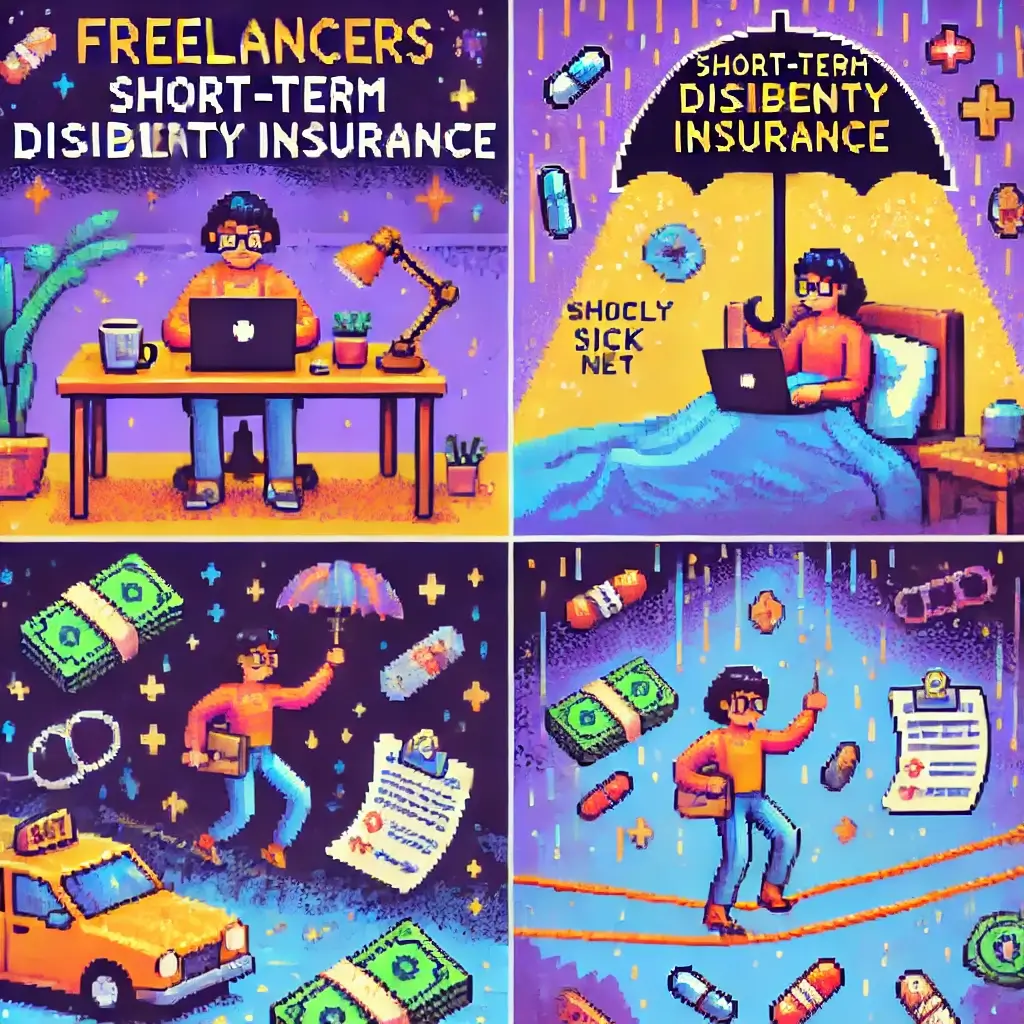
That’s where the dream can turn into a nightmare, where the freedom feels less like a choice and more like a high-wire act without a net.
The truth is, as freelancers, we don’t have a boss who will keep paying us sick leave or a company HR department to navigate the maze of medical leave.
It’s just us, the bank account, and the mounting pile of bills.
This is the moment when the concept of short-term disability insurance stops being some abstract, boring financial product and becomes a very real, very urgent lifesaver.
For years, I told myself I didn’t need it.
I was healthy, I was careful, I was invincible—or so I thought.
Then a nasty bout of a stomach bug left me bedridden for a week, and I watched in panic as a major client deadline slipped away.
The work stopped, but the bills didn’t.
That one week was enough to make me realize how fragile my financial foundation was.
And that’s why I’m here to talk about a topic that feels a little bit like eating your vegetables—you know you should, but you’d rather not.
But trust me, this is a vegetable that could save your financial life.
Let’s pull back the curtain on short-term disability insurance and understand why it’s not a luxury for freelancers, but an absolute necessity.
Table of Contents
What is Short-Term Disability Insurance, Really?
Let’s get the dry stuff out of the way first, but I promise to keep it colorful.
Imagine your income is a beautiful, gushing waterfall, a constant flow of abundance and opportunity.
Now, imagine a dam suddenly gets built right in front of that waterfall because you can’t work.
Short-term disability insurance is a magical little bypass channel that keeps at least some water flowing, even when the main waterfall is blocked.
In more technical terms, it’s an insurance policy that replaces a portion of your income—typically 60-80%—when you can’t work for a short period of time due to a temporary illness or injury.
This isn’t for long-term, life-altering events; that’s what long-term disability is for.
This is for the stuff of everyday life that can throw a serious wrench in your financial plans: a broken leg, a debilitating case of food poisoning, a bout of pneumonia, or even recovery from a minor surgery.
The policy has a waiting period, which is the time between when you become disabled and when your benefits begin—often 7 to 14 days.
It also has a benefit period, which is the maximum amount of time you can receive payments, usually three to six months, sometimes up to a year.
For us freelancers, this isn’t a benefit package from a generous employer; it’s a policy we have to seek out and purchase for ourselves.
And that’s the part that trips so many of us up.
We’re so focused on the next gig, the next client, the next big project that we forget to protect the very engine that drives our success: ourselves.
Think of it as the ultimate form of self-care and self-respect for your professional life.
It’s the promise you make to yourself that you won’t be left high and dry if your body or mind needs a forced vacation.
Why Freelancers Are Desperate for Short-Term Disability Insurance
Why is this such a big deal for us, specifically?
Because we are our own safety net, and sometimes, that net has holes in it the size of a small car.
Let’s put it bluntly: your income is directly tied to your ability to work.
When you’re a salaried employee, you can usually take a few sick days without a drop in pay, and maybe even tap into an employer’s disability plan if you’re out longer.
When you’re a freelancer, every single day you can’t work is a day you don’t get paid.
There’s no paid time off.
There’s no company policy to lean on.
It’s just a blank space in your earnings column.
The financial reality can be brutal.
Bills don’t stop coming in just because you’re flat on your back with a raging fever.
Rent, groceries, utilities, and all the other expenses of life keep marching on, relentless and unforgiving.
Without short-term disability insurance, you have only a few options: deplete your savings, go into debt, or beg your family for help.
None of those are great options, and all of them come with a significant amount of stress and emotional weight.
This stress can actually slow your recovery, creating a vicious cycle.
You’re worried about money, so you can’t rest properly, which means you can’t get back to work quickly, which makes you worry more about money.
It’s a spiral of despair.
Short-term disability insurance breaks that spiral before it can even start.
It provides a layer of protection that allows you to focus on one thing and one thing only: getting better.
It gives you the peace of mind that comes from knowing that even if you can’t work, you can still pay your bills and keep your life afloat.
It’s the silent partner who always has your back.
It’s the kind of stability that freelancers often crave but don’t always know how to get.
It’s not just about money; it’s about emotional well-being and the confidence to take on a new project without the terror of an unknown future looming over you.
Read More: Understanding Disability Insurance
Finding the Perfect Short-Term Disability Insurance Policy
So, you’re convinced.
You’re ready to take the leap and get yourself a policy.
But where do you even begin?
The world of insurance can be as confusing as a cat trying to use an iPad.
Don’t worry, I’ve navigated this for years, and I’ll break it down for you.
First, you need to understand that freelancers often have a different path to getting short-term disability insurance.
You can’t just sign up for your company’s plan.
You’ll be looking for individual disability insurance policies.
The first step is to figure out how much coverage you need.
Don’t just pull a number out of thin air.
Sit down and honestly calculate your monthly expenses.
Think about your rent or mortgage, your car payment, utilities, food, and anything else you absolutely have to pay to survive.
Remember, the goal isn’t to replace your entire income, but to cover your essential living expenses.
Most policies will cover around 60-80% of your income, and that’s a good number to aim for.
Next, you need to understand the waiting period, also known as the elimination period.
This is a critical part of your short-term disability insurance policy.
It’s the amount of time that must pass after your disability begins before you can start receiving benefits.
It can range from a few days to a few weeks, and generally, the longer the waiting period, the lower your premiums will be.
If you have a decent emergency fund, you can opt for a longer waiting period and save some money.
If your savings are a little… non-existent, then a shorter waiting period might be worth the extra cost.
Finally, look at the benefit period—the maximum length of time you can receive benefits.
For a short-term disability insurance policy, this is typically 3 to 6 months, but can be up to a year.
Make sure you choose a period that feels right for your level of risk tolerance.
I’ve seen so many people get tripped up by the details, and that’s why it’s so important to read the fine print.
A policy that looks cheap on the surface might have a 60-day waiting period, which would leave you in a very difficult position if you only need to be out for three weeks.
Trust me, the devil is in the details.
It can feel overwhelming, but a bit of research now saves you a lot of heartache later.
Find Top-Rated Disability Insurance Companies
The Real Cost and Unspeakable Value of Short-Term Disability Insurance
“But what about the cost?”
I hear you sigh.
We’re freelancers, we watch every penny, and the idea of adding another monthly expense can feel like a punch to the gut.
The cost of short-term disability insurance varies widely, depending on your age, gender, occupation, income, and the policy you choose.
Generally, you can expect to pay anywhere from 1% to 3% of your annual income in premiums.
For a freelancer making $60,000 a year, that could be anywhere from $600 to $1,800 annually, or $50 to $150 a month.
That might sound like a lot, but let’s put it in perspective.
That $50 a month could be the difference between having a roof over your head and being completely out of options if a simple illness derails your work for a few weeks.
It’s the price of a few fancy lattes a month, or a dinner out with friends, or a couple of streaming subscriptions.
Is that worth the peace of mind that comes from knowing you’re protected?
Let’s do some quick math.
Say you have a bad case of the flu that keeps you from working for three weeks.
If your monthly income is $5,000, that’s a loss of over $3,500.
One single illness just wiped out over half of your monthly income.
Now, imagine you have a policy that pays you 60% of your income after a 7-day waiting period.
The policy would kick in, and for the remaining two weeks you are out, it would pay you a portion of your income, perhaps a few thousand dollars.
That’s the difference between a total financial collapse and a minor hiccup.
The value isn’t just in the money itself, but in the ripple effect.
It’s the value of not having to stress about your finances while you’re trying to heal.
It’s the value of being able to fully recover without the pressure to jump back into work too soon, which could lead to a relapse and even more lost income.
It’s the value of a good night’s sleep, knowing that you’ve got a financial parachute ready for a soft landing.
The cost of short-term disability insurance is a drop in the ocean compared to the potential financial devastation of a sudden illness or injury.
And that, my friend, is a truth we all need to internalize.
Compare Disability Insurance Quotes Here
Short-Term Disability Insurance Infographic for Freelancers
Your safety net in the unpredictable world of freelancing.
The Freelancer’s Dilemma: Why You Need It
Unlike salaried employees with paid sick leave and benefits, freelancers face a total loss of income when they can’t work due to illness or injury.
- ❌ NO PAID TIME OFF
- ❌ DEPLETING SAVINGS
- ❌ FINANCIAL STRESS
How Short-Term Disability Insurance Works
1. The Unexpected Happens
An illness or injury prevents you from working.
2. The Waiting Period
The policy’s waiting period (typically 7-14 days) begins before benefits are paid. Your emergency fund covers this gap.
3. Benefits Begin
After the waiting period, the insurer pays a portion of your income (usually 60-80%) to help cover your expenses.
How to Choose a Policy
-
1
Calculate Your Coverage: Determine the minimum monthly income you need to cover essential expenses.
-
2
Choose the Waiting Period: The longer the waiting period, the lower your premium. Match it to your emergency fund.
-
3
Select the Benefit Period: This is the maximum time you can receive benefits, typically 3 to 12 months for a short-term policy.
“Short-Term Disability Insurance isn’t a luxury—it’s an essential investment in your career and well-being.”
– Financial Experts
5 Common Mistakes to Avoid with Short-Term Disability Insurance
As with anything, there are landmines to avoid.
I’ve seen so many people get this wrong, and I want to save you from those painful mistakes.
1. The “It Won’t Happen to Me” Fallacy
This is the big one.
We’re all human, and we are all susceptible to illness and injury.
It’s not a question of if, but when.
Don’t let your youthful optimism or stubborn belief in your own invincibility keep you from being prepared.
It’s just as much a part of your business plan as your marketing strategy.
2. Ignoring the Waiting Period
I mentioned this before, but it bears repeating.
A policy with a 60-day waiting period is not a short-term disability insurance policy that will help you with a two-week bout of food poisoning.
Make sure the waiting period aligns with your emergency savings and your tolerance for risk.
3. Underestimating Your Income
When you’re applying for a policy, don’t lowball your income to get a cheaper premium.
The insurer will verify your income, and you could end up with a policy that pays out far less than you need to survive.
Be honest and be realistic about your earnings.
4. Waiting Until You Need It
You cannot get short-term disability insurance once you are already sick or injured.
It’s like trying to buy fire insurance while your house is already burning down.
You have to purchase it while you are healthy and well.
Plan for it before you need it, not after.
5. Not Reading the Fine Print
Every policy is different.
What one policy considers a disabling event, another might not.
Make sure you read the exclusions and limitations.
Does the policy cover mental health conditions, like severe anxiety or depression, which can be just as debilitating as a physical injury?
Does it cover pregnancy-related disabilities?
Don’t just click “buy now” without a thorough understanding of what you’re actually paying for.
Your Burning Questions About Short-Term Disability Insurance, Answered
I’ve gathered some of the most common questions I get from freelancers and am providing my honest, expert answers.
Q: Is short-term disability insurance the same as workers’ compensation?
A: No, absolutely not.
Workers’ compensation is for injuries you sustain on the job, while short-term disability insurance covers illnesses and injuries that occur outside of work.
For example, if you trip over a cord in your home office and break your wrist, that’s a workers’ comp issue (if you’ve set that up), but if you break your wrist falling off your bike on a Saturday, that’s where short-term disability insurance comes in.
Q: What about my emergency fund? Can’t that replace short-term disability insurance?
A: An emergency fund is a great start, but it’s not a complete replacement.
A typical emergency fund is designed to cover 3-6 months of expenses for unexpected costs like a car repair or a job loss.
If you use your emergency fund to cover a short-term disability, you are essentially leaving yourself with no safety net for other unexpected events that might come up, like a dental emergency or a major home repair.
Short-term disability insurance is a tool specifically designed for this purpose, preserving your emergency fund for a true “rainy day.”
Q: Will my pre-existing conditions be covered?
A: Most policies will have a clause regarding pre-existing conditions, which is typically any medical condition you have received treatment for within a specific time frame before you apply.
They are often not covered for a certain period, usually 12 months, after the policy goes into effect.
This is why it’s so important to get a policy while you are healthy, and to be completely honest on your application about your medical history.
Q: How do I file a claim?
A: The process can vary by company, but generally, you will need to contact your insurance provider as soon as you become disabled.
You will need to submit a claim form, and your doctor will also have to submit paperwork confirming your disability and the expected recovery period.
It can be a bit of a bureaucratic pain, but the peace of mind is worth it.
Making the Conscious Choice to Get Short-Term Disability Insurance
Look, I know this isn’t a fun topic.
It’s not as glamorous as talking about a new productivity app or a new marketing strategy.
But it’s so much more important.
It’s the silent, steady bedrock beneath the shimmering surface of your freelance life.
You work incredibly hard to build your freelance career, to create a life of freedom and purpose.
Why would you leave that entire beautiful structure vulnerable to a single, random event?
We buy car insurance because we know accidents can happen, even if we are the safest drivers in the world.
We buy home insurance because a fire or a flood could wipe us out, even if we are diligent about our home maintenance.
Why don’t we apply the same logic to ourselves?
You are your most valuable asset.
Your ability to work is the engine that drives your business.
Protect it fiercely.
Don’t wait until a sudden, painful reality check forces you to confront the financial insecurity that you have tried so hard to ignore.
Do it now.
Do the research, get the quotes, and choose a short-term disability insurance policy that makes you feel safe and secure.
It’s not just a financial decision; it’s an act of radical self-respect.
Final Keywords: short-term disability insurance, freelancer, self-employed, independent contractor, freelance insurance
🔗 Artisan Food Producer Posted 2025-08-21 13:14 UTC 🔗 Advanced CPT Code Auditing Posted 2025-08-21 12:43 UTC 🔗 Vacant Lot Auction Posted 2025-08-21 12:13 UTC 🔗 Key Person Insurance Posted 2025-08-21 06:07 UTC 🔗 Gold & Platinum Posted 2025-08-21 🔗 Unstoppable: How 1 Small Policy Protects Posted 2025-08