
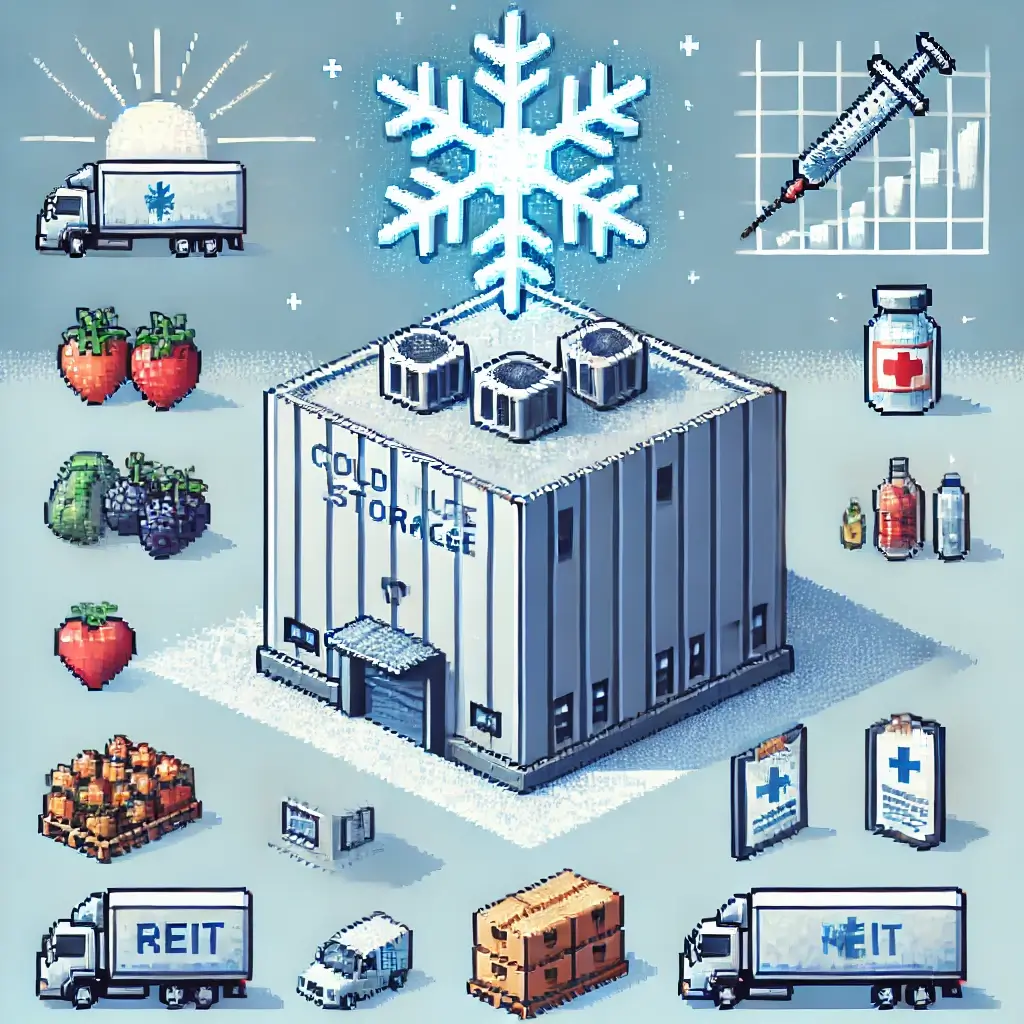
The Chilling Truth: Why Cold Storage REITs Are Your 2025 Investment MVP!
Hey there, savvy investors and curious minds!
Let’s talk about something that might not immediately spark visions of grandeur, but trust me, it’s quietly revolutionizing the way we think about real estate and the very food on our plates.
I’m talking about cold storage facilities – those massive, often unassuming buildings that keep our groceries fresh, our vaccines viable, and our supply chains humming.
And specifically, I want to dive into the red-hot potential of **Cold Storage REITs**.
For years, industrial real estate has been a darling, thanks to e-commerce and logistics.
But within that sector, cold storage is emerging as a true titan, a specialized niche with incredible resilience and growth prospects.
Why?
Because the world is changing, and with it, the demands on our food supply chain are becoming more complex, more global, and frankly, more fragile without the right infrastructure.
Think about it: from farm to fork, how does that fresh produce from halfway across the world stay fresh?
How do highly perishable pharmaceuticals reach hospitals intact?
The unsung hero, my friends, is cold storage.
It’s the vital link in a chain that simply cannot afford to break.
Table of Contents
—
1. The Unseen Backbone: What Exactly Are Cold Storage Facilities?
Okay, let’s pull back the curtain a bit.
When I talk about **cold storage facilities**, I’m not just talking about your average refrigerated warehouse.
These are highly specialized, technologically advanced structures designed to maintain precise temperature and humidity levels for a vast array of perishable goods.
Imagine a gigantic, industrial-sized refrigerator and freezer, but with multiple temperature zones, sophisticated monitoring systems, and often, automated retrieval and sorting capabilities.
From -60 degrees Fahrenheit for certain pharmaceuticals to just above freezing for fresh produce, these facilities are engineered with incredible precision.
They’re a far cry from a typical dry warehouse.
The construction costs are significantly higher due to the insulation, refrigeration equipment, and advanced climate control systems.
Think reinforced floors, specialized doors, and robust power grids to keep everything running smoothly, come what may.
It’s not just about keeping things cold; it’s about preserving quality, extending shelf life, and ensuring safety.
This isn’t a business for amateurs; it requires deep expertise in refrigeration technology, logistics, and food safety regulations.
And because of that specialization, there’s a relatively high barrier to entry for new players, which helps established **cold storage** operators maintain a strong competitive edge. —
2. The Supply Chain’s Chilly Challenge: Why Cold Storage is More Critical Than Ever
Alright, let’s get into the nitty-gritty of why these icy behemoths are becoming indispensable.
The global food supply chain, my friends, is under immense pressure.
And it’s not just about getting food from point A to point B anymore.
Several powerful trends are converging, making **cold storage** absolutely non-negotiable.
Changing Consumer Habits: Fresh is the New Black
Remember when frozen dinners were a staple?
While they still have their place, consumers today are increasingly demanding fresh, organic, and healthier food options.
Think about the explosion of fresh meal kits, ready-to-eat salads, and specialty produce.
These items have shorter shelf lives and require precise temperature control throughout their journey from farm to grocery store or, increasingly, to your doorstep.
This shift directly translates to a greater need for sophisticated cold chain logistics.
The E-commerce Revolution: Groceries Delivered Cold
This is perhaps the biggest game-changer.
Online grocery shopping, once a niche, is now mainstream.
Companies like Instacart, Amazon Fresh, and your local supermarket’s delivery service rely heavily on an unbroken cold chain.
Imagine ordering frozen shrimp and fresh berries online – they can’t just sit in a regular warehouse.
They need dedicated **cold storage** space, often closer to urban centers, to facilitate last-mile delivery.
This isn’t just about large, regional distribution centers; it’s also about smaller, strategically located “dark stores” or micro-fulfillment centers with robust refrigeration capabilities.
The demand here is absolutely exploding.
Globalization of Food: From Farm to Far Away
Our dinner tables are more diverse than ever, thanks to global trade.
That Chilean sea bass or those exotic fruits from Southeast Asia wouldn’t make it to your local market without a meticulously managed cold chain.
As international trade continues to grow, so does the reliance on sophisticated **cold storage** networks at ports, airports, and inland distribution hubs.
It’s a testament to human ingenuity that we can enjoy seasonal produce year-round, and cold storage is at the heart of that miracle.
Pharmaceuticals and Biotechnology: The Cold Imperative
It’s not just about food, folks!
The pharmaceutical industry has an equally, if not more, critical need for **cold storage**.
Vaccines, biologics, and many other life-saving medications are temperature-sensitive.
The recent global health crisis vividly demonstrated the absolute necessity of a robust “cold chain” for vaccine distribution.
This sector demands ultra-low temperatures and extremely precise monitoring, making it a highly specialized and high-value segment for **cold storage** providers.
Food Waste Reduction and Sustainability Goals
Believe it or not, cold storage plays a crucial role in environmental sustainability.
Proper refrigeration and temperature control significantly reduce food spoilage and waste.
This isn’t just good for the planet; it’s good for the bottom line of food producers and retailers.
As companies and governments increasingly prioritize sustainability, efficient **cold storage** becomes an even more attractive investment. —
3. The Rise of Cold Storage REITs: Investing in Temperature Control
So, you’re thinking, “This sounds great, but how do I, as an individual investor, get a piece of this action?”
Enter **Cold Storage REITs** (Real Estate Investment Trusts).
If you’re not familiar with REITs, think of them as companies that own, operate, or finance income-producing real estate.
They’re a fantastic way for everyday folks to invest in real estate without having to buy, manage, or maintain properties themselves.
The beauty of REITs is that they’re legally required to distribute at least 90% of their taxable income to shareholders annually in the form of dividends.
This makes them a popular choice for income-focused investors.
A **Cold Storage REIT** specializes specifically in owning and managing cold storage warehouses and distribution centers.
Instead of owning one warehouse, you own a piece of a portfolio of these specialized, high-demand properties.
It’s like having a diversified portfolio of temperature-controlled real estate, all managed by a team of experts.
These REITs benefit directly from the trends we just discussed: the surging demand for temperature-controlled logistics space from food producers, grocery retailers, pharmaceutical companies, and e-commerce giants.
Because of the specialized nature and high capital expenditure involved in building these facilities, tenants often prefer to lease from experienced operators rather than building their own.
This creates a stable revenue stream for **Cold Storage REITs** through long-term leases. —
4. Why Invest Now? Unpacking the Drivers of Demand for Cold Storage
So, you’re convinced that **cold storage** is important.
But why is *now* the time to consider investing in a **Cold Storage REIT**?
Let’s peel back the layers on the demand drivers.
Supply-Demand Imbalance: A Golden Opportunity
Here’s the kicker: the demand for **cold storage** space is currently outstripping supply.
Building these specialized facilities is complex, time-consuming, and expensive.
It’s not like converting an old factory into a loft apartment.
This means existing, well-located **cold storage** assets are highly valuable, and new developments, though happening, can’t keep pace with the accelerating demand from all sectors.
This imbalance typically leads to higher occupancy rates and stronger rental growth for property owners.
Inflation Hedge and Defensive Qualities
In an economic climate where inflation is a concern, real estate, in general, can act as a good hedge.
Property values and rental income tend to rise with inflation.
More specifically, **cold storage** is considered a defensive asset class.
Why?
Because people always need to eat, and medicines are always essential, regardless of the economic cycle.
This makes the demand for **cold storage** less susceptible to economic downturns compared to, say, retail or office spaces.
Even during recessions, our need for food and medicine remains constant, ensuring stable demand for these facilities.
Technological Advancements and Efficiency
Modern **cold storage** facilities are increasingly incorporating advanced technology.
Think automation, robotics, AI-driven inventory management, and energy-efficient refrigeration systems.
These innovations not only improve operational efficiency and reduce costs but also enhance the appeal of these facilities to tenants.
REITs that invest in and upgrade their properties with these technologies are well-positioned for long-term growth and tenant retention.
Diversification Benefits for Your Portfolio
Adding a **Cold Storage REIT** to your investment portfolio can offer valuable diversification.
It provides exposure to a specialized real estate sector that behaves differently from traditional office, retail, or even general industrial properties.
This can help reduce overall portfolio volatility and enhance risk-adjusted returns, especially if you’re already heavily invested in other sectors.
Long-Term Lease Structures
One of the attractive features of industrial and **cold storage** properties is the prevalence of long-term leases.
Tenants in these specialized facilities often sign leases for 10, 15, or even 20 years.
Why so long?
Because moving a large-scale cold chain operation is incredibly disruptive and expensive.
This provides **Cold Storage REITs** with highly stable and predictable income streams, which is music to any investor’s ears. —
5. Navigating the Cold Landscape: Risks and Considerations
Alright, before you go all-in and start dreaming of refrigerated riches, let’s talk about the chillier side of things.
No investment is without its risks, and **Cold Storage REITs** are no exception.
High Capital Expenditure and Operating Costs
As I mentioned earlier, these facilities aren’t cheap to build or maintain.
The specialized refrigeration equipment is expensive, and energy costs can be substantial.
Fluctuations in electricity prices can impact profitability.
A **Cold Storage REIT** needs to have robust management and capital allocation strategies to handle these costs effectively.
Interest Rate Sensitivity
Like all REITs, **Cold Storage REITs** can be sensitive to interest rate changes.
Rising interest rates can increase borrowing costs for acquisitions and new developments, potentially impacting profitability and making their dividend yields less attractive compared to bonds.
It’s always a good idea to keep an eye on the broader interest rate environment when considering REIT investments.
Technological Obsolescence
While technology is a driver of growth, it can also be a risk.
Rapid advancements in refrigeration technology or supply chain logistics could potentially render older facilities less efficient or desirable, requiring significant capital upgrades.
A strong **Cold Storage REIT** will continuously invest in modernizing its portfolio.
Concentration Risk
The universe of publicly traded **Cold Storage REITs** is relatively small compared to other REIT sectors.
This means fewer options for diversification within the sub-sector itself.
It also means that the performance of a few key tenants could have a more significant impact on a specific REIT’s financials.
Regulatory and Environmental Compliance
The food and pharmaceutical industries are heavily regulated, and **cold storage facilities** must adhere to strict health, safety, and environmental standards.
Changes in regulations or environmental mandates could impose additional costs or operational challenges.
Ensuring compliance is an ongoing, critical task for these operators. —
6. The Future is Frosty: Long-Term Outlook for Cold Storage REITs
Despite the risks, the long-term outlook for **Cold Storage REITs** remains incredibly compelling.
The underlying demand drivers aren’t going anywhere; in fact, they’re only accelerating.
Continued E-commerce Growth
Online grocery sales are still in their relatively early innings compared to other retail segments.
As more consumers embrace the convenience of having groceries delivered, the need for strategically located **cold storage** facilities will only intensify.
This isn’t a fad; it’s a fundamental shift in how we shop for food.
Rise of Urbanization and Last-Mile Logistics
As urban populations grow, so does the demand for efficient last-mile delivery of perishable goods.
This means a greater need for smaller, highly efficient **cold storage** hubs within or very close to metropolitan areas.
These urban infill locations are often harder to acquire and develop, making existing properties even more valuable.
Innovation in Food Technology
From plant-based meats to novel food processing techniques, the food industry is constantly innovating.
Many of these new products will require specialized temperature control, further boosting the demand for sophisticated **cold storage** solutions.
The future of food is exciting, and **cold storage** will be an integral part of bringing those innovations to market.
Reshoring and Supply Chain Resilience
Recent global events have highlighted the vulnerabilities of long, complex supply chains.
There’s a growing trend towards reshoring manufacturing and diversifying supply networks, which could lead to increased domestic production and a greater need for **cold storage** closer to home markets.
Building more resilient supply chains inherently involves more robust and distributed **cold storage** infrastructure. —
7. My Two Cents: Is a Cold Storage REIT a Smart Move for Your Portfolio?
So, after all this talk about frosty warehouses and perishable goods, where do I land on **Cold Storage REITs**?
In my humble opinion, and I’ve been watching real estate trends for a good while, they represent a truly compelling investment opportunity for 2025 and beyond.
The convergence of powerful macro trends – e-commerce growth, changing consumer preferences, globalization, and pharmaceutical demands – creates a very strong tailwind for this specialized sector.
It’s a foundational piece of our modern economy that we often take for granted, but its importance is only increasing.
When you’re looking for stability, income potential, and growth in a sometimes-turbulent market, a well-managed **Cold Storage REIT** can offer a fantastic blend of these qualities.
They offer exposure to real assets, provide consistent dividends, and are driven by non-discretionary consumer spending (food and medicine).
Of course, as with any investment, due diligence is key.
Research specific REITs, look at their management teams, their portfolio diversification, their balance sheets, and their growth strategies.
But don’t overlook the chilly champions of the supply chain.
They might just be the unsung heroes your portfolio has been waiting for.
Happy investing, and keep it cool!
—
Further Reading and Resources:
Cold Storage REITs, Food Supply Chain, Investment Potential, Industrial Real Estate, Logistics