
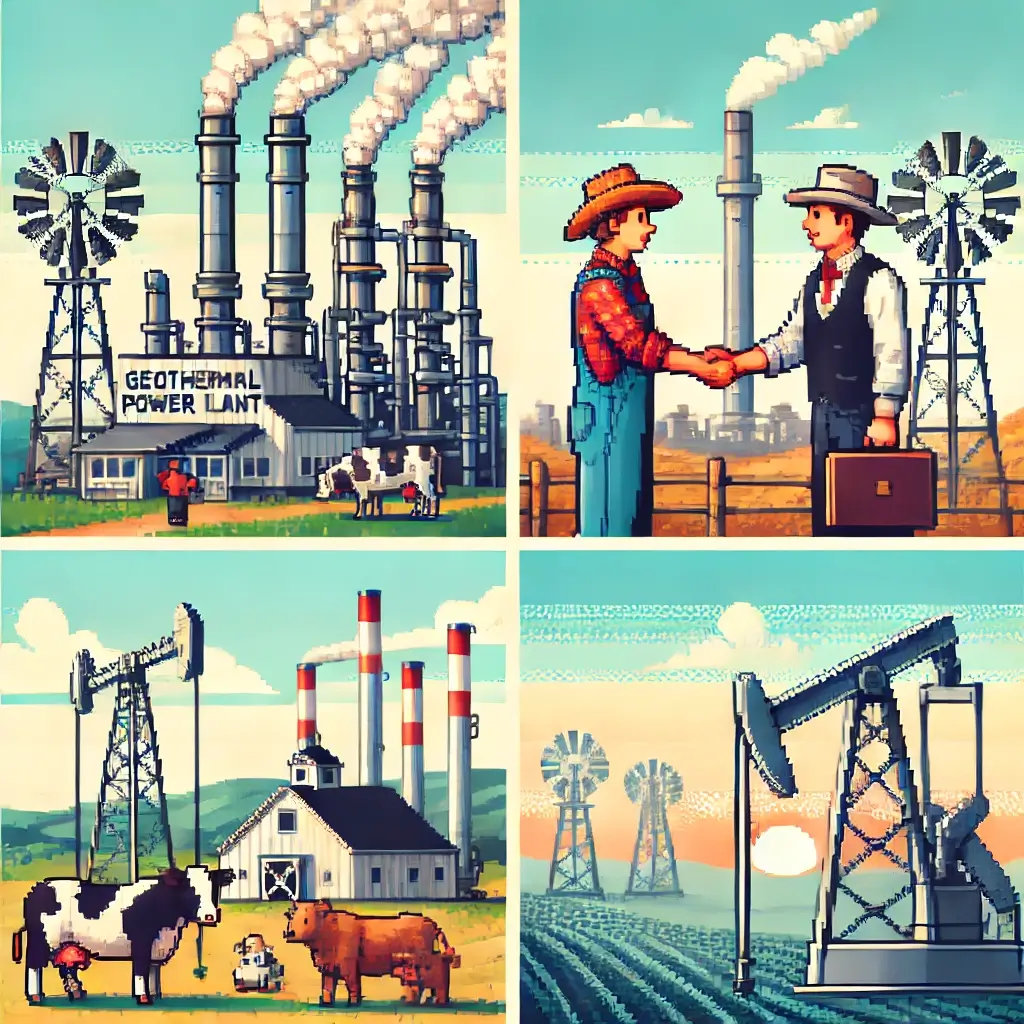
When a Geothermal Power Plant Land Lease Is More Than Just Dirt: 5 Truths
Hello, friends. Pull up a chair. Let’s talk about something that might sound about as exciting as watching paint dry, but I promise you, it’s not. We’re going to dive into the world of geothermal power plant land leases. And let me tell you, after decades in this game, I’ve seen it all. The highs, the lows, the moments of pure panic and utter elation. It’s a world where the earth itself becomes a character in your financial story. It’s where your patch of land, which you’ve probably walked over a thousand times without a second thought, holds a hidden, powerful secret: a fiery core that can light up a city. This isn’t just about a contract; it’s about a handshake with the future of energy, a gamble on the unseen, and a deep, emotional connection to the land that’s been in your family for generations, or maybe, the one you just bought last week with a dream in your heart.
It’s a journey filled with complex legal jargon, emotional weight, and the kind of financial decisions that can change your life. And it’s one I’m here to guide you through. So let’s get real. Let’s strip away the corporate speak and get down to the core of what this truly means for you, the landowner.
Table of Contents
A Geothermal Power Plant Land Lease Is About More Than Money
Let’s start with the elephant in the room: the money. Yes, the potential for significant income is the primary driver for many landowners. You see the dollar signs, the chance to finally pay off the farm, send the kids to college, or just breathe a little easier. And that’s a powerful motivator. But if you think this is a simple transaction—you sign, they pay, and you move on—you’re sorely mistaken. This is a long-term relationship, a commitment that can last for 30, 40, or even 50 years. It’s like a marriage, but with a corporation and your backyard.
I remember one client, a sweet old couple named Frank and Martha, who owned a beautiful 300-acre ranch in a quiet valley. The land had been in Martha’s family since the 1800s. A geothermal company approached them, and the offer was more than they could have ever imagined. Martha was hesitant. She was worried about the disruption, the noise, the thought of huge drilling rigs on the land where her grandparents’ ashes were scattered. Frank, on the other hand, saw it as a lifeline. Their cattle business was struggling, and this was a way to save their legacy.
Their story is a microcosm of the emotional tug-of-war that happens with a geothermal power plant land lease. It’s not just a business deal; it’s a negotiation with your own history and your hopes for the future. You have to weigh the financial security against the emotional cost. Will you be able to look at your land the same way? Will the hum of the plant replace the sound of the wind through the trees? These are not trivial questions. They are the heart of the matter.
I always tell my clients, the first thing you need to do is sit down and have an honest conversation with yourself and your family. What is your emotional attachment to this land? What are your non-negotiables? Is there a piece of land that is sacred to you, that you can’t bear to see developed? Or are you willing to see it all changed for the sake of a better future? This is a soul-searching exercise, not a quick spreadsheet calculation. And believe me, the emotional landscape is just as important as the physical one.
And let’s not forget the land itself. You are leasing a piece of the earth, but the company is after what’s beneath it. The hot, pressurized water and steam. The very energy of the planet. It’s a powerful thing to be a steward of that resource. But it also means that the land will undergo a transformation. There will be well pads, pipelines, and a power plant. The landscape will change. For some, this is an exciting evolution, a testament to progress. For others, it’s a painful loss. You have to decide which camp you’re in, and there is no wrong answer.
This is where my experience comes in. I’ve helped people through this process for years. My job is to be an advocate, a guide, and sometimes, just a sounding board. I want to make sure that when you sign on that dotted line, you are doing so with your eyes wide open, knowing every single truth, good and bad.
Trust Is The Foundation of a Geothermal Power Plant Land Lease
This might sound a little woo-woo, but hear me out. The relationship between you and the geothermal company is built on a foundation of trust. They are a large corporation, and you are, for the most part, an individual landowner. It’s an unbalanced dynamic, and you have to be careful. You can’t just take their word for it, no matter how friendly their representative seems.
I’ve seen it happen time and again. A landowner gets a great offer and is so excited they just want to sign. They see the company as a savior, a partner, a golden ticket. But you have to remember, their primary interest is profit. Your primary interest is protecting your land and your family’s future. These two interests can align, but they are not always the same.
This is where the power of the contract comes in. The lease agreement is the physical embodiment of your trust. It’s where all the promises are laid out in cold, hard print. You need to read every single line, and then read it again. And for the love of all that is holy, you need to hire an attorney who specializes in this stuff. Not your cousin Vinnie who did your last will and testament. You need someone who knows the ins and outs of energy law, who understands the potential pitfalls and can negotiate for your best interests.
I remember one time I was working with a landowner who was so proud of the lease agreement he was about to sign. “Look at this,” he said, “they’re giving me a huge bonus for signing and a great royalty rate!” I sat down and read the document, and sure enough, the upfront money was great. But buried deep within the legalese was a clause that gave the company the right to use his water rights for free, without any additional compensation. His land was in a semi-arid region, and water was his most precious resource. He was about to give it away for nothing, a silent sacrifice for a short-term gain. We went back to the negotiating table, and thanks to a good lawyer, we got that clause removed. It was a close call, and a powerful lesson in why you can’t just trust a handshake.
The contract should also address things like environmental impact. What happens if there’s a spill? Who is responsible for cleanup? What are the protocols for monitoring seismic activity? These are not questions you want to be asking for the first time after a problem has occurred. They need to be addressed in the contract, a clear roadmap for what happens in any scenario. This is about building a relationship of accountability, not just one of trust.
So, when you’re sitting across from that company representative, be friendly, be open, but also be guarded. And remember, the best way to build a foundation of trust is to verify every single thing they say.
Patience Is Your Greatest Asset in a Geothermal Power Plant Land Lease
This is not a quick flip. This is a marathon, not a sprint. The process of getting a geothermal power plant up and running on your land can take years, sometimes a decade or more. There’s exploration, permitting, drilling, testing, and construction. Each step has its own timeline and its own potential for delays.
I once worked with a family who was so excited about the prospect of a geothermal lease. They started making plans for a new house, a new car, and a big family vacation. They were a year into the process when the company hit a snag. The initial test wells didn’t show the expected heat and pressure, and the project was put on hold indefinitely. The family was devastated. Their dreams were put on ice, and the disappointment was palpable. The project eventually resumed years later, but that initial excitement was replaced by a kind of weary resignation.
This is why patience is so crucial. You can’t put all your eggs in this basket. You have to continue living your life, running your business, and pursuing your dreams. The geothermal project should be a bonus, a future possibility, not a guarantee you bank on tomorrow. And the contract should reflect this reality. It should include clauses that protect you in the event of delays, or if the project is abandoned. What happens if they drill a bunch of wells and then walk away? Who is responsible for plugging them? Who cleans up the mess? This is why you need a professional who can anticipate these issues.
The waiting game is also an emotional one. You might feel a mix of hope and frustration. The land is tied up, you’ve turned down other opportunities, and you’re just… waiting. It’s a test of your resolve. I always encourage my clients to keep a long-term perspective. This is a generational investment. You might not see the full benefit in your lifetime, but your children or grandchildren will. And that can be a source of immense pride and comfort.
I tell them to imagine a sapling. You plant it, you water it, you wait. You don’t get a tree overnight. But one day, years from now, you’ll look up and see a magnificent oak providing shade for the next generation. A geothermal power plant land lease is like planting that tree. It requires faith and patience.
The Community Impact of a Geothermal Power Plant Land Lease
Your land is not an island. It’s part of a larger community, and a geothermal project will have an impact on your neighbors, your town, and the local ecosystem. I’ve seen projects that have been welcomed with open arms and others that have been met with fierce resistance.
When you enter into a geothermal power plant land lease, you’re not just making a decision for yourself. You’re becoming an ambassador for clean energy, and you’re inviting a large-scale industrial project into your neighborhood. Your neighbors might have concerns about noise, traffic, and potential environmental risks. They might be worried about the value of their property. You have a responsibility to be open and honest with them.
I remember one case where the landowner, a man named Bob, tried to keep the project a secret. He didn’t want to deal with the inevitable questions and concerns. When the company started their initial geological surveys, the neighbors were shocked. They felt betrayed. The community was split, and Bob found himself isolated and defensive. It was a terrible situation that could have been avoided with a little transparency.
I always advise my clients to be proactive. Talk to your neighbors early. Be a source of information. Invite the company to a town hall meeting. Be the one who brings the community together, not the one who drives a wedge between them. This is about being a good neighbor, and a good steward of your community.
And let’s talk about the economic ripple effect. A geothermal project can bring new jobs to the area, both during construction and for long-term operation. It can bring in tax revenue that can be used to improve schools, roads, and local services. But it also changes the character of the area. A rural community might suddenly see more traffic, more people, and more industry. You have to decide if that’s a trade-off you’re willing to make. And you have to be prepared to defend your decision to your friends and neighbors.
The community aspect of a geothermal power plant land lease is often overlooked, but it’s one of the most important parts of the puzzle. It’s a chance to be a leader, to help your community embrace a cleaner, more sustainable future. Or it can be a source of conflict and resentment. The choice is yours, and it’s one you should make with your heart and your head.
Leaving a Legacy Through a Geothermal Power Plant Land Lease
When all is said and done, this is a decision about legacy. What do you want to leave behind? Will it be a piece of land, untouched and pristine, a snapshot of the past? Or will it be a monument to progress, a source of clean energy for generations to come?
I’ve worked with landowners from all walks of life, and their motivations are as varied as the landscapes they own. Some see this as a way to secure their family’s financial future. Others see it as a chance to be a part of the solution to climate change. And a few, like Martha from the beginning of this post, are just trying to find a way to honor the land and its history while also providing for the future.
A geothermal power plant land lease is a chance to do something truly meaningful. It’s an opportunity to contribute to a cleaner planet, to reduce our dependence on fossil fuels, and to create a more sustainable future for our children and grandchildren. That’s a powerful legacy.
But it’s not a decision to be taken lightly. It’s a complex, emotionally charged journey. It requires patience, trust, and a deep understanding of what you value most. My goal, and the reason I’ve dedicated my life to this work, is to make sure you have the knowledge and the resources to make the best decision for you and your family.
So, as you consider the possibility of a geothermal power plant land lease, remember this: It’s not just a contract. It’s a story. Your story. And you get to decide how it ends.
Geothermal Power Plant Land Lease: Key Summary
1. What is a Geothermal Power Plant?
Clean energy from the Earth’s heat
It utilizes geothermal energy from the Earth’s core to produce steam or hot water, which then turns turbines to generate electricity. This process is nearly carbon-free, unlike fossil fuels.

2. 3 Key Lease Considerations
Financial Benefits: Rent and Royalties
The main sources of income are long-term rent for land use and royalties, which are a percentage of the power plant’s revenue. Carefully check the terms before signing.
Contract Terms: Exploration, Construction, Operation
Long-term contracts spanning decades are common. Key aspects to clarify include exploration rights, noise and traffic during construction, and environmental protection clauses.
Environmental and Community Impact
Consider the changes to the landscape and the impact on neighbors from noise and construction. Transparent communication and seeking professional advice are crucial.
3. Land Lease Process
Exploration Agreement
Sign an exclusive exploration and development agreement with the company.
Exploration and Assessment
Geological surveys and test drilling to confirm the geothermal resource.
Formal Lease Signing
If the resource is confirmed, the formal lease agreement is signed.
Construction and Operation
The power plant is built and operated over the long term.
4. Expert Advice
Consult an Expert Lawyer
It is essential to consult with a lawyer specializing in energy contracts to ensure there are no unfavorable clauses.
Adopt a Long-Term Perspective
Consider the value of environmental preservation and the legacy you will leave for future generations, not just short-term gains.
Frequently Asked Questions (FAQ)
Understanding Your Geothermal Lease
What is Geothermal Power?
Energy from the Earth’s core.

Caption: How it works: Heat from the earth’s core creates steam, which turns turbines to generate electricity.
Key Lease Terms to Know
- Royalty Payments: Share of revenue you receive.

Caption: A balance of upfront money and long-term royalties is crucial for financial security. - Exploration Rights: Permission for the company to test your land.

Caption: This defines where they can work and what they can do on your property. - Environmental Clauses: What happens in case of a spill or other incident.

Caption: Ensure the lease specifies responsibility for cleanup and remediation.
Q: What are the typical lease terms for a geothermal power plant?
A: The terms can vary widely, but most leases are for a long period, often 30 to 50 years. They usually include an initial exploration phase, which might last a few years, followed by a development and production phase. The lease will typically include provisions for royalty payments, which are a percentage of the gross revenue from the electricity generated, and often an upfront signing bonus. It’s crucial to understand how royalties are calculated—is it based on gross revenue or net revenue? And what deductions can the company make before calculating your share?
Q: How do I know if my land is suitable for a geothermal power plant?
A: The simple answer is, you probably don’t. That’s what the exploration phase of the lease is for. Geothermal resources are often found in areas with high heat flow, typically near tectonic plate boundaries or volcanic activity. A company will have a team of geologists and geophysicists who have already identified your land as having potential. They will use a variety of techniques, from satellite imagery to ground surveys, and eventually, exploratory drilling to confirm the resource. You can’t just dig a hole and find out for yourself. It requires specialized, expensive equipment and expertise.
Q: What are the potential environmental impacts of a geothermal power plant?
A: Compared to fossil fuel plants, geothermal is incredibly clean. It doesn’t burn anything, so there are no combustion-related emissions like sulfur dioxide or carbon dioxide. However, there can be some minor environmental impacts. The drilling process can release small amounts of hydrogen sulfide gas, which has a distinct rotten egg smell. The plant itself can produce some noise, and the visual impact can be significant. There’s also a small risk of induced seismicity (minor earthquakes) from the injection of water back into the earth, which is why monitoring is so important. A good lease will have clear provisions for addressing these issues, from noise mitigation to seismic monitoring.
Q: How do I find an attorney who specializes in geothermal power plant land leases?
A: This is a critical step. Start by asking the company for a list of attorneys they’ve worked with in the past, but don’t just pick one from their list. Ask around in your community or a neighboring community where a similar project has been proposed. Look for attorneys with experience in oil and gas, mineral rights, or renewable energy. They will have a strong understanding of the complex legal landscape. You want an attorney who is an advocate for the landowner, not just someone who will rubber-stamp the company’s contract.
Q: What happens to the land after the lease expires?
A: This is a great question and a key part of the lease negotiation. The lease should include a reclamation clause. This means the company is responsible for decommissioning the plant, removing all equipment and structures, and returning the land to its original state, or as close to it as possible. This can be a significant cost, and a good lease will require the company to post a bond or other form of financial security to ensure they can meet this obligation, even if they go out of business. Don’t assume they will do the right thing—put it in the contract.
geothermal land lease, clean energy, renewable energy, land lease, real estate
🔗 1 Secret to Generational Wealth: 3 Themes Posted 2025-08-21 06:03 UTC 🔗 Amusement Parks Land Investment Posted 2025-08-21 06:03 UTC 🔗 Rent-to-Own Unique Properties Posted 2025-08-20 11:43 UTC 🔗 Commercial Kitchen Incubators Posted 2025-08-20 03:30 UTC 🔗 Campsite Adventure Park Properties Posted 2025-08-19 05:36 UTC 🔗 Vineyard & Winery Real Estate Posted 2025-08-19 05:36 UTC