
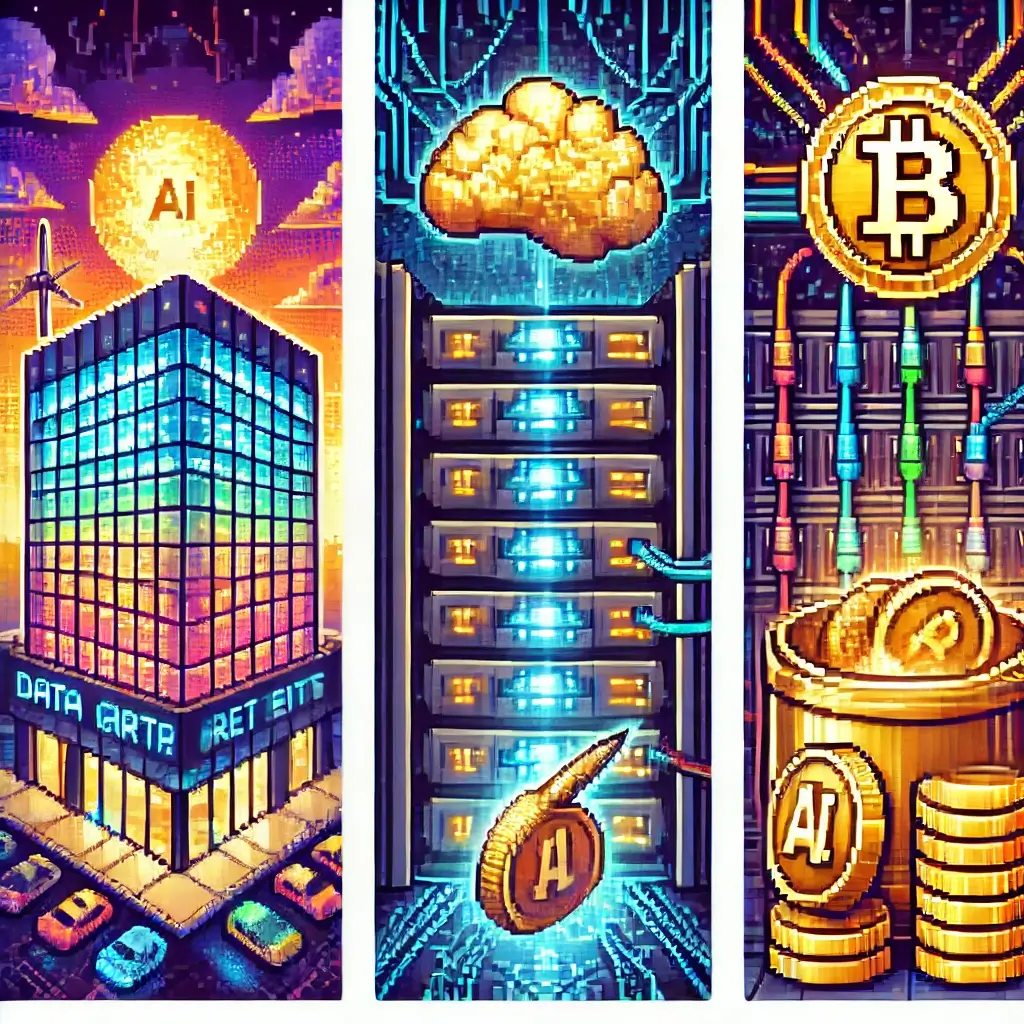
The Great Server Rush: Why Data Center REITs Are Becoming the New Digital Gold
Let’s be honest—most people never stop to think about where the internet actually lives. We scroll, we stream, we rely on AI to answer our questions, but the invisible backbone behind all of this is made possible by physical infrastructure. And that infrastructure is increasingly controlled by Data Center REITs. These real estate investment trusts have gone from being niche to becoming the very heart of the digital economy.
In this post, we’re diving deep. We’ll explore why Data Center REITs are more than just landlords with fancy server rooms, how artificial intelligence has created unprecedented demand, and why the future of technology depends on these seemingly boring yet powerful companies. This is not a passing trend; it’s a structural shift in how the global economy is wired.
To keep things organized, we’ll break this article into three big parts: the foundations, the current explosion, and the future outlook. So grab a coffee, settle in, and let’s open the doors to the world of Data Center REITs.
Table of Contents
Part 1: The Foundation of Data Center REITs
1. What Exactly Is a REIT?
A Real Estate Investment Trust, or REIT, is a company that owns or manages income-producing real estate. Think of it as a mutual fund for real estate, allowing investors to buy shares instead of whole buildings. The concept was introduced in the U.S. in the 1960s to democratize real estate ownership. While traditional REITs focus on offices, apartments, or retail malls, Data Center REITs specialize in one thing: secure, high-performance facilities for servers and networking equipment.
2. The Rise of Digital Infrastructure
The internet doesn’t float in the air—it needs a home. That home is the modern data center, a fortress-like facility engineered to handle massive amounts of data. With features like redundant power supplies, fireproof walls, biometric security, and liquid-cooling systems, these centers are designed for one mission: uptime. Every second of downtime can cost millions. This is where Data Center REITs come in—they lease out this critical space to tech giants, financial institutions, and government agencies.
3. Why Investors Care
Why would anyone invest in a building full of humming machines? Because the demand is relentless. Every new app, every new AI model, every streaming platform—it all needs servers. And servers need homes. Unlike retail malls or office towers, which can go out of style, data centers only become more essential. For investors, Data Center REITs offer stable, long-term leases and the potential for dividend growth that is tied directly to digital adoption.
4. The AI Tsunami
The arrival of artificial intelligence has changed the scale of demand. Training large models requires staggering amounts of computing power, far beyond what traditional enterprise data centers can handle. AI workloads are not steady; they spike unpredictably, consuming power and cooling at extreme levels. Data Center REITs are racing to redesign facilities with liquid immersion cooling, advanced ventilation, and access to renewable energy sources to keep up with this AI-driven hunger.
If the early internet was about e-commerce and social media, the current era is about AI. And AI does not exist in the cloud—it exists inside physical servers, packed into racks, running 24/7. The infrastructure is tangible, expensive, and absolutely necessary. Investors who ignore this reality miss the entire story of why Data Center REITs matter.
5. Power and Cooling: The Twin Challenges
Every Data Center REIT faces the same bottleneck: electricity. Running AI servers can require as much energy as a small city. Cooling them generates additional demand. This has pushed developers to seek sites near renewable energy hubs, hydroelectric plants, or regions with favorable climates. It has also sparked innovation—companies are experimenting with sub-sea data centers, liquid cooling tanks, and AI-driven energy optimization tools.
This challenge is also an opportunity. Those REITs that can secure long-term power contracts and build facilities optimized for AI workloads will dominate. For investors, this means the difference between average returns and exponential growth. The market is paying close attention to which Data Center REITs are scaling effectively and which are falling behind.
6. Why This Market Isn’t Just Another Bubble
Skeptics worry about bubbles. We’ve seen dot-com stocks crash, housing collapse, and crypto volatility. But Data Center REITs are rooted in real assets. You can visit a facility, walk through its halls, feel the cool air blasting from industrial fans. These are not speculative tokens—they are physical structures built to last decades. Long-term leases, often spanning 10–20 years, provide stable income streams. The fundamental demand for data is not a fad; it’s structural and accelerating.
In other words, Data Center REITs are not riding hype—they are enabling the infrastructure for the hype itself. Whether AI booms or blockchain takes over, whether the metaverse grows or contracts, all of it still depends on servers. And servers will always need a home.
Learn More at NareitWisdomTree Data Center ReportChilton Capital Analysis
Part 2: Market Dynamics and Strategic Shifts
7. The Colocation Conundrum
One of the most fascinating aspects of Data Center REITs is the business of colocation. In simple terms, this means renting racks and space to multiple tenants under the same roof. It’s like a skyscraper filled not with offices, but with rows of servers from dozens of different companies. On paper, colocation sounds ideal—diversification reduces risk. If one tenant leaves, another one takes its place. The revenue stream is balanced across many clients.
But in practice, colocation is a juggling act. Each client has different requirements: one may demand high power density racks, another insists on private cages, while a third requires unique cooling specifications. Balancing these needs is like running a hotel where every guest demands a custom mattress. This operational complexity is what separates average Data Center REITs from world-class operators. Those with the expertise to manage diverse workloads gain a strong competitive moat.
8. The Shift Toward High-Density AI Tenants
The AI revolution is forcing a rethink of colocation. Traditional tenants running steady workloads are now being overshadowed by AI startups and enterprise AI divisions requiring high-density infrastructure. Instead of dozens of moderate tenants, a single AI client may consume vast amounts of space and electricity. For Data Center REITs, this is both an opportunity and a risk. Higher rents can be charged, but reliance on fewer tenants increases exposure. It’s a strategic balancing act between stability and growth.
9. Hyperscalers: Friend or Foe?
Amazon Web Services, Microsoft Azure, and Google Cloud are known as hyperscalers. These giants have historically built their own data centers at breathtaking speed. For years, analysts worried that hyperscalers would squeeze out Data Center REITs entirely. Why would trillion-dollar companies rent space when they can build their own?
The answer, surprisingly, lies in capacity. The AI boom has overwhelmed even hyperscalers. The speed of demand has outpaced their ability to secure land, power, and build facilities. In this crunch, Data Center REITs have become partners rather than competitors. Hyperscalers now lease significant capacity, sometimes signing long-term contracts for entire facilities. This collaboration marks a turning point, validating the essential role of REITs in the digital economy.
10. Power Procurement as a Competitive Advantage
Behind the walls of a data center lies an invisible war: the battle for electricity. Data Center REITs are negotiating with utility providers, governments, and renewable energy projects to lock in affordable, long-term power. Those who succeed will enjoy not only lower costs but also a marketing edge—corporate clients increasingly demand sustainable energy solutions. Leasing space in a data center that runs on 100% renewable power is no longer a perk, it’s a requirement for many ESG-conscious enterprises.
11. Geographic Arbitrage in Data Centers
Not all data center locations are created equal. Some markets, like Northern Virginia, Singapore, and Dublin, have become global hubs due to connectivity, tax benefits, and available power. Data Center REITs are strategically expanding into regions where supply is scarce but demand is exploding. For example, AI adoption in Asia has created new hotspots where local governments are racing to attract operators. The result is geographic arbitrage—capturing higher rents in underserved markets while maintaining anchor operations in established hubs.
12. Risks Facing Data Center REITs
a. Rising Interest Rates
Building a modern data center can cost billions. Rising interest rates increase the cost of financing, making new construction more expensive. For Data Center REITs, this squeezes margins. However, the demand is so high that many operators can pass on costs through higher rents, partially offsetting this risk.
b. Tenant Concentration
Leasing entire facilities to hyperscalers provides stability but concentrates risk. If one tenant reduces demand or defaults, the revenue impact can be enormous. Diversification strategies remain critical, balancing big clients with smaller but steady tenants.
c. Regulatory and Environmental Challenges
Governments are increasingly concerned about energy use, water consumption, and environmental impact. Stricter regulations may raise costs. Data Center REITs that adopt green technologies early will have an edge, but those slow to adapt may face fines or reputational damage.
d. Technological Obsolescence
The rapid pace of innovation means facilities built today could be outdated tomorrow. High-density AI workloads are already forcing upgrades to cooling and electrical systems. Forward-looking Data Center REITs are designing modular facilities that can adapt, reducing the risk of stranded assets.
13. The Financial Model of Stability
Unlike speculative tech startups, Data Center REITs rely on predictable income streams. Long-term leases often include built-in rent escalators, ensuring revenue growth even during economic downturns. Dividends remain a major attraction for investors seeking yield in uncertain markets. This blend of stability and growth potential has made the sector a darling for institutional capital.
Pension funds, insurance companies, and sovereign wealth funds are allocating billions into Data Center REITs. Their reasoning is simple: as the digital economy grows, so does the need for reliable infrastructure. These investors are betting on the backbone rather than the applications. It’s a strategy akin to investing in railroads during the industrial age—the tracks may not be glamorous, but they are indispensable.
14. A Comparison to Historical Infrastructure Booms
History rarely repeats exactly, but it does rhyme. Data Center REITs today resemble railroad companies in the 19th century, telephone networks in the 20th, and cell tower REITs in the early 21st. Each represented a foundational shift in communication and commerce. Investors who identified the infrastructure behind the innovation often enjoyed generational wealth creation. The same logic applies now: servers are the new railcars, and data centers are the new railroads.
The difference this time is scale. AI, cloud computing, and digital services are converging at once, driving unprecedented demand. Unlike past infrastructure booms that played out over decades, this wave is accelerating at lightning speed. Data Center REITs must build faster, adapt quicker, and innovate continuously. For investors, this urgency translates into both risk and reward—those who act early stand to benefit the most.
📊 Data Center REITs: Growth in the AI Era
AI Demand
Over 65% of new data center leases in 2025 are driven by AI workloads.
Energy Usage
Data Center REITs consume energy equal to small cities, pushing innovation in renewable power.
Global Expansion
Markets like Asia-Pacific and Europe are experiencing the fastest REIT-driven build-outs.
💰 Where Do Data Center REIT Revenues Come From?
40%
Hyperscalers
30%
Colocation
20%
Enterprise
10%
Other
📈 Timeline of Data Center REIT Evolution
- 2010-2015: Early adoption, focused on cloud computing tenants.
- 2016-2020: Expansion into global hubs like Singapore, Frankfurt, and Dublin.
- 2021-2023: Surge in demand from streaming, IoT, and enterprise SaaS.
- 2024-2025: AI-driven mega-builds; record leasing by hyperscalers.
Part 3: The Future Outlook of Data Center REITs
15. The ESG Imperative
Environmental, Social, and Governance (ESG) considerations have become critical for global capital flows. For Data Center REITs, this means building green. Energy efficiency, renewable power sourcing, and water conservation are no longer optional—they are demanded by both regulators and tenants. Some REITs are already experimenting with solar-powered campuses, hydrogen backup systems, and advanced water recycling for cooling towers. Investors who prioritize ESG are paying close attention, rewarding operators who lead in sustainability.
16. AI, Edge Computing, and the Next Phase
The next technological frontier is edge computing—placing servers closer to users for faster processing. AI-driven applications such as autonomous vehicles, smart factories, and immersive AR/VR platforms require ultra-low latency. Data Center REITs are exploring smaller, distributed facilities at the “edge” of networks. This complements traditional mega-centers, creating a hybrid model. The infrastructure of tomorrow will not be defined by a single massive hub but by a network of interconnected facilities.
17. Geopolitics and National Security
Data is a strategic asset. Governments view it as critical to national security. Data Center REITs are increasingly navigating a geopolitical landscape where data sovereignty laws dictate where information can be stored. Tensions between major economies have already led to restrictions on cross-border data flows. For REITs, this creates both opportunity and risk—opportunity to expand into protected domestic markets, and risk of regulatory fragmentation that raises costs and complexity.
18. The Role of Artificial Intelligence in Operations
Ironically, the very technology driving demand—AI—is also transforming how Data Center REITs operate. Predictive AI models optimize cooling, forecast power usage, and prevent downtime. Robotics handle physical maintenance in high-security environments. This integration reduces costs and enhances reliability, making facilities smarter and more efficient. The future data center is not only bigger, but also more intelligent.
19. Investment Strategies for Data Center REITs
a. Direct Investment
Investors can purchase shares of listed Data Center REITs such as Equinix (EQIX) or Digital Realty (DLR). These companies operate globally and are considered leaders in the space. Direct ownership provides exposure to dividend income and capital appreciation.
b. Diversified ETFs
Exchange-Traded Funds (ETFs) focusing on digital infrastructure bundle multiple REITs together. This provides diversification across operators and geographies, reducing single-company risk. ETFs are particularly attractive for retail investors seeking simplicity.
c. Private Capital and Infrastructure Funds
Institutional investors often participate through private infrastructure funds that build and operate data centers outside public markets. These funds are raising record amounts, reflecting confidence in long-term demand. Data Center REITs benefit as private funds create joint ventures or acquire facilities, fueling industry consolidation.
d. The Dividend Appeal
A defining feature of REITs is dividend payout. U.S. law requires REITs to distribute at least 90% of taxable income to shareholders. For Data Center REITs, this means investors enjoy steady cash returns. As demand grows, dividend growth often follows, creating a powerful compounding effect.
20. Frequently Asked Questions (Extended Edition)
Q: How are Data Center REITs different from Cloud Providers?
A: Cloud providers like Amazon Web Services and Google Cloud rent computing services to end users. Data Center REITs rent the physical space and infrastructure where those servers operate. They are landlords to the cloud itself.
Q: What happens if demand slows down?
A: While short-term fluctuations exist, the long-term trajectory of data growth remains strong. Even if AI demand temporarily eases, other drivers—streaming, IoT, gaming, enterprise SaaS—continue to expand. The diversified demand base supports resilience.
Q: Are Data Center REITs recession-proof?
A: No investment is truly recession-proof, but Data Center REITs come close. Digital infrastructure is now as essential as utilities. Businesses cannot simply shut down servers without halting operations. This makes the sector relatively defensive compared to cyclical industries.
Q: Which regions will grow fastest?
A: North America remains the leader, but Asia-Pacific and Europe are accelerating rapidly. Countries with strong digital economies, such as Singapore, South Korea, and Germany, are attracting heavy investment from Data Center REITs.
Q: How does AI specifically increase demand?
A: Training AI models requires enormous clusters of GPUs and specialized cooling systems. Unlike traditional workloads, AI consumption is bursty and power-intensive. This magnifies the need for advanced data centers—exactly what Data Center REITs provide.
21. Conclusion: The Hidden Giants of the Digital Age
The story of Data Center REITs is ultimately a story about the physical foundations of the digital future. These companies may not build apps, design AI models, or run social networks, but they provide the indispensable ground beneath them. They own the walls, the power grids, and the cooling systems that make innovation possible.
As artificial intelligence grows, as digital transformation deepens, and as global connectivity expands, the demand for these facilities will only rise. Investors seeking long-term, stable exposure to the digital revolution would be wise to consider Data Center REITs. They are not speculative hype; they are the backbone of progress.
In a world obsessed with flashy headlines and overnight trends, the quiet hum of servers in climate-controlled rooms might seem mundane. But within those walls lies the infrastructure of the future—every algorithm, every transaction, every moment of digital life. Data Center REITs may be invisible to the average person, yet their impact touches every screen, every click, every AI interaction we experience daily.
Data Center REITs, AI Infrastructure, Digital Transformation, Cloud Backbone, Real Estate Innovation
🔗 Geothermal Power Plant Land Lease Posted 2025-08-22 02:37 UTC 🔗 Amusement Parks Land Investment Posted 2025-08-21 06:03 UTC 🔗 Rent-to-Own Unique Properties Posted 2025-08-20 11:43 UTC 🔗 Commercial Kitchen Incubators Posted 2025-08-20 03:30 UTC 🔗 Campsite Adventure Park Properties Posted 2025-08-19 (approx.) UTC