
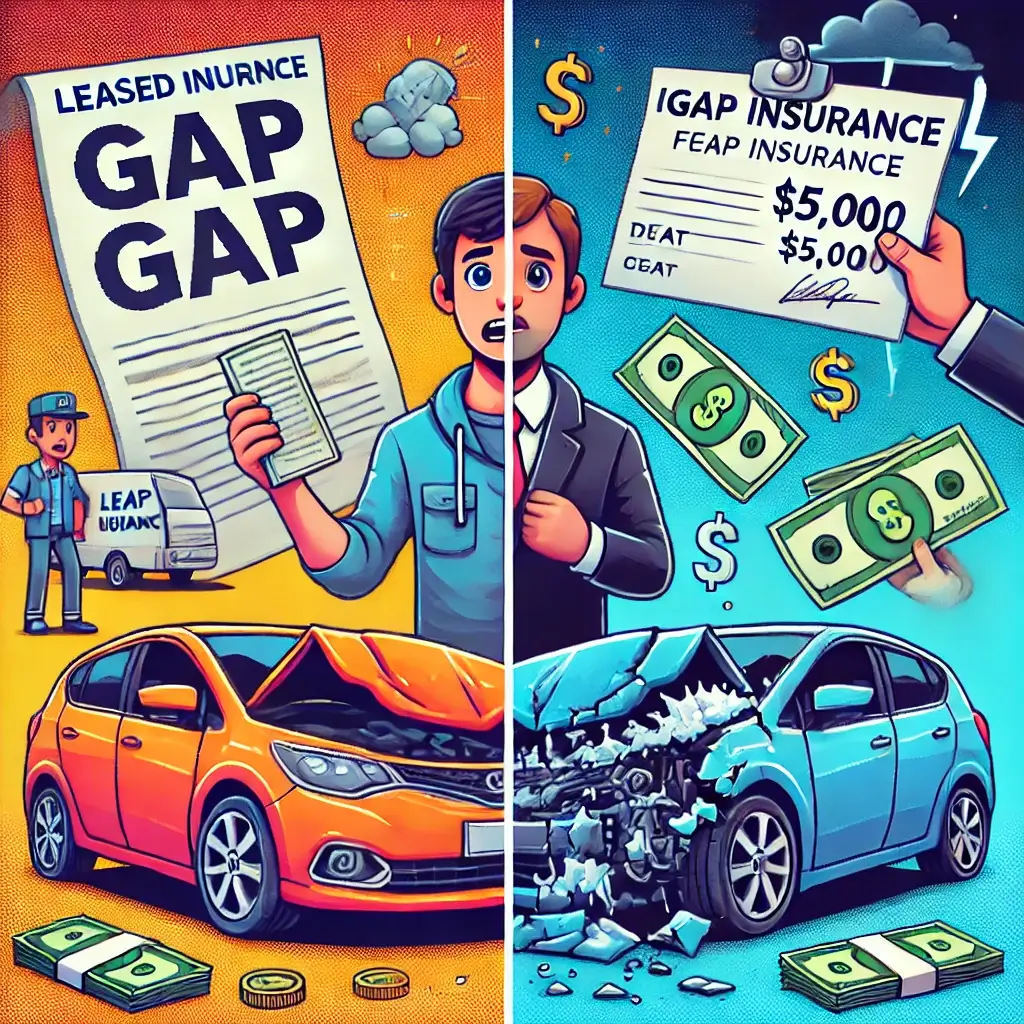
The #1 Reason 90% of Leased Car Drivers NEED GAP Insurance!
I’ve seen it happen time and time again.
A friendly face walks into my office, excited about their new car lease.
They’ve got a shiny new ride, a manageable monthly payment, and they feel like they’ve just won the lottery.
But then, disaster strikes.
A few months later, they’re in an accident, and the car is a total loss.
That’s when the fun stops, and the cold, hard reality of the “gap” hits them square in the face.
They find themselves owing thousands, sometimes tens of thousands, of dollars on a car that no longer exists.
And the look on their face… well, it’s a look of pure shock and disbelief.
It’s a look that says, “Why didn’t anyone tell me about this?”
That’s why I’m writing this for you today.
So you don’t become one of those people.
This isn’t a lecture; it’s a conversation between two people who want to make sure you’re protected.
Consider this your friendly guide to understanding **GAP insurance for your leased vehicle**.
Trust me, it’s a lot less scary than it sounds, and it could save you from a financial nightmare.
Let’s dive in.
—
Table of Contents
—
What is the “Gap” and Why it Matters
Let’s get right to the point.
The “gap” is the difference between what you still owe on your leased car and what your standard car insurance company is willing to pay you if the vehicle is totaled or stolen.
It’s a little-known, but critically important, concept for anyone who leases a car.
When you lease a car, its value starts to drop the second you drive it off the lot.
This is called depreciation, and it happens faster than you might think.
In fact, many cars can lose 20% or more of their value in the first year alone.
At the same time, the amount you owe on your lease doesn’t drop as quickly.
This creates a situation where, for most of your lease term, you owe more on the car than it’s actually worth.
This is the “gap.”
Let’s say your new leased car is worth $35,000 when you drive it off the lot.
After a year, it might only be worth $28,000, but you might still owe $32,000 on the lease.
If the car is totaled, your insurance company will look at the actual cash value of the vehicle—the $28,000.
They’ll cut you a check for that amount, minus your deductible, and call it a day.
But you still owe the leasing company $32,000.
That’s a $4,000 difference that you, the driver, are responsible for.
And that’s a debt you have to pay out of your own pocket for a car you no longer have.
Doesn’t sound fair, does it?
—
GAP Insurance for Leased Vehicles: An Essential Protection
This is where **GAP insurance for a leased vehicle** comes in to save the day.
It’s an acronym for Guaranteed Asset Protection.
In simple terms, it’s a specialized type of insurance that covers the “gap” we just talked about.
It’s designed to pay the difference between the actual cash value of your car and the remaining balance on your lease.
So, in our previous example, that $4,000 would be covered by your GAP insurance policy.
You walk away from the totaled car without owing a single cent.
Now, I know what you might be thinking.
“Is this something I really need?”
The answer, for most people who lease a car, is a resounding **yes**.
Leasing companies often require you to have full coverage insurance, but that’s usually not enough to cover the gap.
They want to ensure their asset is protected, and GAP insurance is the tool that makes that happen.
It’s a small cost that provides an immense amount of peace of mind.
I can’t tell you how many times I’ve seen clients breathe a massive sigh of relief when they realize they have this coverage.
It turns a devastating financial loss into a manageable situation.
And that’s priceless.
—
How GAP Insurance for a Leased Vehicle Works in a Real-Life Scenario
Okay, let’s get a bit more personal here.
Let me tell you about a client of mine, let’s call her Sarah.
Sarah was a smart, young professional who leased a brand new sedan.
The car was a total dream for her.
One rainy Tuesday morning, she was on her way to work when she was rear-ended on the highway.
Thankfully, she was okay, but her beautiful new car was completely wrecked.
It was a total loss.
Now, at the time of the accident, she still owed $28,000 on her lease.
Her insurance company, after assessing the damage, determined the car’s actual cash value was only $22,000.
Do you see that gap?
That’s a $6,000 difference that Sarah would have had to pay the leasing company, all while trying to figure out how to get to work without a car.
But here’s the good news.
When she first leased the car, I strongly recommended she get **GAP insurance for her leased vehicle**.
She listened, and she paid a small extra fee to have it included in her policy.
Her insurance company paid the $22,000 to the leasing company, and then her GAP insurance policy kicked in and paid the remaining $6,000.
Sarah walked away from the entire situation without owing a single cent.
She was able to move on with her life, save up for a new down payment, and not be saddled with a massive debt for a car she no longer had.
That’s the power of this kind of coverage.
It’s not just about protecting the car; it’s about protecting your financial future.
It’s about having a safety net in place so that when life throws a curveball, you’re not left completely exposed.
—
The Three Ways to Get GAP Insurance for Your Leased Vehicle
So, you’re convinced you need it.
The next question is, “How do I get it?”
Luckily, you have a few options.
The three main ways to get **GAP insurance for a leased vehicle** are through the dealership, your insurance company, or your bank/credit union.
Each one has its pros and cons, and it’s important to understand them so you can make the best choice for your situation.
Let’s break them down one by one.
—
The Dealership Option
This is probably the most common way people get GAP insurance.
When you’re in the finance office signing all the papers for your new lease, the finance manager will almost certainly offer you GAP insurance as an add-on.
It’s convenient because you can roll the cost right into your monthly lease payment.
It’s all handled in one place, one time, and you don’t have to think about it again.
However, it’s often the most expensive option.
Dealerships often mark up the price of GAP insurance significantly, and because the cost is bundled into your lease, you end up paying interest on it for the entire lease term.
This can make a simple $300-$500 policy turn into a much larger expense over time.
My advice?
Never just blindly accept the dealership’s offer.
Always do your homework and compare prices.
—
The Insurance Company Option
This is often the smartest choice for many people.
Many major insurance companies offer **GAP insurance for leased vehicles** as an add-on to your standard policy.
The cost is typically much lower than what you’d get from a dealership, often just a small extra amount on your monthly premium.
And because it’s tied to your auto insurance, you can often save money by bundling it with other coverage.
The only drawback is that you have to be proactive about it.
You have to remember to call your insurance agent and ask for it.
It won’t automatically be included, and if you forget, you’re not protected.
So, as soon as you’ve signed the lease papers, make that call.
It takes five minutes and could save you a world of trouble.
—
The Bank or Credit Union Option
This is a less common but still viable option.
Some banks and credit unions that provide auto loans also offer **GAP insurance for leased vehicles** directly.
The pricing is usually competitive, and it can be a good alternative if you don’t want to get it from the dealership and your insurance company doesn’t offer it.
The process can sometimes be a little more involved, but the potential savings are often worth the extra effort.
It’s always a good idea to check with your personal bank or credit union to see what they offer.
You might be surprised by the deals you can find.
—
My Advice on Where to Buy It
Here’s my two cents, based on years of experience.
Start with your own insurance company.
They already know you, they know your driving record, and they can often give you the best rate.
It’s the path of least resistance and often the most cost-effective.
If they don’t offer it, or if their price is too high, then look into your bank or credit union.
Finally, if those two options don’t work out, you can always go back to the dealership.
But you’ll be going back armed with knowledge, and you’ll be in a much better position to negotiate.
Remember, never be afraid to ask questions and compare prices.
It’s your money, and you deserve to get the best value for your protection.
—
But Is GAP Insurance for a Leased Vehicle Really Worth It?
I get this question all the time.
“Is it just another add-on they’re trying to sell me?”
The simple, honest, and direct answer is: **Yes, it is absolutely worth it.**
And here’s why.
The primary goal of GAP insurance is to protect you from financial ruin in the event of an accident or theft.
It’s a small investment to protect a potentially massive liability.
Think of it like an umbrella on a rainy day.
You don’t need it every day, but when you do, you’ll be incredibly grateful you have it.
The cost of GAP insurance is often just a few hundred dollars for the entire term of your lease.
Compare that to the thousands, or even tens of thousands, of dollars you could owe if you don’t have it.
It’s an investment in your peace of mind and your financial health.
I’ve seen too many people try to save a few bucks by skipping this coverage, only to regret it deeply later.
Don’t be one of them.
—
The Real Cost of Not Having GAP Insurance for Your Leased Vehicle
Let’s get back to that feeling of dread I mentioned at the beginning.
The feeling of owing money on a car you no longer have.
When you have to pay that “gap” out of your own pocket, it can be a devastating blow to your finances.
It can affect your credit score, your ability to get another car, and your overall financial stability.
It’s not just about the money; it’s about the stress, the sleepless nights, and the feeling of being completely overwhelmed.
Imagine you’re in the middle of your lease, and your car is totaled.
You suddenly have to come up with $5,000, $8,000, or even more.
That’s money you might have been saving for a down payment on a house, a vacation, or your kid’s college fund.
It’s a hit you just can’t afford to take.
But with **GAP insurance for your leased vehicle**, that burden is lifted from your shoulders.
You can focus on what’s important: getting a new car and moving on with your life.
—
Final Thoughts on Protecting Your Leased Vehicle
Leasing a car can be a fantastic way to drive a new, reliable vehicle without the burden of a massive down payment.
But it comes with a unique set of risks, and the “gap” is the biggest one.
Do yourself a favor.
When you’re considering a lease, make a plan to get **GAP insurance for your leased vehicle**.
It’s not a luxury; it’s a necessity.
It’s the single most important decision you can make to protect your finances and your peace of mind.
Don’t leave yourself exposed to a financial disaster.
Protect yourself, and drive with confidence.
—
GAP insurance, leased vehicle, financial protection, car insurance, depreciation