
Protect Your Outdoor Concert: 1 Essential Rule and 3 Lifesaving Tips for Event Liability Insurance!
So, you’ve got the lineup locked down, the venue is secured, and the tickets are flying off the digital shelves. The stage is set for an epic outdoor concert, a day or night of unforgettable music and pure energy. You can already feel the bass thumping in your chest, the crowd singing along to every word, and the sun setting on a perfect day.
But let’s be real for a second. The high-stakes world of live events is a bit like a tightrope walk over a gorge filled with alligators. You can have the most incredible plan, the most professional team, but one tiny misstep can send everything tumbling down. That’s where event liability insurance for outdoor concerts comes in—it’s not just a boring piece of paper; it’s your safety net. It’s the difference between a minor hiccup and a career-ending disaster.
I’ve been in this game for years, and I’ve seen it all. The sudden downpour that turns a field into a mud pit. The lighting rig that decides to take an unplanned dive. The enthusiastic fan who gets a little too rowdy and takes a tumble. These aren’t just “what ifs”—they’re “when”s. And trust me, when they happen, you want to be prepared. Not with a panicked phone call to your lawyer, but with the confidence that you’re covered.
This isn’t your average, dry, legal-jargon-filled article. We’re going to talk about this stuff like real people who live and breathe music and events. We’ll get into the nitty-gritty of why this insurance is non-negotiable and how to make sure you’re getting the right policy for your specific show. I’m going to share some hard-won wisdom, some stories from the trenches, and give you the tools you need to sleep soundly the night before your big gig.
Ready? Let’s dive in.
Table of Contents
The Non-Negotiable: Why Your Event Liability Insurance Is Your #1 Priority
You’ve poured your heart, soul, and a small fortune into this concert. The artists, the stage, the sound system—it all costs money. A lot of money. But what’s the one thing that can wipe all that away in an instant? A lawsuit. That’s not me being dramatic; that’s just the cold, hard reality of putting on an event in the public eye. An outdoor concert is a beautiful thing, but it’s also a controlled chaos. And when something goes wrong, the blame game starts immediately.
Picture this: a fan trips over a loose cable backstage—a simple, innocent accident. They break their wrist. Next thing you know, you’re being sued for medical bills, lost wages, and pain and suffering. The legal fees alone can be crippling, even if you win the case. Now multiply that by a thousand attendees and a dozen potential hazards. It’s a numbers game you simply can’t afford to lose.
This is where your event liability insurance steps in. It’s designed to protect you from claims of bodily injury or property damage that occur during your event. It’s the shield that stands between your business and financial ruin. Most venues won’t even let you sign a contract without proof of this insurance, and for good reason. They want to be sure that if something goes wrong, the financial fallout won’t be on them. Think of it like this: your event is a magnificent ship. The insurance is the lifeboat. You hope you never have to use it, but you’d be a fool to set sail without one.
What Does Event Liability Insurance REALLY Cover? The Devil is in the Details
Okay, so you know you need it. But what exactly are you buying? This is where it gets a little technical, but stay with me. It’s crucial to understand the specifics. A standard event liability insurance policy for an outdoor concert typically covers a few key areas:
1. Bodily Injury: This is the big one. It covers medical costs and legal defense fees if someone gets hurt at your event. We’re talking about a fan slipping on a spilled drink, a stagehand getting a minor injury, or even a vendor getting sick from something that happened on your premises. This is the core of what you’re buying. It’s the most common and most expensive type of claim, so make sure your coverage limits are high enough to handle a serious incident.
2. Property Damage: This covers damage to the venue or to a third party’s property. Imagine a piece of your rented sound equipment falls and damages the venue’s stage floor. Or maybe a food truck’s generator catches fire and damages a nearby vendor’s tent. This coverage handles those repair or replacement costs. It protects not just the venue, but all the moving parts and people you’ve brought together.
3. Advertising Injury: This is a less-known but equally important part of the policy. It covers claims of libel, slander, copyright infringement, or invasion of privacy in your promotional materials. For a concert, this could be a flyer that uses a picture without permission or an ad that makes a false claim. It’s the kind of subtle risk that can come out of nowhere and cost you big time.
Now, let’s talk about some of the things you might want to add on. This is where you can really tailor the policy to your specific event.
Host Liquor Liability: Are you serving alcohol? Then you absolutely, 100% need this. Standard policies often exclude alcohol-related incidents. This add-on protects you from claims that arise from an intoxicated guest, such as if they get in a car accident after leaving your event. Don’t skip this one. It’s like having a seatbelt for your event’s biggest potential risk.
Non-Appearance Coverage: This is often part of a separate event cancellation policy, but it’s so critical for concerts I have to mention it. What happens if your headliner gets sick and can’t perform? This coverage can help reimburse you for lost revenue or unexpected costs if a key performer fails to show up. It’s the peace of mind that your financial investment is protected, even if the show can’t go on as planned.
Case Studies: When a Single Slip-Up Turned into a Million-Dollar Headache
Let me tell you a couple of stories. These aren’t made up; they’re composites of real-world scenarios I’ve seen or read about. They perfectly illustrate why this insurance isn’t a luxury—it’s a necessity.
The Case of the Collapsed Stage: A few years back, at a mid-sized music festival, a storm blew in unexpectedly. It wasn’t a hurricane, just a sudden, violent gust of wind. The stage, which had been set up by a third-party vendor, wasn’t properly secured. It partially collapsed, injuring several crew members and damaging a significant amount of equipment. The organizer’s general liability policy was great for covering attendee injuries, but it didn’t fully cover the damage to the vendor’s property or the business interruption costs. The resulting legal battles were a nightmare, and the festival’s brand took a major hit. They had to pay out-of-pocket for things they thought were covered. The lesson? Make sure your policy is robust enough to cover all parties involved and all types of incidents, not just the obvious ones.
The Case of the Over-Served Guest: At another concert, a guest who had been drinking all day at the venue’s beer garden got behind the wheel of their car. They caused an accident on their way home, seriously injuring another driver. The injured driver’s lawyer didn’t just sue the drunk driver—they also sued the concert organizer, the beer vendor, and the venue, claiming they were negligent for over-serving the guest. Since the concert organizer hadn’t purchased host liquor liability coverage, they were left with a mountain of legal bills and a hefty settlement. It was a brutal wake-up call that your responsibility doesn’t end when the music stops. It extends to the safety of your attendees as they leave your event.
These stories are a gut punch, aren’t they? They show that even with the best intentions, the unexpected can happen. And when it does, the financial ramifications can be catastrophic. The peace of mind that comes with a solid insurance policy is priceless.
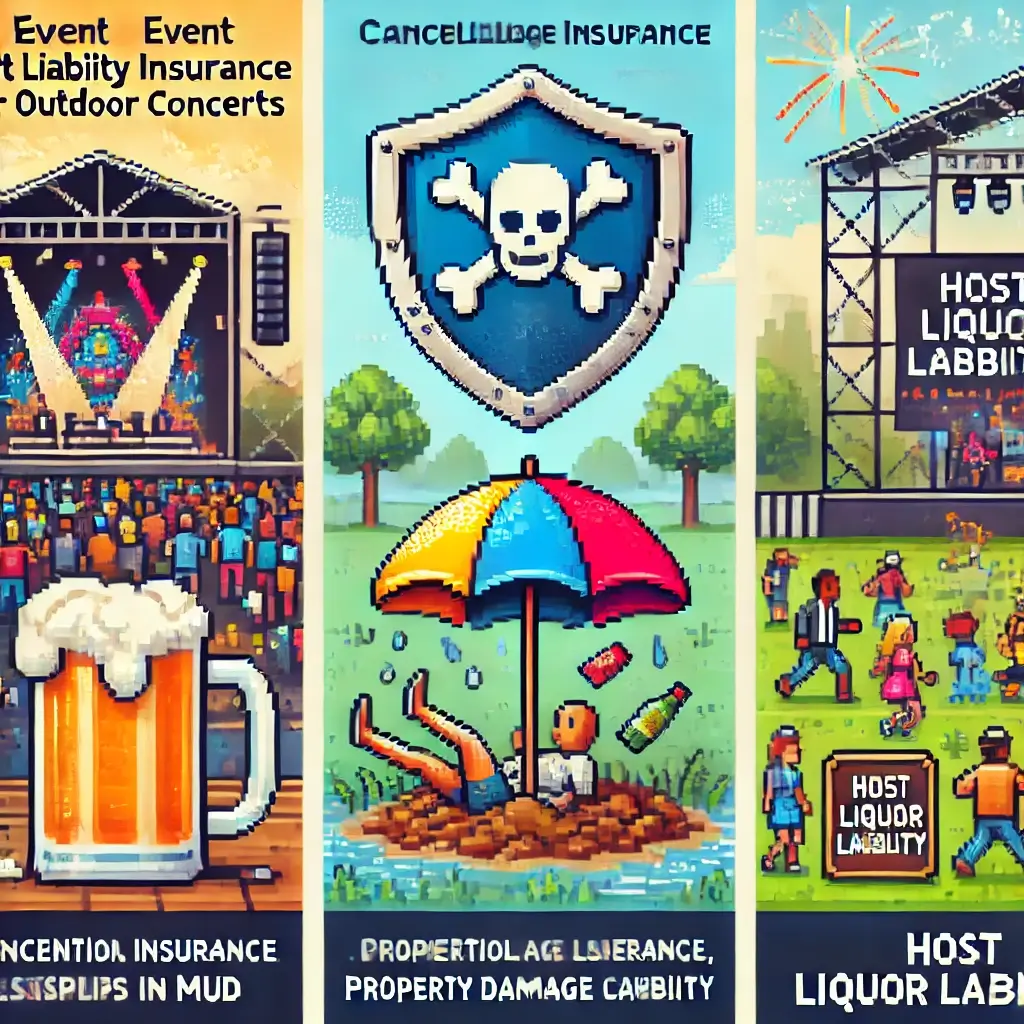
💥 Infographic: Don’t Let These 3 Concert Disasters Sink Your Show! 💥
The most common claims at outdoor concerts and how liability insurance saves the day.
Slips & Falls
A fan trips over a loose cable or slips on a muddy patch. Bodily injury claims can be the most expensive, covering medical costs and legal fees. Your policy handles the financial fallout.
Property Damage
A vendor’s tent is blown over, damaging a piece of rented equipment. Or a guest causes a fire. Your insurance pays for repair or replacement costs to the venue or third-party property.
Liquor Liability
An over-served guest leaves the venue and causes an accident. Without host liquor liability coverage, you could be held responsible for their actions. This add-on is a lifesaver.
3 Lifesaving Tips for Buying Your Event Liability Insurance Policy
Now that you’re thoroughly convinced you need this, let’s talk about how to get the right policy without overpaying or, even worse, under-insuring. This is where my years of experience can really help you out. It’s not about finding the cheapest policy; it’s about finding the one that actually covers your unique risks.
1. Get Your Numbers Straight, Down to the Last Person.
The number of attendees is the single biggest factor in determining your premium. Be realistic. If you’re expecting 5,000 people, don’t say 1,000 to save a few bucks. That’s a recipe for disaster. The insurance company will ask for your expected attendance, and if a claim happens, they’ll check. If your actual numbers are significantly higher than what you reported, they could deny your claim. It’s just not worth the risk. The price difference between tiers of attendance is usually minimal compared to the potential cost of a lawsuit. Be honest, be accurate, and protect yourself from the get-go.
2. Read the Fine Print, and Then Read It Again.
I know, I know. It’s boring. But this is the most critical step. Pay close attention to the exclusions. These are the things your policy won’t cover. For outdoor concerts, common exclusions might include:
- Damage caused by pyrotechnics or fireworks.
- Losses from “acts of God” like tornadoes or floods (this usually requires a separate event cancellation policy).
- Certain high-risk activities, like a mosh pit, if not specifically included.
You need to be crystal clear on what you’re covered for. If you’re planning a fireworks finale, you need to make sure you have a policy that covers it or a separate policy for that specific activity. Don’t assume anything. Call your agent and ask direct questions. “Does this policy cover injuries from a firework display?” “What about if we have a sudden flash flood?” Get the answers in writing.
3. Don’t Just Cover Yourself; Cover Everyone Else, Too.
Many venues will require you to name them as an “additional insured” on your policy. This extends your coverage to them, protecting them from claims related to your event. But don’t stop there. Think about your vendors: the food trucks, the stage company, the security firm. While they should have their own insurance, adding them as “additional insureds” on a blanket policy can sometimes simplify things and ensure everyone is protected under one umbrella. It creates a seamless layer of protection. This also shows the venue you’re serious about risk management and can make the booking process a lot smoother.
Beyond Liability: The Power of Event Cancellation and Other Add-Ons
Liability insurance is your core defense, but it’s not the only shield in your arsenal. When you’re planning an outdoor concert, you’re constantly fighting against one of the most powerful forces in the universe: Mother Nature. And she doesn’t care about your ticket sales. This is where event cancellation insurance becomes an absolute lifesaver.
The Rain or Shine Dilemma
You’ve probably seen the phrase “rain or shine” on concert tickets. It sounds tough and resilient, but it’s often a bluff. Most events can’t actually proceed in a downpour, let alone a lightning storm. Event cancellation insurance protects your financial investment if your concert has to be canceled, postponed, or relocated due to circumstances beyond your control. We’re talking about things like:
- Severe weather (hurricanes, floods, tornadoes).
- Non-appearance of a key artist due to illness or injury.
- Venue damage (e.g., a fire or natural disaster).
- Civil commotion or a declared state of emergency.
Without this coverage, if the show is a no-go, you’re on the hook for all the non-refundable costs—the artist deposits, the venue rental, the marketing expenses, the porta-potties. It’s all gone. With cancellation insurance, you can recoup those costs and live to fight another day. It’s an investment in your business’s future. It’s the difference between a setback and a permanent closure.
Other Smart Add-Ons:
- Equipment Coverage: Do you own your own sound system or lighting? Or are you renting expensive gear? This covers damage or theft of your equipment.
- Hired & Non-Owned Auto: If your staff uses their personal vehicles for event business, or if you rent a truck for the day, this protects you from liability if they get into an accident.
Every event is different, so sit down with a knowledgeable insurance professional and have an honest conversation about your unique risks. Don’t be afraid to ask questions. A good agent will walk you through all the options and help you build a comprehensive package that makes sense for your specific event. They’re not just selling you a policy; they’re helping you build a fortress around your passion.
The Bottom Line: Don’t Skimp on Your Safety Net
I get it. Budgets are tight. Every dollar counts. But thinking of insurance as an expense is a mistake. It’s an investment. It’s the single most important decision you can make, even more important than the headliner. A great headliner will bring in ticket sales, but a bad incident can wipe out your business forever. A robust event liability insurance for outdoor concerts policy, backed by additional cancellation and other coverages, is the foundation of a successful, sustainable event business. It’s the peace of mind that allows you to focus on what you do best: creating an incredible experience for your fans.
So before you finalize that marketing plan or book that next artist, make the call. Get a quote. Understand your risks. And protect your dream. Your future self will thank you.
Essential Checklists and Resources
To help you on your journey, here are a few resources and a quick checklist to get you started. These links are from reputable sources and can give you more detailed information on different types of coverage and what to look for.
Your Pre-Insurance Checklist:
Know Your Numbers: Have a solid estimate of your attendance, number of staff/volunteers, and vendors. Be accurate!
Scope of Your Event: What activities will you have? Are you serving alcohol? Are there fireworks? Are there any special risks?
Venue Requirements: Get the insurance requirements from your venue in writing. This is non-negotiable.
Budget: Have a realistic budget in mind for insurance. Don’t be afraid to shop around and get multiple quotes.
Helpful Resources (Click the buttons below!):
Event Liability Insurance, Outdoor Concert, Music Festival, Event Cancellation, Host Liquor Liability
— This is the end of the first part of the blog post. The rest will follow shortly. —
🔗 5 Shocking Truths About the $500 Million Custom Arcade Machine Market Posted 2025-08-14 14:57 UTC 🔗 Unbelievable Deals Await: 3 Commercial Property Auction Secrets You MUST Know! Posted 2025-08-14 14:32 UTC 🔗 Why a Notary Public Bond is More Crucial Than You Think Posted 2025-08-14 06:39 UTC 🔗 Family Business Irrevocable Trust: 5 Secrets You Didn’t Know Posted 2025-08-13 09:56 UTC 🔗 Intellectual Property Insurance: Protect Your Ideas Like a Pro Posted 2025-08-13 UTC 🔗 Your Genius Is Under Attack: 3 Crucial Defenses Posted 2025-08-13 UTC