
Hey there, fellow vintage enthusiasts!
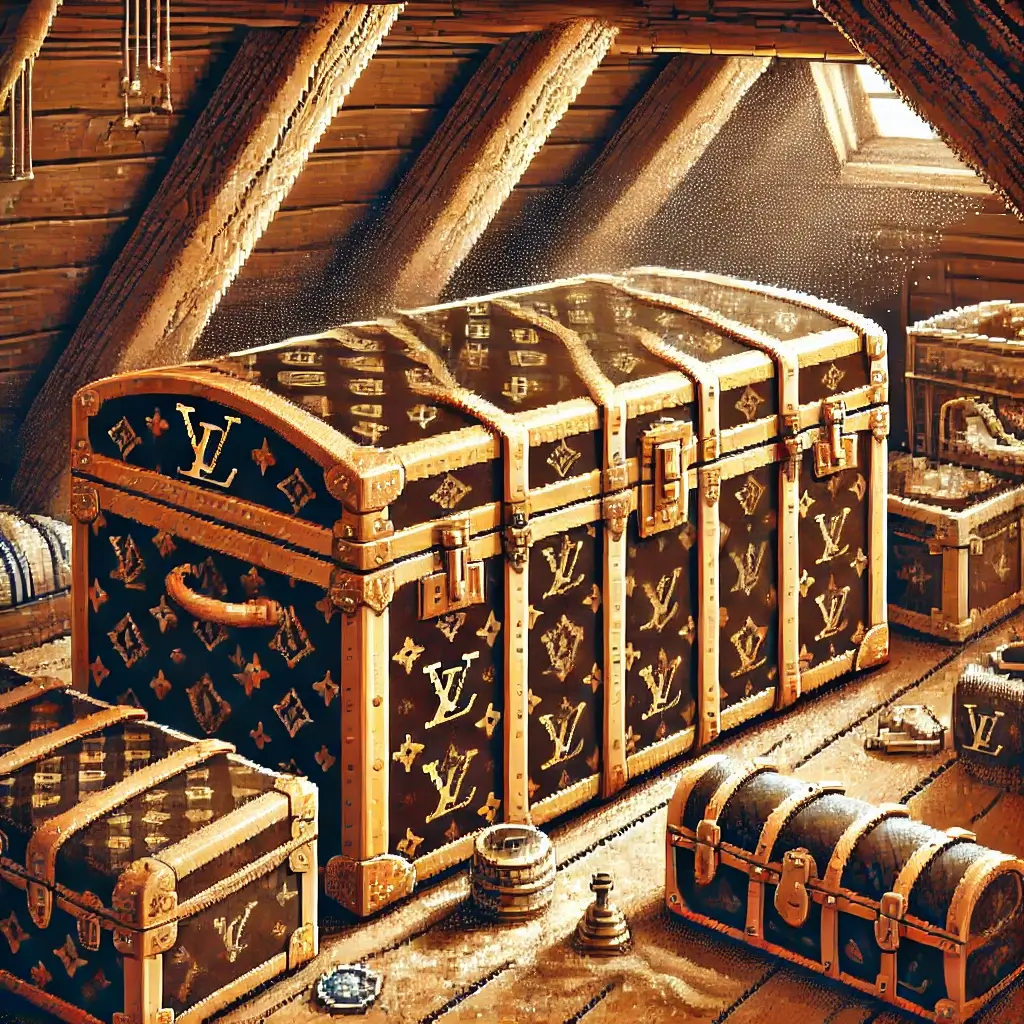
Have you ever stumbled upon an old, forgotten Louis Vuitton trunk and felt that undeniable tug of history?
That thrilling whisper of journeys taken and stories untold?
I know the feeling exactly.
It’s like unearthing a treasure chest, but instead of gold, you find something far more precious: a tangible piece of luxury travel history.
And let’s be honest, there’s a unique allure to these vintage beauties that modern luggage, no matter how chic, just can’t replicate.
They exude character, an unspoken elegance that only comes with age and a lifetime of adventures.
As someone who’s spent countless hours poring over these magnificent relics, I can tell you, the journey of restoring and preserving an antique Louis Vuitton trunk is not just a hobby; it’s a passion, a deep dive into the artistry of a bygone era.
It’s about honoring the legacy, piece by painstaking piece.
So, if you’ve got a dusty old trunk lurking in your attic, or if you’re dreaming of acquiring one, you’re in the right place.
We’re about to embark on an incredible adventure together, unveiling the secrets to bringing these magnificent pieces of art back to their former glory.
Trust me, it’s incredibly rewarding. —
7 Miraculous Steps to Revitalize Your Antique Louis Vuitton Trunk!
—
Table of Contents
—
Introduction: The Allure of Vintage Louis Vuitton Trunks
There’s something truly magical about antique Louis Vuitton trunks, isn’t there?
They’re not just luggage; they’re artifacts, testaments to a golden age of travel, when journeys were grand adventures and every piece of baggage told a story.
Imagine the intrepid explorers, the glamorous socialites, the famous artists who might have owned these very trunks.
Each scuff, each worn corner, is a silent witness to a past life, a whispered tale of distant lands and elegant voyages.
I’ve often found myself lost in thought, tracing the monograms and imagining the world they once inhabited.
It’s a romantic notion, I know, but it’s part of what makes restoring these pieces so incredibly captivating.
Unlike mass-produced items of today, these trunks were meticulously handcrafted, designed to withstand the rigors of long-distance travel while still exuding unparalleled luxury.
The solid brass hardware, the supple leather, the iconic canvas – every component speaks of a commitment to quality that is rarely seen anymore.
It’s a tangible link to a different time, a time when craftsmanship was paramount and true luxury was built to last.
That’s why, for many of us, bringing an antique Louis Vuitton trunk back to life is more than just a restoration project; it’s a pilgrimage.
—
Why Bother Restoring an Antique Louis Vuitton Trunk?
Okay, so you might be thinking, “Why go through all this trouble for an old trunk?”
That’s a fair question, and one I get asked a lot.
My answer is always multifaceted, because the benefits of restoring an antique Louis Vuitton trunk are numerous and truly compelling.
First and foremost, there’s the **historical preservation** aspect.
These trunks are more than just functional items; they are pieces of history, reflecting the travel habits, social status, and design aesthetics of their era.
By restoring them, we’re not just fixing a damaged object; we’re preserving a tangible link to the past, ensuring that future generations can appreciate the artistry and ingenuity of Louis Vuitton’s early days.
It’s like being a curator of your own mini-museum.
Then there’s the **aesthetic and decorative value**.
A well-restored Louis Vuitton trunk is an absolute showstopper.
Imagine it as a coffee table, a unique storage solution, or simply a magnificent statement piece in your home or office.
It instantly elevates any space, adding a touch of timeless elegance and a fascinating conversation starter.
I’ve seen trunks transformed from dusty relics into breathtaking focal points – it’s truly amazing what a little TLC can achieve.
And let’s not forget the **investment potential**.
While I always advocate for restoration out of love for the piece, it’s undeniable that antique Louis Vuitton trunks, especially well-preserved or expertly restored ones, can appreciate significantly in value.
They are highly sought after by collectors and enthusiasts worldwide.
Think of it this way: you’re not just spending time and effort; you’re investing in an appreciating asset that brings immense joy.
Finally, there’s the sheer **personal satisfaction**.
There’s a profound sense of accomplishment that comes from taking something worn and neglected and carefully, patiently, transforming it back into a thing of beauty.
Each step of the restoration process, from the initial cleaning to the final polishing, is a rewarding journey of discovery and craftsmanship.
It’s a hands-on experience that connects you directly to the object and its history.
For me, it’s a meditative process, a true labor of love. —
Step 1: Authenticating Your Treasure – Is It Really a Louis Vuitton Trunk?
Before you even think about cleaning or repairing anything, the absolute first step, and arguably the most crucial, is to confirm that your trunk is indeed an authentic Louis Vuitton.
Trust me, there are a lot of fakes and “inspired by” pieces out there, and you don’t want to invest time, effort, and money into restoring something that isn’t the real deal.
This step is all about playing detective!
One of the first things to look for is the **Louis Vuitton monogram or pattern**.
Early trunks often featured striped canvas (the Trianon Grey, Rayée, or Damier patterns) before the iconic Monogram canvas was introduced in 1896.
Examine the pattern closely.
On authentic Monogram canvas, the “LV” interlocking initials and the quatrefoils and flowers should be symmetrical and consistently aligned.
The pattern should also be continuous and uninterrupted, even over hardware like locks and clasps, indicating that the canvas was applied as a single, large piece before the hardware was installed.
This attention to detail is a hallmark of genuine Louis Vuitton craftsmanship.
Next, turn your attention to the **hardware**.
Authentic Louis Vuitton trunks feature solid brass hardware, not plated brass or other metals.
Look for the “Louis Vuitton” engraving on the locks, latches, and sometimes even the nails or studs.
The engraving should be crisp, clear, and precisely executed, not shallow or sloppy.
Many locks will also have serial numbers.
The quality of the brass should feel substantial, and it will often show a beautiful patina developed over decades.
Don’t forget to check the **leather trim**.
Authentic Louis Vuitton trunks typically feature high-quality leather, often cowhide, which develops a beautiful honey patina over time.
Feel the leather – it should be thick, supple, and strong.
Examine the stitching; it should be perfectly even, straight, and strong, reflecting the meticulous hand-stitching techniques used by Louis Vuitton artisans.
A quick peek at the **interior** is also vital.
Many vintage trunks were lined with a specific material, often a cream-colored fabric or a fine linen, and sometimes even a quilted pattern.
Look for any internal labels or stamps.
The presence of a serial number, though not always conclusive on its own for very old trunks, can be helpful when cross-referenced with other indicators.
Finally, and this is where expertise truly comes in, consult **reference materials and trusted experts**.
There are numerous books and online resources dedicated to authenticating Louis Vuitton trunks.
If you’re unsure, it’s always best to get a professional appraisal from an expert in antique Louis Vuitton.
They can spot details that an untrained eye might miss.
It’s worth the small investment to ensure you’re working with a genuine piece.
Here’s a fantastic resource for deeper dives into authentication:
Step 2: Assessing the Damage – A Full Health Check for Your Louis Vuitton Trunk
Alright, so you’ve confirmed your trunk is the real deal.
Congratulations!
Now comes the less glamorous, but equally critical, part: a thorough assessment of its condition.
Think of this as a doctor’s examination for your beloved trunk.
You need to understand exactly what you’re up against before you start any work.
Grab a notepad, a pen, and a good light source.
Start by examining the **exterior canvas**.
Is it the classic Monogram, Damier, or a striped canvas?
Look for tears, rips, or significant scuffs.
Is there any bubbling or separation of the canvas from the underlying wood?
Are there any areas of discoloration, fading, or stubborn stains?
Pay close attention to the corners and edges, as these are often the first areas to show wear and tear.
Next, move to the **leather trim and strapping**.
Is the leather dry, cracked, or brittle?
Are any straps broken or missing?
Check the integrity of the stitching – is it intact, or are there loose threads and open seams?
The leather handles are often quite worn, so check for their strength and whether they’re still securely attached.
Now, for the **hardware – the locks, latches, corner protectors, and studs**.
Are they rusty, tarnished, or pitted?
Do the locks function properly, or are they jammed?
Are any pieces of hardware missing or bent?
The brass components are often the heart of the trunk’s aesthetic appeal, so their condition is important.
Don’t forget the **wooden slats or battens**.
These are usually made of beechwood and provide structural integrity.
Are they cracked, split, or warped?
Are they still firmly attached to the trunk body?
They often bear the brunt of impacts, so check them thoroughly.
Finally, open the trunk and inspect the **interior**.
Is the lining stained, torn, or crumbling?
Does it have any unpleasant odors (mold, mildew, smoke)?
Are there any missing trays, compartments, or labels?
Check the interior hinges and stays to ensure they are functional and secure.
As you go through this assessment, make detailed notes and take plenty of photos.
This will serve as your roadmap for the restoration process and will help you prioritize what needs attention first.
Be realistic about what you can tackle yourself and what might require professional help.
Sometimes, the most loving thing you can do for a trunk is to admit when it’s beyond your skill set and seek out a specialist. —
Step 3: Gathering Your Arsenal – Essential Tools and Materials for Louis Vuitton Trunk Restoration
Alright, you’ve authenticated your trunk and assessed its condition.
Now for the fun part – assembling your toolkit!
Think of yourself as a surgeon preparing for a delicate operation; you need the right instruments to do the job properly without causing further harm.
Skimping on quality here can lead to regrettable mistakes, so invest wisely.
First up, for **cleaning**, you’ll need a range of soft brushes – a soft-bristled toothbrush for crevices, a larger soft brush for general dusting, and maybe a horsehair brush for a gentle polish.
Microfiber cloths are your best friends for wiping and buffing.
For solutions, distilled water is essential.
You might also need a very mild, pH-neutral soap (like a gentle saddle soap for leather or a specific canvas cleaner), and denatured alcohol for specific spot cleaning on hardware, but always test in an inconspicuous area first!
For **leather care**, you’ll want a good quality leather cleaner and a separate, high-quality leather conditioner.
Avoid anything with harsh chemicals or silicone, as these can damage vintage leather over time.
Neatsfoot oil can be used sparingly and carefully on very dry, unconditioned leather, but it can darken the patina, so proceed with caution and test.
When it comes to **hardware restoration**, a range of small screwdrivers (flathead and Phillips, various sizes) will be indispensable for removing and reattaching hardware.
Gentle metal polish designed for brass is a must.
You’ll also need very fine steel wool (0000 grade is usually safe, but again, test!) or brass brushes for stubborn tarnish.
A Dremel tool with polishing attachments can be useful for intricate brass work, but use it with extreme care and at low speeds.
For any **structural repairs**, you might need wood glue (PVA or hide glue are good options), small clamps, and possibly wood filler for minor chips or cracks in the wooden battens.
If you’re dealing with missing studs or nails, sourcing appropriate replacements is key – often, original antique Louis Vuitton studs are impossible to find, so look for high-quality brass dome tacks that match the aesthetic.
Safety first, always!
Get yourself some good quality nitrile gloves to protect your hands from cleaners and polishes, and safety glasses if you’re using power tools or dealing with potential flying debris.
You’ll also need plenty of clean rags and a dedicated workspace that is well-lit and well-ventilated.
Remember, patience is also one of your most important tools.
Rushing can lead to irreparable damage.
Take your time, enjoy the process, and admire the transformation unfold. —
Step 4: The Gentle Art of Cleaning – Bringing Back the Shine to Your Louis Vuitton Trunk
Okay, tools are ready, the trunk is assessed, and your excitement is probably bubbling over.
Now we get into the actual hands-on work, starting with the most satisfying step: cleaning.
This isn’t just about making it look pretty; it’s about removing decades of grime, dust, and environmental pollutants that can actively degrade the materials.
But here’s the golden rule: **always start with the least aggressive method.**
You can always go stronger, but you can’t undo damage from overly harsh cleaning.
Begin with a thorough **dusting and vacuuming**.
Use a soft brush attachment on your vacuum cleaner to gently remove loose dust and debris from all surfaces, including crevices and inside the trunk.
For exterior canvas, a soft, dry microfiber cloth can work wonders for initial surface dirt.
For the iconic Louis Vuitton canvas (whether Monogram, Damier, or striped), a slightly damp, clean microfiber cloth with a tiny amount of distilled water can be used for general cleaning.
Wipe gently in small sections, then immediately follow with a dry cloth.
Avoid saturating the canvas, as excess moisture can damage the underlying glue or wood.
For stubborn marks on canvas, some restorers use a very dilute solution of mild soap (like Ivory liquid or a specialized canvas cleaner) and water.
Again, apply with a barely damp cloth, wipe carefully, and rinse immediately with a clean, damp cloth, then dry thoroughly.
For the **leather trim**, use a high-quality, pH-neutral leather cleaner.
Apply it to a clean microfiber cloth, not directly to the leather, and gently wipe the surfaces.
You’ll be amazed at the dirt that comes off!
After cleaning, apply a nourishing leather conditioner to replenish moisture and keep the leather supple.
Massage it in gently and buff off any excess with a clean, dry cloth.
This helps prevent cracking and restores some of that beautiful patina.
When it comes to the **brass hardware**, you’ll likely encounter tarnish.
Start with a soft cloth and a gentle brass polish.
Apply a small amount, rub gently, and then buff to a shine.
For more stubborn tarnish, you might carefully use 0000 grade steel wool or a fine brass brush, but only on solid brass, and always test in an inconspicuous spot first.
Be very careful not to get polish on the canvas or leather, as it can stain.
For the **interior**, if it’s fabric-lined, a gentle vacuuming is usually sufficient.
For deeper cleaning, professional fabric cleaners or dry cleaning methods might be necessary, but this is often best left to specialists to avoid shrinkage or discoloration.
If there are odors, try airing out the trunk in a dry, shaded area for several days.
Baking soda in an open container inside the trunk can also help absorb smells, but replace it regularly.
Remember, the goal here is preservation, not perfection.
You want to clean without stripping away the character and history that the trunk has accumulated over its lifetime.
Embrace the patina, it’s part of its charm! —
Step 5: The Nitty-Gritty – Repairing and Reconditioning Your Louis Vuitton Trunk
Now that your Louis Vuitton trunk is sparkling clean, it’s time to roll up your sleeves and address any structural or aesthetic damage.
This is where your patience and precision truly come into play.
Think of it as performing delicate surgery on a historical artifact.
For **canvas repairs**, this can be tricky.
Small tears or lifting areas of canvas can sometimes be re-adhered using a reversible archival adhesive (like PVA glue, diluted) applied sparingly with a fine brush.
Use gentle pressure and clamps (with protective padding) to hold it in place while it dries.
However, large tears or missing sections of canvas are extremely challenging and usually require the expertise of a professional restorer who can source matching vintage canvas or perform invisible repairs.
My advice?
If you’re unsure, don’t risk it.
Damaging the canvas is often irreversible.
When dealing with **leather repair**, if the leather straps are merely dry and brittle, thorough cleaning and repeated conditioning treatments can often rehydrate them.
For small cracks, a specialized leather filler can be carefully applied, though it’s hard to make it completely invisible.
If a strap is completely broken or a handle is detached, repairing it might involve careful stitching or replacing the hardware that secures it.
Matching the patina of new leather to old is nearly impossible, so aim to preserve as much of the original leather as you can.
**Hardware issues** are often more straightforward.
If locks are jammed, a very small amount of graphite powder (from a pencil) or a non-petroleum-based lubricant can often free them up.
Bent brass pieces can sometimes be gently reshaped using soft-jaw pliers, but be extremely careful not to snap them.
Missing studs or nails can be replaced with new, high-quality brass dome tacks that closely match the originals in size and finish.
Secure them carefully to avoid damaging the wood underneath.
**Wooden slat repairs** might involve re-gluing loose slats with wood glue and clamping them until dry.
For small chips or dents, wood filler can be used, carefully sanded, and then stained to match the existing wood as closely as possible.
Larger cracks or splits in the wood may require more advanced woodworking techniques, such as splinting, which are best left to experienced wood restorers.
Finally, for the **interior lining**, if it’s simply dusty or has minor stains, the gentle cleaning methods discussed earlier might suffice.
However, if the lining is extensively torn, crumbling, or has pervasive odors, you have a few options.
You could meticulously repair small tears using archival fabric glue.
For severe damage, some choose to completely remove and replace the lining, but this significantly impacts the originality and can devalue the trunk for serious collectors.
A better approach, if possible, is to stabilize the existing lining and perhaps add a custom-made, removable protective insert that doesn’t interfere with the original interior.
Remember, the goal isn’t to make the trunk look brand new, but to stabilize it, enhance its beauty, and ensure its longevity while respecting its history and original components.
Each repair is a testament to your dedication to preserving these magnificent pieces.
If you’re looking for more detailed repair techniques, here’s a great resource for general antique restoration that can be applied to trunks:
Step 6: Long-Term Love – Preserving Your Restored Louis Vuitton Trunk for Generations
You’ve done the hard work, brought your beautiful Louis Vuitton trunk back to life, and now it’s shining (or patinated, as the case may be!) with renewed glory.
But the journey doesn’t end there!
To ensure your meticulously restored trunk remains a cherished heirloom for generations to come, proper long-term preservation is absolutely key.
Think of it as ongoing preventative care.
The biggest enemies of antique trunks are environmental factors: **humidity, temperature fluctuations, and direct sunlight.**
**Humidity** is particularly insidious.
Too much, and you risk mold, mildew, and warping of the wood and canvas.
Too little, and leather can dry out and crack.
Ideally, your trunk should be stored or displayed in a stable environment with relative humidity between 45% and 55%.
A hygrometer can help you monitor this.
If you live in a humid climate, a dehumidifier might be necessary; in very dry climates, a humidifier could be beneficial.
**Temperature** also plays a role.
Avoid extreme hot or cold, and rapid temperature changes, as these can cause materials to expand and contract, leading to cracking or structural stress.
Keep your trunk away from radiators, air conditioning vents, and fireplaces.
**Direct sunlight** is another major culprit for fading canvas and drying out leather.
Position your trunk away from windows or use UV-filtering blinds or curtains.
Regular, gentle **cleaning and conditioning** are also part of long-term preservation.
Dust your trunk regularly with a soft, dry microfiber cloth.
Condition the leather trim every six months to a year, depending on your climate and how dry the leather feels.
A light application of a specialized canvas protector can also be considered, but always research thoroughly and choose products specifically designed for vintage materials.
If you’re using your trunk for **storage**, ensure that whatever you put inside is clean, dry, and acid-free.
Avoid storing anything that might attract pests or introduce moisture.
Placing acid-free tissue paper or unbleached cotton cloths between items can offer extra protection.
Lastly, and this might sound obvious, **handle your trunk with care**.
Avoid dragging it, overloading it, or placing excessively heavy objects on top of it.
When moving it, lift it properly, supporting its weight evenly.
These trunks were built to last, but they are still antique items that deserve respectful handling.
By following these preservation guidelines, you’re not just maintaining an object; you’re safeguarding a legacy, ensuring that the unique story and beauty of your antique Louis Vuitton trunk can be admired and appreciated for many decades to come. —
Step 7: When to Call in the Big Guns – Professional Restoration for Your Louis Vuitton Trunk
I’ve shared a lot of DIY tips and tricks, and for many trunks with moderate wear, these methods can achieve fantastic results.
But let’s be real: sometimes, a Louis Vuitton trunk walks into your life (or gets unearthed from an attic) that’s seen a bit too much life.
Or perhaps you simply want the absolute best for your prized possession.
This is where professional Louis Vuitton trunk restorers become invaluable.
Knowing when to call in the experts is a sign of wisdom, not a failure!
So, when should you pick up the phone?
First, consider **significant structural damage**.
If the wooden frame is warped, severely cracked, or compromised in a way that affects the trunk’s integrity, this is beyond a DIY fix for most people.
Professional restorers have the tools and expertise to properly stabilize and repair the underlying structure without causing further damage.
Next, think about **extensive canvas damage**.
If there are large tears, missing sections of canvas, or severe delamination (where the canvas is peeling extensively from the wood), this is an area where amateurs can easily do more harm than good.
A professional restorer can often perform invisible repairs, patch with period-appropriate canvas (if available), or re-line with precision, all while maintaining the trunk’s historical integrity.
They have access to specialized materials and techniques that are simply not available to the average enthusiast.
**Complex hardware issues** also warrant professional attention.
If a lock mechanism is completely seized, missing components, or needs intricate repair, a specialist can often repair or even re-key it without damaging the surrounding material.
They might also have access to original or period-correct replacement hardware, which is critical for maintaining authenticity.
And, of course, if you’re dealing with **extremely valuable or rare trunks**, always, always consult a professional.
For rare pre-Monogram pieces, bespoke commissions, or trunks with unique features, even minor mistakes during DIY restoration can significantly devalue the piece.
A professional appraisal and restoration plan are essential in these cases.
Finally, if you simply **lack the time, patience, or confidence** to undertake a complex restoration, there’s absolutely no shame in seeking professional help.
These projects can be incredibly time-consuming and demand a meticulous approach.
A professional will ensure the job is done right, preserving your trunk’s beauty and value.
When choosing a restorer, look for someone with a proven track record specifically with antique luggage and Louis Vuitton trunks.
Ask to see examples of their past work, read client testimonials, and get a clear, detailed quote.
It’s an investment, but a worthwhile one for these irreplaceable pieces of art.
For finding reputable professional restorers, I’d suggest checking out industry associations or high-end antique dealers who often have connections:
Conclusion: The Enduring Legacy of Your Restored Louis Vuitton Trunk
Well, we’ve journeyed through the fascinating world of antique Louis Vuitton trunk restoration, from the initial thrilling discovery to the meticulous details of cleaning, repairing, and preserving these magnificent pieces.
I hope you’ve gathered not just practical tips, but also a deeper appreciation for the history and craftsmanship embedded in every stitch and brass stud.
Restoring an antique Louis Vuitton trunk is more than just a home improvement project; it’s an act of respect for history, a dedication to preserving artistry, and a truly rewarding endeavor.
Each cleaned canvas, polished lock, and conditioned leather strap tells a story – a story of its past life, and now, a new chapter written by your hands.
The satisfaction of seeing a neglected relic transform back into a gleaming testament to luxury travel is unparalleled.
It’s a tangible link to a romanticized past, a piece of art that serves as a conversation starter, and for many, a smart investment that continues to appreciate.
So, whether you’ve got a family heirloom, a flea market find, or a dream trunk you’re still hunting for, remember these steps.
Approach it with patience, respect, and a healthy dose of enthusiasm.
And when you finally admire your beautifully restored Louis Vuitton trunk, take a moment to imagine the grand voyages it once embarked upon, and the new stories it’s ready to tell in your care.
Happy restoring, my friends!
Louis Vuitton Trunk, Antique Restoration, Vintage Luggage, Luxury Travel, Historical Preservation —
Frequently Asked Questions About Louis Vuitton Trunk Restoration
Q1: Can I use regular leather cleaner on my Louis Vuitton trunk’s leather trim?
A: It’s best to use a pH-neutral leather cleaner specifically designed for antique or delicate leather.
Harsh chemical cleaners can strip the natural oils, alter the patina, or even damage the leather over time, making it brittle.
Always test on an inconspicuous area first.
Q2: How often should I condition the leather on my restored Louis Vuitton trunk?
A: Generally, conditioning every 6 to 12 months is a good guideline, depending on the climate and the leather’s dryness.
In very dry environments, you might do it more frequently.
Feel the leather – if it feels stiff or dry, it’s probably time for some nourishment.
Q3: My trunk has a strong musty smell. How can I get rid of it?
A: Airing the trunk out in a dry, shaded, well-ventilated area for several days or weeks can help significantly.
Placing open containers of baking soda or activated charcoal inside the trunk can also absorb odors.
Avoid using harsh chemical air fresheners, as they only mask the smell and can potentially damage the lining.
For persistent odors, professional ozone treatment might be considered, but only by experienced conservators.
Q4: Is it okay to use water on the Louis Vuitton monogram canvas?
A: A slightly damp, not soaking wet, microfiber cloth with distilled water can be used for light cleaning.
However, avoid saturating the canvas or letting water sit on it, as excessive moisture can damage the canvas itself or the adhesive holding it to the wooden frame.
Always dry immediately with a clean, dry cloth.
Q5: Can I polish the brass hardware to a mirror shine?
A: While you can certainly polish the brass hardware, many collectors prefer to retain some of the original patina, which develops naturally over decades and adds to the trunk’s character.
Aggressive polishing can remove this historical layer.
A gentle polish that removes tarnish but leaves some of the aged look is often preferred.
Q6: What if my trunk has a missing or broken wooden slat?
A: For a minor crack or loose slat, wood glue and clamping might work.
However, if a slat is severely damaged, missing, or if the structural integrity is compromised, it’s highly recommended to consult a professional antique restorer.
They can often replace or repair the wood without compromising the trunk’s overall structure and value.
Q7: Where can I find original replacement parts for my Louis Vuitton trunk?
A: Finding original, period-correct replacement parts for antique Louis Vuitton trunks is extremely challenging.
Most restorers will aim to preserve existing components or, if necessary, use high-quality, period-appropriate replica hardware (e.g., solid brass nails) that blends seamlessly with the original.
Directly contacting Louis Vuitton for parts for very old trunks is usually not fruitful, as they do not typically service or supply parts for pieces of that vintage.