3 Sustainable Marketing Practices That Will SHOCK You and Win Over Eco-Conscious Consumers
Table of Contents
Let me tell you a secret that no one in marketing wants to admit: for years, we’ve been getting it all wrong.
I mean, completely, utterly, and embarrassingly wrong.
We’ve treated sustainability like a checklist—a box to be ticked, a buzzword to be thrown into a press release, a shiny little green leaf icon to slap on a product and call it a day.
But the world has changed.
Your customers, my customers, our customers—they aren’t fooled anymore.
They can smell greenwashing from a mile away, and frankly, they’re tired of it.
If you’re in the business of trying to win over eco-conscious consumers, you can’t just talk the talk; you have to walk the walk, and you have to do it in a way that feels genuine, messy, and deeply human.
Forget everything you’ve learned about slick, polished campaigns.
This isn’t about perfectly photoshopped images of pristine nature with your product gently nestled in the foreground.
This is about building real, lasting trust—the kind that survives a public screw-up, a bad review, or an unexpected supply chain hiccup.
And let me tell you, it’s not as hard as it sounds, but it does require a serious mindset shift.
I’ve spent countless hours consulting with brands, sifting through data, and, more importantly, talking to the consumers themselves.
And what I’ve found has been nothing short of eye-opening.
It’s time to get real, get honest, and start doing sustainable marketing the way it was meant to be done: with heart.
Here are the three sustainable marketing practices that I guarantee will change the way you think about connecting with your audience and, more importantly, will actually work.
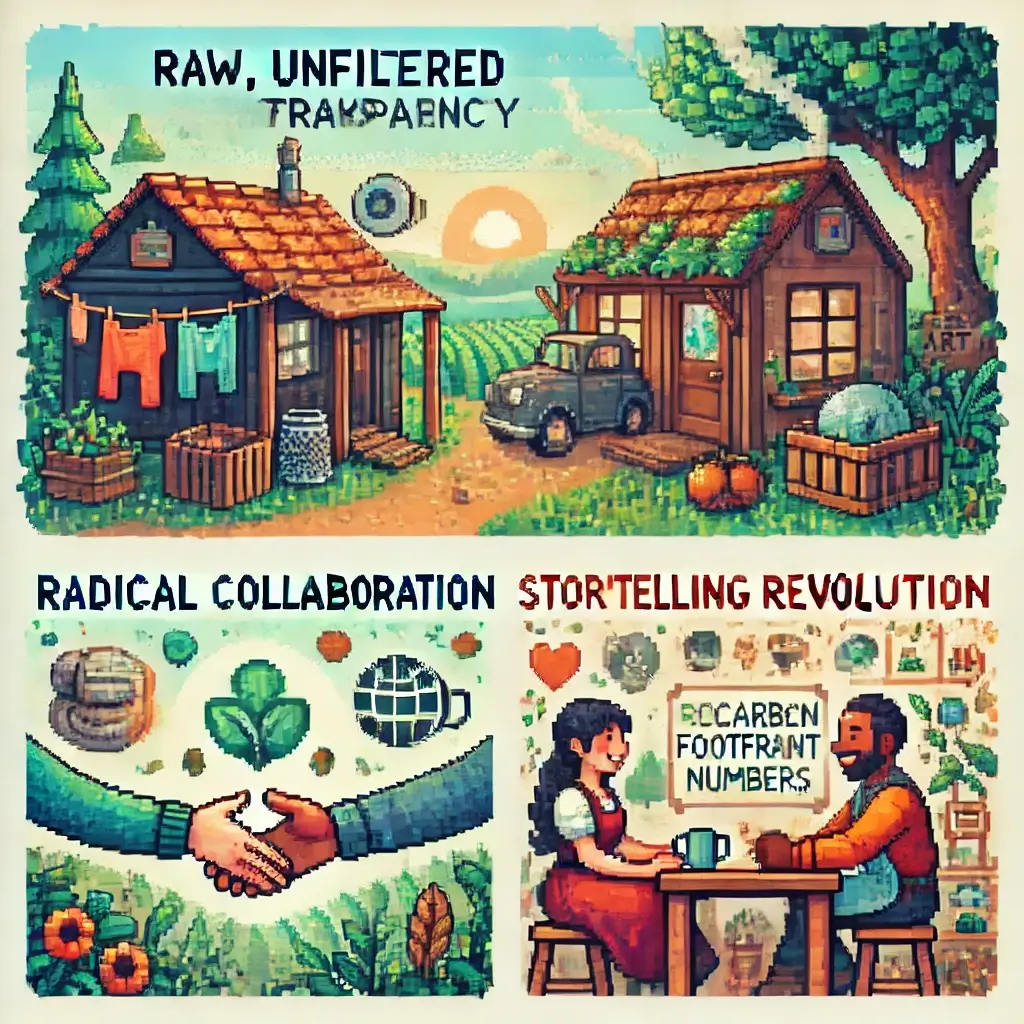
Practice 1: The Raw, Unfiltered Transparency Method for Sustainable Marketing
This one is the big one, the heavy hitter, and the practice that most companies are terrified of.
Why? Because transparency means admitting you’re not perfect.
It means opening up your business—the good, the bad, and the ugly—and inviting people inside.
It’s like inviting someone over to your house for the first time, but instead of frantically cleaning everything, you just… don’t.
You leave the dishes in the sink, the laundry on the floor, and you say, “This is me. This is my life. It’s a work in progress, but I’m doing my best.”
Eco-conscious consumers don’t expect you to be a perfect, zero-waste, carbon-neutral company overnight.
In fact, if you claim to be, they’ll probably call you out on it.
What they crave is honesty.
They want to know where your materials come from, how your products are made, and what challenges you’re facing along the way.
Think about it: have you ever been to a restaurant where the chef comes out and tells you, “Hey, we tried to source this fish locally, but the catch was bad this week, so we had to get it from a little further away, but we made sure it was still a great, sustainable option”?
That story, that small moment of vulnerability, builds more trust than any slick marketing campaign ever could.
It’s about pulling back the curtain.
Share your sustainability report, not as a boring PDF buried on your website, but as a compelling, easy-to-read narrative.
Talk about your failed attempts to find a better packaging solution.
Post a video of your team working on a new initiative, even if it’s messy and not yet perfect.
One of my favorite examples of this is a brand that literally shares its carbon footprint data on its product pages, not just the good stuff, but all of it.
And when a customer asked about a specific ingredient, they didn’t just give a canned response; they published a blog post detailing the entire supply chain for that one ingredient, including the parts where they admitted they had room for improvement.
That’s what I’m talking about.
It’s not about being perfect; it’s about being honest about the journey.
Your customers want to be on that journey with you.
They want to feel like they’re part of the solution, not just another transaction.
This approach isn’t just a marketing tactic; it’s a fundamental shift in how you operate as a business.
It’s about building a community of people who believe in your mission and are willing to support you, even when things aren’t perfect.
Because let’s face it, no one is perfect, and trying to pretend you are will only make your eventual mistakes feel that much worse.
So, take a deep breath and open up.
Trust me, your customers will thank you for it.
Here’s a great example of a company that is doing this right now. Patagonia has been a leader in this for years. They have a section on their website called “The Footprint Chronicles” which is dedicated to supply chain transparency.
It’s a masterclass in how to be honest about your impact and your intentions.
See Patagonia’s Transparency in ActionPractice 2: The Radical Collaboration Playbook for Sustainable Marketing
Remember that old saying, “If you want to go fast, go alone. If you want to go far, go together”?
Well, in the world of sustainable marketing, going far is the only option.
The challenges we face—climate change, pollution, resource depletion—are too big for any single company to solve on its own.
And your customers know this.
They’re looking for brands that aren’t just in it for themselves but are actively working with others to create a bigger, more positive impact.
This isn’t about a simple charity donation or a one-off partnership.
This is about radical collaboration.
Think about a company that sells sustainable coffee.
Instead of just marketing their own beans, they partner with a local non-profit that works to reforest the areas where their coffee is grown.
But they don’t stop there.
They also collaborate with a small, ethical coffee mug company, creating a joint campaign where a portion of the proceeds from every mug sold goes to the reforestation effort.
And they highlight all of these partnerships, not just on their own website, but across all their social media channels.
This isn’t about stealing the spotlight; it’s about sharing it.
It’s about creating a rising tide that lifts all boats.
Your eco-conscious consumers are looking for a network of solutions, not a single savior.
They want to know that when they buy from you, they’re not just supporting your company; they’re supporting an entire ecosystem of good.
I once worked with a small clothing brand that was struggling to compete with fast fashion giants.
We implemented a radical collaboration strategy.
They started featuring other small, sustainable businesses on their blog, even ones that sold products similar to their own.
They didn’t see these other businesses as competitors; they saw them as allies in a shared mission.
The result?
Their community exploded.
Customers started to see them not just as a store, but as a trusted curator of all things sustainable.
They became a hub, a go-to resource, and their sales skyrocketed.
So, look around.
Who are the other ethical brands in your space?
Who are the non-profits or community organizations that are doing amazing work that aligns with your values?
Reach out to them. Propose a project, a campaign, a joint effort.
Don’t be afraid to share your audience with them.
In this new world of sustainable marketing, generosity is a superpower.
And it’s a superpower that your customers will absolutely love you for.
A fantastic example of this kind of collaboration is the work done by the B Corp movement.
They bring together thousands of businesses that are committed to social and environmental performance.
By being part of this community, brands signal to consumers that they are part of a larger movement, not just a stand-alone entity.
Explore the B Corp CommunityPractice 3: The Storytelling Revolution for Sustainable Marketing
Remember when I said eco-conscious consumers are tired of slick, polished campaigns?
Well, here’s the solution: tell a better story.
We’ve been conditioned to think of marketing as a series of bullet points: “Organic,” “Recycled,” “Cruelty-free.”
And while those points are important, they’re not what moves people.
What moves people is a story.
It’s the story of the farmer who carefully tends to the organic cotton plants, not just the label that says “100% Organic Cotton.”
It’s the story of the small-town craftsman who hand-makes each product from salvaged wood, not just the line item that says “Handcrafted from Recycled Materials.”
This is where you get to be a human, not a corporation.
It’s about crafting a narrative that connects with people on an emotional level.
Your sustainability efforts aren’t just facts; they’re chapters in a larger book.
And your customers want to read that book.
So, how do you do it?
Stop talking about features and start talking about people.
Feature the people in your supply chain.
Show the faces behind the products.
Share the stories of the communities you support.
Use video, blog posts, and social media to bring these stories to life.
I once saw a brand that made a short documentary about the journey of their main ingredient from a small farm to their factory.
It wasn’t a commercial; it was a film.
It was beautiful, emotional, and completely authentic.
And it resonated with their audience in a way that no traditional ad ever could.
People didn’t just buy the product; they bought into the story, the mission, the heart behind it all.
They felt like they were part of something bigger than themselves.
So, find your stories.
Dig deep into your business and find the moments that make you proud.
Find the people who are doing the amazing, hard work every single day.
And then, tell their stories with as much honesty and heart as you can muster.
This is the secret ingredient that turns a simple purchase into a meaningful act of support.
And in the end, that’s what truly creates a sustainable business—not just a sustainable product.
A great example of a brand doing this is TOMS.
Their entire business model is built on a powerful story: for every pair of shoes you buy, a pair is given to a child in need.
This simple, powerful narrative has been the driving force behind their success, and it’s a perfect example of how a compelling story can be your most powerful marketing tool.
Discover the TOMS StoryThe Future of Marketing is Human, Not Hype
Look, the bottom line is this: the old rules of marketing don’t apply anymore, especially when it comes to eco-conscious consumers.
They’re not just buying a product; they’re buying a belief system.
They’re investing in a better world, and they want to feel confident that the brands they support are doing the same.
So, stop trying to be perfect and start being real.
Stop seeing other ethical brands as competitors and start seeing them as allies.
And for heaven’s sake, stop talking about features and start telling stories.
It might feel a little scary at first, like jumping into the deep end of a pool.
But trust me, the water’s fine, and there are a lot of people waiting to swim with you.
The future of sustainable marketing isn’t about being the loudest voice in the room; it’s about being the most honest, the most collaborative, and the most human.
And that, my friends, is a practice that will never go out of style.
If you have any questions or want to dive deeper into any of these practices, feel free to reach out. Let’s make a change together, one honest conversation at a time.
sustainable marketing, eco-conscious consumers, transparency, collaboration, storytelling