
Vertical Farming Real Estate: 9 REIT Models About to Sprout (Faster Than Your Basil)
Table of Contents
Confession: sometimes I stare at lettuce like it’s a startup. It’s leafy, delicate, needs nurturing, and if you move too fast, it wilts. But unlike your favorite social app, lettuce absolutely refuses to pivot to AI. So… people are building buildings where lettuce grows like code compiles—stacked, controlled, algorithmically pampered. Welcome to the odd, urgent frontier: Vertical Farming Real Estate, where agronomy meets ducts and ducts meet dividends. If that sentence felt like a smoothie made of buzzwords and hope, good. You’re in the right kitchen.
Why Vertical Farming Real Estate Is Suddenly Everywhere
Why now? Because volatility is the mother of reinvention. Climate whiplash, supply chain hiccups, urban population density, and retailers that want crisp basil 365 days a year have shoved agriculture into the city, into boxes, and—dare I say—onto balance sheets. Power rates spiked, LED prices fell, sensors got nosy (in a good way), and grocers learned the hard way that fragile greens were basically divas. Vertical farms promise resilience: short miles, predictable yields, pesticide-light production, Instagrammable baby kale. And yes, real estate is walking right in with term sheets.
What Exactly Is Vertical Farming Real Estate?
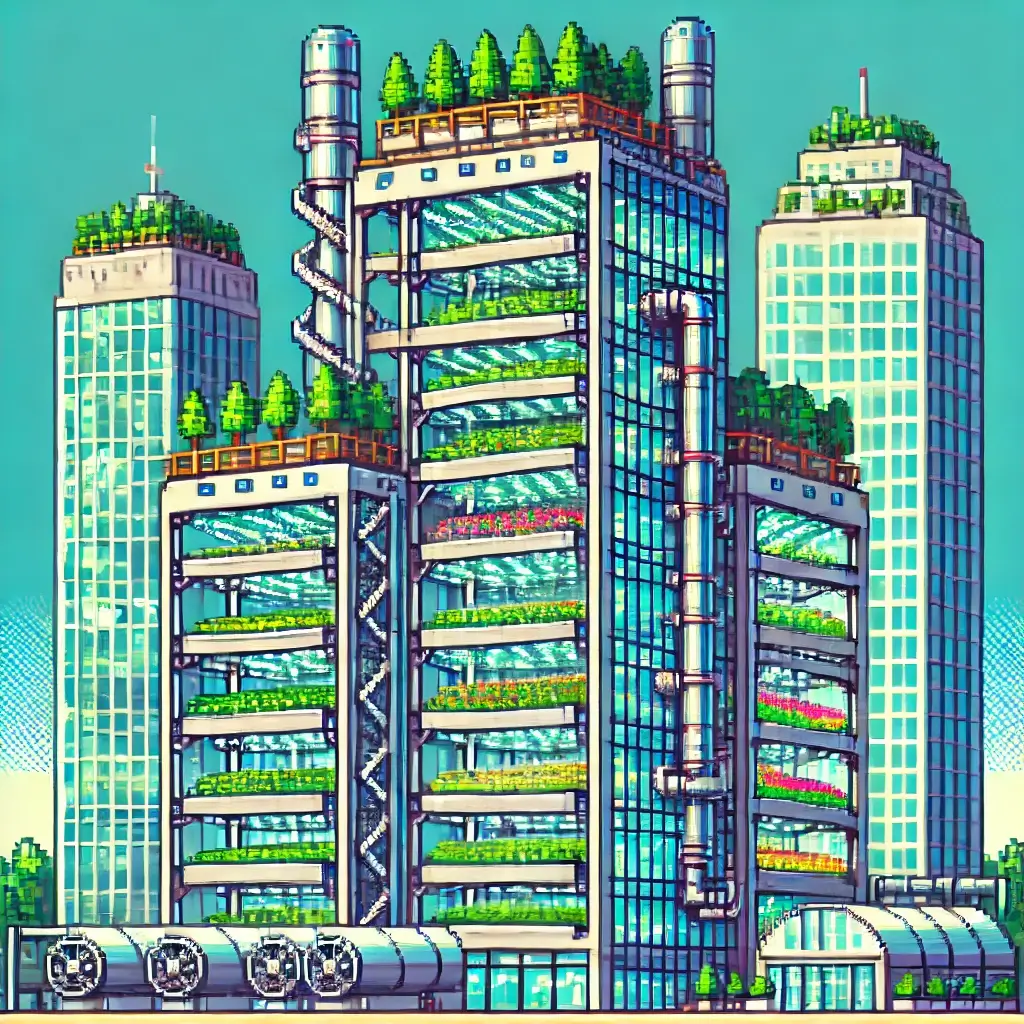
Think of it like this: a vertical farm is a data center for plants. You’ve got rack-like grow shelves, nutrient delivery, climate control, CO2 dosing, software that decides when arugula needs a pep talk, and LEDs that care more about spectrum than a cinematographer. Vertical Farming Real Estate is the specialized shell—the building, utilities, and critical systems—that allows operators to produce high-value crops with a clockmaker’s precision. It’s not farmland. It’s farmspace.
Here’s the frame: the landlord (potentially a REIT) owns the real assets—land, building, core MEP (mechanical, electrical, plumbing), heavy-duty power, water treatment, waste lines, perhaps even backup energy. Tenants (operators) bring the grow recipes, labor, robotics, software, and brands. Cash flows arrive via rent, escalators, and—sometimes—revenue participation if a landlord gets spicy.
9 REIT Models Emerging in Vertical Farming Real Estate
Let’s wander through nine models like we’re at a tasting menu for finance nerds. Bring napkins. And a calculator. And maybe a therapist.
1) Single-Tenant Net-Lease Farm (STNL-Farm)
Think “industrial-lite,” but with more humidity. The REIT funds ground-up or adaptive reuse, delivers a purpose-built shell with high-capacity power and HVAC, and leases long-term to a single operator. Predictable rent; tenant handles O&M. Flavor profile: stable, boring (in a good way), like the reliable friend who always brings ice to the party.
2) Sale-Leaseback with Operator-Installed Systems
An operator owns a building stuffed with LEDs and pumps. They want growth cash. A REIT buys the real property (shell + base building systems), leases it back, and the operator redeploys capital into more farms. Attractive if the operator is strong; risky if they’re a lettuce poet with weak distribution.
3) OpCo/PropCo with Shared Uptime Credits
Spicier. The REIT owns property & critical infrastructure; a separate OpCo grows greens. SLA-style lease clauses tie small rent credits to uptime or yield KPIs. This aligns incentives without turning the REIT into a farmer. Not for the faint of legal budget.
4) Agritech Campus REIT (Mix-Use: Farm + R&D + Training)
Picture a campus near a logistics artery: multiple farm bays, a lab wing, a demo store, even culinary test kitchens. Rent comes from diverse tenants—operators, seed and lighting vendors, robotics startups, culinary academies. Feels like a business park where everything smells faintly of basil and ambition.
5) Cold-Chain-Integrated Vertical Farm Hubs
Co-located with refrigerated cross-dock facilities. Harvest in the morning, on a truck by afternoon, on a shelf tomorrow. The REIT owns both: farm shell + cold storage. Synergy is not just a PowerPoint animal here—it’s fewer losses and faster turns.
6) Rooftop Micro-Farm Aggregator
Rooftops of malls, hotels, hospitals, and office parks—tiny farms that feed on-site cafeterias or local markets. A REIT bundles dozens or hundreds of short, standardized leases with anchor property owners. Less yield per site, more resilience via portfolio math.
7) Municipal P3 (Public–Private Partnership) Farm Facilities
City contributes land or tax incentives; REIT funds the structure; operator supplies leafy drama. Community job creation meets predictable rent. PR teams rejoice; underwriting demands patience and policy literacy.
8) International Greenhouse–Vertical Hybrid Roll-Up
In some climates, greenhouses win; in others, pure vertical farms shine. A REIT assembles a cross-border portfolio of hybrid facilities, targeting dependable climates with supportive tariffs. FX hedging meets lettuces that only speak Kelvin.
9) Tenant-Improvement-Heavy, Revenue-Share “Growth REIT”
The REIT helps fund lighting and racks via TI allowances, trades a portion of fixed rent for revenue share and step-ups. High beta, potentially juicy. This is the “I wore glitter to the credit committee” model. Not for everyone, but someone will try it.
Global Vertical Farming Market Growth
Market value in USD (billions). Projections based on industry research.
REIT Models in Vertical Farming
Stable rent, low risk
Capital recycling
Mixed-use R&D + retail
Farm + logistics
Portfolio resilience
High upside, high risk
Energy vs. Yield Efficiency
Vertical Farming Investment Flow
Unit Economics of Vertical Farming Real Estate: Humble Math, Big Feelings
Let’s say a midsize facility is 60,000–120,000 SF with 25–35% used for non-grow (pack, cold, circulation, mech). Power density can hit data-center-adjacent vibes. Water recirculates like a diligent intern. Crops? Leafy greens, herbs, microgreens. Strawberries are the prom queens—high revenue, touchy at parties.
How does the landlord get paid? Base rent per SF, annual escalators, and sometimes performance-linked sweeteners. But the underwriting soul of Vertical Farming Real Estate begins with the operator’s unit economics: price per kg, loss rates, labor per kg, energy per kg, and distribution distance. If those sing, rent hums along. If not… well, basil wilts and spreadsheets cry again.
- Base rent ranges: similar to specialized industrial or life science flex in secondary urban markets, adjusted for heavy MEP.
- Capex: land + shell + thickened slab + power upgrades + HVAC + water + TI. LEDs and racks are often tenant’s gear—but not always.
- Risk fuses: power price volatility, crop contamination events, operator churn, supply chain for parts, and demand concentration with a single grocer.
Cold Chain + Rooftops: The Hidden Engines of Vertical Farming Real Estate
Here’s the hack nobody brags about on LinkedIn: leafy greens are clock-sensitive. Shelf life is a ticking timer with a passive-aggressive vibe. If you co-locate farms with cold-chain cross-docks, you shave hours, maybe days. This is why a cold-storage + farm combo smells like portfolio alpha. Meanwhile, rooftops are quietly multiplying: shopping centers with dormant roofs, hospitals with foodservice needs, even hotels hunting for experiential dining. Bundle enough micro-farms and suddenly you’re not renegotiating a single lease—you’re negotiating terms at scale.
Zoning, Power, and Water: The Gatekeepers of Vertical Farming Real Estate
Ah, zoning—the part of the story that makes brave investors Google meditation apps. Are vertical farms industrial? Agricultural? Light manufacturing? Life science? Depending on the city, you’ll get a different label and a different set of hoops. Power upgrades require coordination with utilities who have their own clocks. Water discharge permits might involve tradeable words like “BOD” and “TSS.” None of this is sexy. All of this is destiny.
- Power planning: request capacity early; design with redundancy; consider on-site microgrid if rates threaten margins.
- Water & effluent: closed-loop systems are beautiful until you need to clean them—build in sanitation logic and safe discharge plans.
- Food safety: design for one-way flows; keep clean rooms actually clean; give auditors a place to sip coffee and judge you gently.
Capital Stack & Risk Mitigation in Vertical Farming Real Estate
In classic REIT land, you love long leases with credit tenants. In vertical farming, tenant quality and utility exposure dominate the mood board. The capital stack often wants a belt, suspenders, airbags, and maybe a prayer candle.
Capital Stack Starter Pack
- Equity: anchor from the REIT; sometimes a co-GP or local infra fund.
- Construction debt: lenders with patience for weird MEP.
- PACE/Green debt: if energy efficiency upgrades qualify.
- Incentives: municipality carrots, utility rebates, workforce grants.
Lease Engineering
- Base + step-ups with fair escalators (because inflation has feelings).
- TI amortization with step-downs as equipment ages or is replaced.
- Uptime-linked credits (tiny, rules-based) to keep incentives aligned without turning the landlord into a farmer-in-chief.
- Green covenants: energy benchmarks, water recycling thresholds, waste protocols.
Risk Mitigation
- Operator diligence: distribution contracts, crop diversity, QA systems, recall playbooks.
- Utility hedges: fixed-rate power blocks, DR programs, onsite generation.
- Portfolio construction: don’t put all your basil in one basket—or one grocer—no matter how charming their buyers are.
Design Specs That Actually Matter in Vertical Farming Real Estate
Some specs make brokers nod politely. Others keep farms alive. Here’s the hit list:
- Floor loading for racking and water weight; think ahead to multi-level systems.
- Clear heights that future-proof for taller racks and gantry robots.
- Power with room to grow; dual feeds if you can swing it.
- HVAC zoning that respects microclimates; humidity is a diva with a lawyer.
- Water treatment in and out; don’t be surprised by effluent testing.
- Food-safe surfaces and one-way flow of people and product.
Infographic: The Seed-to-Shareholder Loop of Vertical Farming Real Estate
1) Capital
Equity + Green Debt + Incentives
2) REIT / Landlord
Owns shell + core MEP; structures lease
3) Operator
Installs LEDs/racks; runs crops, QA, distribution
4) Cold Chain
Pack, chill, cross-dock; speed beats wilt
5) Retail & Foodservice
Contracts, planograms, predictable volumes
6) Dividends
Rent → NOI → AFFO → Distributions
Mini-Checklist: Are You Ready to Underwrite a Vertical Farm Asset?
2-Question Quiz: Which REIT Model Fits Your Personality?
Q1. You prefer:
Q2. Your happy place:
Show Suggested Fit
If you picked “stable + single building,” you’re an STNL-Farm or Sale-Leaseback fan. If you chose “upside + rooftops,” say hi to Revenue-Share Growth REITs or Rooftop Aggregators. If you picked “both,” you’re an allocator with commitment issues (welcome, friend).
More Nuance in Vertical Farming Real Estate Leases (Because Life Is Nuance)
Lease mechanics deserve therapy. Consider commissioning/validation periods before rent starts, to confirm environmental stability. Draft contamination event protocols with quick sanitation and rent grace windows (small, bounded, audited). Create equipment ownership maps: what’s landlord-owned, what’s tenant-removable, and what’s “we both regret buying this together.”
External Resources for Vertical Farming Real Estate Curiosity
Want to read beyond my coffee-fueled rambling? These resources are solid starting points:
Hypothetical Case Studies in Vertical Farming Real Estate
Case A: “Greens on the Dock”
Setup: 80,000 SF farm shell bolted to a 120,000 SF cold-storage cross-dock near a major metro. Single-tenant lease, 18-year term, 2.5% escalators. Magic: reduced shrink, faster shelf replenishment, and joint marketing with grocers who love the “harvest today, on shelf tomorrow” poster. Risk: a power hiccup could become a lettuce opera—mitigated by dual feeds and a battery system shaped like a spreadsheet hero.
Case B: “Rooftops for Days”
Setup: 60 rooftops across hospitals and campuses. The REIT signs master agreements with property owners; an operating partner manages crops. Magic: hyperlocal freshness plus ESG narrative. Risk: coordination complexity; solved with standardized modules and maintenance SLAs that read like dental checkups.
Case C: “The Learning Campus”
Setup: urban campus with farm bays, a demo store, culinary lab, and community training center. Magic: multiple rent streams and constant tour traffic (retail buyers love a field trip). Risk: more moving parts; offset by anchor tenant credit and a utility-incentive whisperer on staff.
Operator Realities Inside Vertical Farming Real Estate
Operators don’t want landlords who panic at humidity charts. They want partners who can tolerate commissioning noise, understand crop cycles, and won’t faint when someone says “powdery mildew.” The best REITs here cultivate soft skills: listening, flexibility, and a tolerance for acronyms (CEA, HVAC, QA, SOP, OEE… SOS?).
Labor & Automation
Labor is love and pain. Robotics reduce touches, but capital loves to remind you it has to be repaid. Landlords can help by designing clear paths, load-in bays at human heights, and maintenance access so your mechatronics engineer doesn’t turn into a pretzel fixing a servo at 2am.
Retail Relationships
Retail buyers quietly run this story. They care about taste, texture, color, and on-time delivery. They don’t care that your facility smells like hope and electricity. If you’ve got distribution contracts with penalties for non-performance, your landlord will sleep better.
ESG, Community, and the Soul of Vertical Farming Real Estate
Can farms heal cities? Sometimes. Community hiring programs, fresh-food access, waste reduction, water recycling—these aren’t just ESG bingo squares. They build resilient local economies. The trick is to do it without greenwashed press releases. Grow real food. Pay real wages. Recycle real water. Surprise: people notice.
FAQ
Q1: Are vertical farms too energy-hungry to be viable real estate?
A: Energy is a dragon; you don’t slay it, you train it. With efficient LEDs, smart HVAC, and hedged tariffs, many operators hit acceptable costs per kilogram. The landlord’s job is to provide the arena—robust power, redundancy, and room for onsite generation if needed.
Q2: What crops make the best tenants for Vertical Farming Real Estate?
A: Leafy greens and herbs are today’s regulars: predictable, high-turn, easier to automate. Berries are the alluring newcomers—higher revenue potential, touchier engineering. Mushrooms and specialty greens may join the party like that cool friend who arrives late and steals the show.
Q3: Is this a “trend” or a lasting asset class?
A: The form factor evolves, but the underlying drivers—food security, urbanization, retail demand for consistency—aren’t going anywhere. Expect consolidation and better tech. The landlords who design flexible shells will make it through the awkward teenage years.
Q4: How long should leases be?
A: Long enough to justify capex, short enough to pivot when crops or tech change. Many deals mirror specialty industrial: low teens to high teens in years, with options. The precise answer depends on tenant credit and the amount of landlord-funded TI.
Q5: What kills deals most often?
A: Mispriced utilities, unclear equipment ownership, zoning curveballs, and operators who think marketing is a substitute for distribution contracts. (It isn’t.)
📊 ROI Quick Calculator
Estimate your annual rent income from a vertical farm REIT investment.
🤔 Which Vertical Farm REIT Are You?
Pick your answers and discover your REIT personality!
📬 Stay Updated on Vertical Farming REITs
Join our newsletter for real estate + agtech insights.
Conclusion: A Slightly Unreasonable Love Letter to Vertical Farming Real Estate
I’ll say it: I am irrationally optimistic about buildings that grow salads. Maybe I’m wrong. Maybe we’ll return to fields and everything will be fine and the weather will be as polite as a librarian. But it feels like cities need a new kind of logistics—one that starts with seeds, not pallets. If you’re a REIT leader, a developer, or just someone who enjoys the rebel energy of a well-lit head of lettuce, this is your call to explore. Write a term sheet that treats farms like critical infrastructure. Make a building that’s proud of its airflow. Then send me a picture of your first harvest and your first dividend check sitting next to each other like two kids who finally became friends.
Related Deep Dives
Keywords: vertical farming real estate, REIT models, controlled environment agriculture, cold chain logistics, rooftop farms