
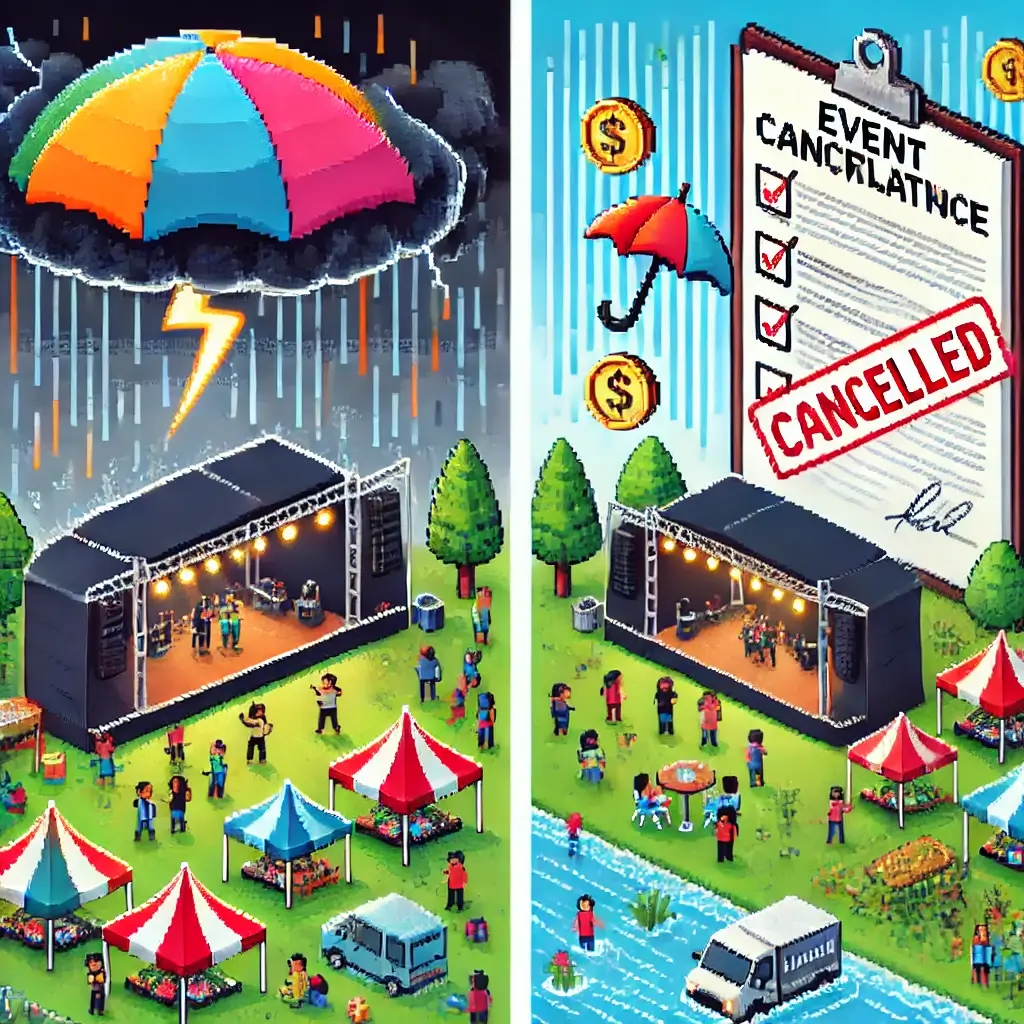
Don’t Let 1 Disaster Ruin Your Festival: Why Event Cancellation Insurance is a MUST!
Hey there, fellow festival organizers!
Are you feeling that familiar buzz in the air? The excitement of planning another fantastic community festival?
The vision of families laughing, music playing, and local businesses thriving?
I get it.
I’ve been there, pulling my hair out over logistics, chasing down permits, and praying for sunshine.
Community festivals are the heart and soul of our towns, bringing people together and creating unforgettable memories.
But let’s be real, organizing these events is a huge undertaking, often fueled by passion, volunteer hours, and a shoestring budget.
And then there’s that nagging worry in the back of your mind, the one that keeps you up at night: “What if something goes wrong?”
What if a sudden downpour turns your vibrant outdoor market into a muddy mess?
What if a key performer cancels last minute?
Or worse, what if a freak natural disaster forces you to cancel the entire event?
Ouch. The thought alone makes my stomach churn.
Because let’s face it, when a festival gets canceled, it’s not just a disappointment; it’s a financial nightmare.
All those non-refundable deposits, advertising costs, and vendor fees can vanish into thin air, leaving your organization in a serious hole.
That’s where **event cancellation insurance** swoops in like a superhero.
It’s not just another line item in your budget; it’s your peace of mind, your safety net, and frankly, a smart investment that can literally save your festival from financial ruin.
Think of it as an umbrella for your budget, protecting you from those unexpected storms.
And believe me, in the world of event planning, storms *will* come.
So, buckle up, because we’re about to dive deep into why this type of insurance is absolutely essential for your small community festival, how to navigate the options, and how to make sure you’re getting the best coverage possible.
Table of Contents
What Exactly IS Event Cancellation Insurance?
Let’s start with the basics.
Imagine you’ve planned a fantastic outdoor concert for your town’s annual summer festival.
You’ve booked the bands, rented the stage, signed contracts with food trucks, and spent a fortune on advertising.
Then, the unthinkable happens: a hurricane warning is issued, and the local authorities declare a state of emergency, forcing you to cancel the event.
Without event cancellation insurance, you’d be out of luck, losing all those non-recoverable expenses.
Event cancellation insurance, sometimes called **event abandonment insurance**, is designed to reimburse you for financial losses incurred if your event has to be canceled, postponed, relocated, or interrupted due to circumstances beyond your control.
It’s not about covering a single rain shower that might reduce attendance; it’s about protecting against significant, unforeseen events that make it impossible or unsafe to proceed.
Think of it as a financial shield, absorbing the impact of unexpected blows.
It covers your costs, not just your potential profits.
So, if you’ve already paid for the venue, performers, marketing, equipment rentals, and more, this policy steps in to ensure those funds aren’t just gone forever.
It’s peace of mind in a policy document.
Why Your Small Festival ABSOLUTELY Needs This
You might be thinking, “Our festival is small, we don’t need fancy insurance!”
And I get that sentiment.
Budget constraints are real, especially for community-driven events.
But honestly, it’s precisely because your festival is small that this insurance is even *more* critical.
Here’s why:
1. Limited Financial Reserves:
Unlike large, corporate-backed events, small community festivals often operate on tight budgets with minimal financial reserves.
One cancellation can decimate your funds, making it impossible to host future events or even cover outstanding debts.
A single major loss could mean the end of your beloved annual tradition.
It’s like running a lemonade stand versus a multi-national corporation; the lemonade stand has less wiggle room if a storm hits.
2. High Non-Refundable Expenses:
Even small festivals rack up significant non-refundable expenses: venue deposits, performer fees (often paid months in advance), advertising campaigns, equipment rentals, and permits.
These costs are sunk, regardless of whether your gates open.
Imagine losing all that money with nothing to show for it.
It’s a punch to the gut, both financially and emotionally.
3. Reputation and Community Trust:
A canceled festival without proper financial recovery can damage your organization’s reputation within the community.
Vendors, performers, and attendees rely on you.
If you’re seen as financially unstable after a cancellation, it can be tough to rebuild trust and get support for future endeavors.
Your community counts on you, and this insurance helps ensure you can deliver, come what may.
4. Volunteer Burnout and Morale:
Volunteers pour their heart and soul into these events.
If an event is canceled and finances are lost, it can lead to massive burnout and demoralization among your dedicated team.
It’s hard to ask people to invest their precious time again if their efforts were for naught due to an uninsured loss.
Protecting your investment also protects the spirits of those who make it all possible.
5. Unexpected Disasters are More Common Than You Think:
We all hope for clear skies and smooth sailing, but the world is unpredictable.
From sudden severe weather to unexpected power outages, public health crises, or even local infrastructure failures, there’s a long list of things that can derail an event.
Don’t be caught off guard!
I once knew a small town that had their annual “Apple Blossom Festival” planned for months, and then, a week before, a pipe burst, flooding the entire main street where the festival was to be held. No insurance. Total disaster. You don’t want to be *that* town.
Common Scenarios You’re Covered For (and Some You’re Not)
Okay, so what exactly does **event cancellation insurance** typically cover?
While policies vary, here are some common scenarios that usually fall under its protective umbrella:
What’s Typically Covered:
Severe Weather: This is a big one for outdoor festivals. Think hurricanes, blizzards, floods, tornadoes, or even just sustained heavy rainfall that makes the venue unsafe or inaccessible.
Natural Disasters: Earthquakes, wildfires, volcanic eruptions (less likely for most, but you get the idea!).
Venue Unavailability: The venue you booked becomes unusable due to damage (fire, flood), utility failure, or government order.
Essential Performer/Speaker Non-Appearance: If a crucial artist, speaker, or VIP can’t make it due to accident, illness, death, or travel delays, and their absence forces cancellation or significant alteration.
Strikes: Labor strikes that impact venue staff, transport, or essential services.
Civil Commotion/Terrorism: Unforeseen acts of civil unrest, riots, or terrorism that make it unsafe to hold the event.
Utility Failure: Extended power outages, water supply issues, etc., that make the event impossible to run.
Communicable Disease Outbreaks: If a public health emergency is declared by a relevant authority, leading to event restrictions or cancellations. (This became a huge focus after recent global events! Make sure to check the specifics on this one.)
What’s NOT Typically Covered (and Why Customization is Key!):
This is where it gets a little tricky, and why reading the fine print is crucial.
Most standard policies *won’t* cover:
Lack of Attendance: If people simply don’t show up. Insurance isn’t there to cover poor marketing or a lack of public interest.
Change of Heart: Deciding you just don’t feel like holding the festival anymore. (Believe it or not, people try!)
Budget Shortfalls: Running out of money to put on the event. This is an organizational issue, not an insurable risk.
Expected Weather: If you plan an outdoor festival in a notoriously rainy season, and it rains as expected. It generally covers *unexpected* severe weather, not typical seasonal conditions.
Pre-Existing Conditions: Any circumstances you were aware of before purchasing the policy that could lead to cancellation.
Permit Denials (often): If you fail to secure necessary permits. Though sometimes, if a government body unexpectedly revokes a permit for reasons outside your control, it *might* be covered – but clarify this!
This is why you need to have a detailed conversation with your insurance broker.
They can help you understand the exclusions and, more importantly, whether you can add riders or endorsements to cover specific risks that are particularly relevant to your festival.
For example, if your festival relies heavily on a specific, rare artifact being displayed, you might be able to get specific coverage for its non-arrival or damage.
Or if your region is prone to a very specific type of weather event, you might want to ensure that’s explicitly included.
So, How Much Does This Lifesaver Cost?
Ah, the million-dollar question, or rather, the “how many hundreds of dollars will this cost me?” question!
Unfortunately, there’s no one-size-fits-all answer here.
**Event cancellation insurance** costs vary widely depending on several factors:
Total Insurable Expenses: This is the big one. The higher the amount of money you want to protect (your non-recoverable costs), the higher the premium will be.
Event Type and Location: An outdoor music festival in a hurricane-prone area will likely have a higher premium than an indoor craft fair in a very stable climate.
Event Duration: A multi-day festival generally costs more to insure than a single-day event.
Lead Time: How far in advance you purchase the policy. Buying it too close to the event date might limit coverage or increase costs.
Coverage Scope: Basic policies are cheaper, but adding specific riders (like enhanced communicable disease coverage or terrorism coverage) will increase the premium.
Deductible: Like any insurance, a higher deductible (the amount you pay out-of-pocket before insurance kicks in) can lower your premium.
Your Claims History: If you’ve made claims on previous event policies (unlikely for most small festivals, but worth noting for larger organizations), it can affect your rates.
As a general ballpark, for a small community festival with non-recoverable expenses in the tens of thousands of dollars, you might be looking at premiums anywhere from a few hundred dollars to a couple of thousand.
It’s a relatively small percentage of your overall budget, but it protects a potentially devastating loss.
Consider it an investment, not an expense.
Think of it this way: would you rather spend $500 on insurance, or lose $15,000 if your festival gets rained out?
The choice is pretty clear when you put it like that!
Navigating the Policy Maze: What to Look For
Alright, you’re convinced. You need this.
But how do you pick the *right* policy?
It can feel like wading through alphabet soup and legalese, but with a few key pointers, you’ll be a pro.
Here’s what to keep an eye out for and what questions to ask your broker:
1. Clearly Define Your Insurable Expenses:
Before you even talk to an insurer, sit down and list every single non-refundable expense associated with your festival.
This includes:
Venue rentals
Performer/entertainment fees
Equipment rentals (tents, stages, sound systems, lights)
Marketing and advertising costs
Permit fees
Staffing costs (if non-refundable)
Security
Decorations and supplies
And don’t forget the unexpected little things!
This total is the “sum insured” – the maximum amount the policy will pay out.
Be thorough here; you don’t want to undersell your needs.
2. Understand the Covered Perils (and Exclusions!):
We touched on this, but it’s worth reiterating.
Get a clear list of what events are covered (perils) and, just as importantly, what isn’t (exclusions).
Ask about specific weather thresholds (e.g., “will it cover sustained rain over X inches in a 24-hour period?”).
If your festival relies on a specific type of weather (like snow for a winter festival), discuss “lack of snow” coverage, which is often a separate rider.
Make sure the policy aligns with the unique risks of *your* festival.
3. Read the Fine Print on “Force Majeure” and Government Orders:
Many policies include clauses around “Force Majeure” (acts of God) and government-mandated cancellations.
Ensure these are broad enough to cover situations like public health emergencies, civil unrest, or official evacuation orders.
This became painfully relevant for many during the pandemic, highlighting the need for robust coverage in this area.
4. Check for Business Interruption/Relocation Coverage:
Some policies offer additional coverage for business interruption losses (e.g., if you’re a for-profit festival and lose potential revenue) or costs associated with relocating the event.
For most small community festivals, the focus will be on expense reimbursement, but it’s worth knowing these options exist.
5. What About the Deductible?
This is the amount you’ll pay out of pocket before the insurance kicks in.
A higher deductible means a lower premium, but ensure it’s an amount your organization can comfortably absorb in a crisis.
6. Claims Process Clarity:
Ask your broker about the claims process.
What documentation will you need?
How quickly are claims typically processed?
The last thing you need during a crisis is a confusing or slow claims procedure.
7. Work with an Experienced Broker:
This is probably the most important tip.
Don’t just grab the first online quote you see.
Find an insurance broker who specializes in **event insurance** or understands the unique needs of non-profit and community events.
They can help you navigate the complexities, compare quotes from different carriers, and tailor a policy that genuinely fits your festival’s risks and budget.
A good broker is your advocate and your guide.
They can translate the jargon and ensure you’re not paying for coverage you don’t need, or worse, missing crucial coverage you do.
Real Talk: A Story from the Trenches
Let me tell you about Sarah.
Sarah was the tireless head of the “Maple Creek Folk Festival,” a charming annual event that had been running for over 20 years in a picturesque, but sometimes tempestuous, valley town.
Every year, Sarah would agonize over the weather forecast.
One year, she decided, against some old-school board members’ initial reluctance, to invest in **event cancellation insurance**.
It added a few hundred dollars to their budget, but the peace of mind was immediate.
The festival was set for early June.
Two days before, the heavens opened.
Not just a drizzle, but a relentless, torrential downpour that turned the festival grounds into a swamp and caused localized flash flooding.
The local sheriff’s department advised cancellation due to safety concerns and road closures.
It was heartbreaking.
Months of work, thousands of volunteer hours, all seemingly washed away.
But because Sarah had the foresight to get that insurance, they weren’t ruined.
The policy covered their non-refundable artist deposits, the rental of tents and stages that never got put up, the advertising they couldn’t pull back, and even some of the catering prep fees.
It didn’t cover the broken hearts of the community, but it *did* cover the bank account.
The festival survived.
They used the payout to cover their losses, regroup, and start planning for next year without being burdened by debt.
Sarah became the hero, not because she stopped the rain, but because she prepared for it.
That’s the power of **event cancellation insurance**.
It’s not just a piece of paper; it’s the bridge that gets you from a disaster back to stability.
Getting a Quote and Making a Choice
So, you’re ready to take the plunge and get a quote?
Excellent decision!
Here’s a quick checklist to ensure you’re well-prepared and get the most accurate information:
Before You Call:
Detailed Budget: Have a clear, itemized list of all your non-refundable expenses for the festival.
Event Details: Know your event dates, exact location (including specific addresses if possible), estimated attendance, and a general description of activities.
Venue Information: Is it indoor or outdoor? What are the specific risks associated with the venue (e.g., flood plains, old electrical systems)?
Previous Experience: Briefly note if you’ve run this festival before and any past incidents (or lack thereof).
During the Conversation (with your broker):
Be Honest and Thorough: Provide accurate information. Don’t gloss over details or exaggerate. Transparency helps your broker find the best policy.
Ask About Riders/Endorsements: If you have specific concerns (e.g., a critical vendor failing to deliver, a very particular weather risk), ask if these can be added to the policy.
Clarify the Claims Process: Again, this is vital. Understand exactly what you’d need to do if you had to make a claim.
Compare Apples to Apples: If you get multiple quotes, ensure they’re for similar coverage levels, deductibles, and covered perils. A cheaper policy might be cheaper because it covers less!
Don’t Rush: Take your time to review the proposed policy. Ask for clarification on anything you don’t understand.
Remember, your broker is there to help you.
A good broker will take the time to understand your festival’s unique needs and risks, rather than just selling you a generic policy.
They’ll also be able to explain the jargon in plain English, which is a lifesaver.
Making an informed decision about **event cancellation insurance** is one of the smartest things you can do for your community festival.
Pro-Tips for Festival Success (Beyond Insurance)
While **event cancellation insurance** is a non-negotiable safety net, here are a few other pro-tips to ensure your festival runs smoothly, come rain or shine:
1. Plan for Contingencies:
Always have a “Plan B” (and C, and D!).
What if the power goes out? Do you have backup generators?
What if it rains? Do you have indoor alternatives or sufficient tenting?
Contingency planning reduces stress and makes your event more resilient.
2. Communicate, Communicate, Communicate:
Keep your community, vendors, performers, and volunteers in the loop.
Clear communication builds trust.
If something does go wrong, prompt and honest communication can mitigate negative sentiment.
Have a communication plan in place for emergencies.
3. Build Strong Relationships:
Foster good relationships with your local authorities, emergency services, and key vendors.
These relationships are invaluable when you need quick decisions or support during an unexpected event.
4. Document Everything:
Keep meticulous records of all contracts, expenses, communications, and permits.
This is crucial for both good event management and, if needed, for making an insurance claim.
If you’re ever in a situation where you need to file a claim, having all your ducks in a row will make the process infinitely smoother.
5. Learn from Every Event:
After each festival, conduct a thorough debrief.
What went well? What could have been better? What unexpected challenges arose?
This continuous learning loop helps you refine your planning and risk management for future events.
Where to Find Reliable Information and Get Covered
Ready to explore your options for **event cancellation insurance**?
Here are some highly reputable resources and companies that specialize in event insurance.
Remember, it’s always best to work with a licensed broker who can help you compare quotes and customize a policy.
Click the buttons below to visit their sites and start your research!
Don’t wait until the last minute!
Get your quotes well in advance of your festival date to ensure you have ample time to compare options and secure the best coverage.
Protect your passion, protect your community, and protect your budget.
Here’s to a successful, stress-free, and well-protected festival season!
Event cancellation insurance, Community festival, Festival planning, Risk management, Event protection