
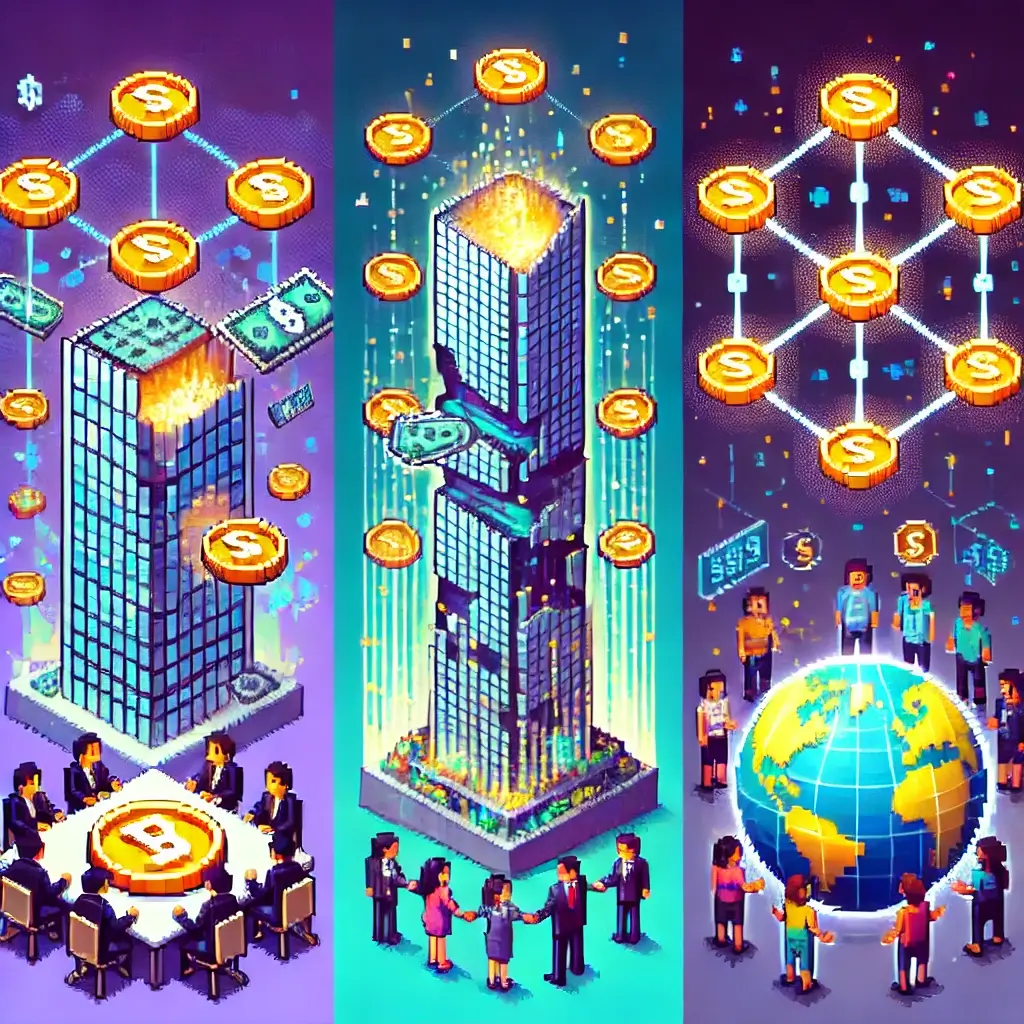
The 5-Minute Read That Will Change Your Mind: How Blockchain & Tokenized Real Estate Funds Are Unlocking Generational Wealth for Under $100
Table of Contents
Let’s be real for a second.
For most of us, the idea of owning a piece of prime real estate – a sleek downtown condo, a sprawling suburban home, a bustling commercial building – feels about as attainable as flapping our arms and flying to the moon.
The real estate world has long been an exclusive club, a playground for the ultra-wealthy with moats of high capital requirements, armies of lawyers, and mountains of paperwork.
You needed six, maybe seven figures just to get a seat at the table.
But what if I told you that the foundation of this old-world system is cracking?
What if I told you that a technological revolution is happening right now, one that’s poised to blow the doors off that exclusive club and invite everyone inside?
This isn’t some far-off futuristic dream.
It’s happening now, powered by two words you’ve probably heard but maybe don’t fully grasp: Blockchain and Tokenization.
Forget everything you think you know about property investment.
We’re about to embark on a journey that will show you how you can own a piece of a Miami beachfront property or a Manhattan high-rise for less than the cost of a new smartphone.
This is the story of how tokenized real estate funds are democratizing wealth creation and handing the keys to the kingdom back to the everyday investor.
Strap in, because your financial future might just be getting a complete renovation.
What the Heck is Blockchain, Anyway? (And Why Should You Care?)
Alright, let’s clear the air.
When you hear “blockchain,” your mind probably jumps straight to Bitcoin, cryptocurrencies, and stories of people becoming overnight millionaires (or losing their shirts).
That’s part of the story, sure, but it’s like saying the internet is only for sending emails.
Blockchain technology is the powerful engine running underneath all of that, and its potential goes far, far beyond digital money.
Imagine a shared, digital notebook.
A very, very special notebook.
Every time a transaction happens—say, Person A gives Person B something of value—a new entry is made in this notebook.
But here’s the magic: this notebook isn’t owned by one person or stored in one place.
Instead, an identical copy exists on thousands of computers all around the world.
Each new entry, or “block,” is cryptographically linked to the one before it, creating a “chain.”
Now, let’s say a shady character tries to go back and change an entry. Maybe they want to erase a debt or claim they own something they don’t.
To do that, they would have to change not just the entry on their copy of the notebook but on thousands of other copies simultaneously.
And because all the blocks are linked, changing one would create a ripple effect, invalidating all the blocks that come after it.
It’s like trying to secretly change a single sentence in millions of copies of a book at the exact same time. It’s practically impossible.
This makes a blockchain an incredibly secure, transparent, and unchangeable ledger.
So, why does this matter for real estate?
The traditional real estate process is a messy, complicated beast.
It involves a dizzying number of intermediaries: brokers, lawyers, banks, title companies, government record offices, and escrow agents.
Each one of these steps adds time, cost, and potential for human error or fraud.
Think about buying a house. The paperwork alone can deforest a small country.
Title searches take weeks to ensure the seller actually has the right to sell the property. Transferring funds is a nail-biting process that relies on trusted (and expensive) third parties.
Blockchain sweeps away a lot of that mess.
By placing property ownership records on a blockchain, we create a single, undeniable source of truth.
Title history? It’s right there, transparent and unalterable, for everyone to see.
Transfer of ownership? It can be done in minutes or hours, not weeks or months, through a “smart contract” (more on that later) that automatically executes when all conditions are met.
This isn’t just a small improvement. It’s a fundamental rewiring of the entire system, making it faster, cheaper, and infinitely more secure.
It removes the need for many of the middlemen who do little more than act as gatekeepers, collecting fees for the privilege of trust.
In a blockchain world, trust is built into the system itself.
Tokenization: Turning Skyscrapers into Digital Shares
Okay, so blockchain is the secure digital notebook.
Now, let’s talk about what we’re writing in it.
This is where “tokenization” comes in, and it’s the concept that truly unlocks real estate for the rest of us.
Tokenization is the process of converting ownership rights of an asset into a digital “token” on a blockchain.
Think of it like this: Imagine a massive, $50 million commercial building.
In the old world, maybe one wealthy corporation or a handful of millionaire investors could own it.
With tokenization, you can take that $50 million building and digitally divide it into, say, 50 million tokens, each worth $1.
Each token is a digital certificate, a cryptographic proof of ownership representing a tiny fraction of that building.
Suddenly, owning a piece of that skyscraper is no longer a pipe dream. You could buy 100 tokens for $100, or 1,000 tokens for $1,000.
You are now a part-owner of a prime piece of commercial real estate. You have a direct, legally-backed claim to a fraction of that asset.
These aren’t just meaningless digital points; they are “security tokens.”
This is a crucial distinction. Unlike cryptocurrencies like Bitcoin, which have no underlying asset, a security token is directly tied to a real-world, tangible asset.
Its value is derived from the performance of that asset. If the building’s value goes up, the value of your tokens goes up. If the building generates rental income, you, as a token holder, are entitled to your proportional share of the profits, often paid out as dividends directly to your digital wallet.
This process is facilitated by something called a “smart contract.”
A smart contract is a self-executing contract with the terms of the agreement directly written into code.
It’s a bit like a super-smart vending machine.
In a regular vending machine, you put in money (the condition) and the machine automatically gives you a soda (the outcome). No cashier needed.
A smart contract for a tokenized property works similarly. It might say, “IF rental income of $X is received by this date, THEN automatically distribute Y% of that income to all token holders, proportional to the number of tokens they own.”
It all happens automatically, transparently, and without the need for a property management company to manually calculate and cut thousands of checks.
This is the core of the revolution: making a massive, illiquid asset like real estate divisible, tradable, and accessible to anyone with an internet connection.Read More on Forbes
Fractional Ownership: You Don’t Need to Buy the Whole Cow
The concept of sharing ownership isn’t new. People have been pooling money to buy things for centuries.
Think of timeshares, for example. A group of people share ownership of a vacation property, each getting to use it for a specific week of the year.
But traditional fractional ownership is often clunky, geographically limited, and legally complex.
Selling your “share” can be a nightmare, requiring you to find a specific buyer and navigate a maze of legal paperwork.
Blockchain-powered fractional ownership, or tokenization, puts this concept on steroids.
Let’s use an analogy. Imagine a beautiful, priceless painting hanging in a museum.
You can’t buy it. It’s one single, indivisible object.
Now, what if you could create a perfect, high-resolution digital image of that painting and sell pixels of that image? One person could own the Mona Lisa’s smile, another could own her left eye. Suddenly, everyone can own a piece of the masterpiece.
Tokenization does this for real estate.
It takes a single, indivisible building and breaks it down into thousands or millions of digital “pixels” (tokens) that can be bought and sold easily.
This shatters the single biggest barrier to entry in real estate: high capital requirements.
You no longer need a $100,000 down payment to start investing in property. You can start with $1,000, $500, or even $50.
This opens the door for portfolio diversification that was previously impossible for the average person.
Instead of putting all your savings into one single property (and praying the market in that one neighborhood doesn’t tank), you can now spread your investment across multiple properties in different locations and sectors.
With $10,000, you could own a piece of a student housing complex in Boston, a share of an office building in Austin, a slice of a retail center in Miami, and a part of an apartment complex in Dubai.
You are diversifying your risk just like the wealthiest investors do, reducing your exposure to any single market’s downturn.
Furthermore, it solves the “liquidity” problem.
Real estate is notoriously illiquid. Selling a property can take months, sometimes years. It’s a slow, arduous process.
But what if selling your share of a property was as easy as selling a stock?
With tokenization, it can be. Because these tokens are digital assets, they can be traded on specialized online marketplaces, 24/7, from anywhere in the world.
If you need to access your cash, you don’t have to wait for the entire building to be sold. You just sell your tokens on a secondary market to another investor who wants in.
This combination of low entry cost, easy diversification, and increased liquidity is the holy trinity for the modern investor. It’s a fundamental shift in who gets to build wealth through property.
The Game-Changing Benefits of Tokenized Real Estate Funds
So, we’ve covered the “what” and the “how.” Now let’s get to the “why.” Why is this such a big deal? Let’s break down the transformative benefits.
1. Radical Accessibility & Democratization:
This is the big one. As we’ve discussed, the towering financial walls around real estate investment are being demolished. Students, young professionals, artists, gig economy workers—anyone who was previously locked out can now become a property investor. It levels the playing field, turning a wealth-building tool for the 1% into an opportunity for the 99%.
2. Unprecedented Liquidity:
Imagine you own a rental property and suddenly need cash for a medical emergency. Good luck. You have to list it, find a buyer, negotiate, go through escrow… it could take half a year. With tokenized assets, you can log into a platform and sell your tokens in minutes. This ability to easily convert your investment back into cash is a massive, game-changing advantage.
3. Enhanced Transparency:
Every transaction, every shred of ownership history, every distribution of rental income is recorded on the immutable blockchain ledger. There are no hidden fees, no backroom deals, no “trust me” handshakes. You can independently verify every single detail of your investment. This transparency builds confidence and dramatically reduces the risk of fraud.
4. Lower Costs & Increased Efficiency:
Think of all the middlemen we’re cutting out. Fewer brokers, fewer bankers, fewer lawyers, fewer administrative staff. Smart contracts automate tasks like rent distribution and compliance checks. This efficiency translates into lower transaction fees and higher net returns for you, the investor. More of your money goes into the actual investment, not into lining the pockets of intermediaries.
5. Global Market Access:
Traditionally, investing in international real estate was a logistical and legal nightmare. You had to navigate foreign laws, currency exchanges, and find trustworthy partners on the ground. With tokenization, the world flattens. From your living room in Ohio, you can invest in a property in Tokyo as easily as one down the street. It creates a single, global marketplace for real estate, allowing capital to flow to where the best opportunities are, regardless of borders.
This isn’t just a marginal improvement. It’s a complete paradigm shift that addresses the most significant pain points of traditional real estate investing head-on.Explore via Cointelegraph
How to Dip Your Toes in the Water: Your First Tokenized Real Estate Investment
Okay, you’re convinced. The theory is sound, the benefits are clear. But how does this work in practice? How do you actually go from reading this article to owning your first property token?
It’s probably easier than you think. The process generally looks something like this:
Step 1: Find a Reputable Tokenization Platform
This is the most crucial step. A new wave of companies has emerged that act as the bridge between property owners and investors. These platforms handle the legal work, the tokenization process, and provide the marketplace for trading. Do your homework here. Look for platforms that are compliant with regulations in their jurisdiction (like SEC regulations in the US), have a track record of successful projects, and are transparent about their fees and processes. Some well-known names include RealT, Lofty AI, and Roofstock onChain.
Step 2: Go Through KYC/AML Verification
Because these are real financial securities, you’ll need to verify your identity. This is standard procedure and is a good sign that the platform is operating legally. It’s called KYC (Know Your Customer) and AML (Anti-Money Laundering) verification. You’ll typically need to upload a government-issued ID and perhaps a proof of address. It’s the same process you’d go through to open a new bank or brokerage account.
Step 3: Fund Your Account
Once verified, you’ll need to get money onto the platform. Most platforms offer a variety of options. You can often do a standard bank transfer (ACH), wire transfer, or, in many cases, use cryptocurrencies like USDC (a “stablecoin” pegged to the US dollar) or Ethereum.
Step 4: Browse Properties and Do Your Due Diligence
This is the fun part! The platform will list available properties that are open for investment. They’ll provide a wealth of information for each one: photos, location details, financial projections, inspection reports, details about the property manager, and the legal structure of the offering. Read this information carefully. Just because it’s tokenized doesn’t mean it’s automatically a good investment. The old rules of real estate still apply: location, condition, and cash flow are king.
Step 5: Purchase Your Tokens
Once you’ve chosen a property, you simply decide how much you want to invest and purchase the corresponding number of tokens. The transaction is recorded on the blockchain, and voilà! You are officially a fractional owner of a real estate asset. The tokens will be deposited into your digital wallet, which is secured on the platform or can be transferred to a personal wallet that you control.
Step 6: Earn Passive Income and Monitor Your Investment
Now, you can sit back and let your investment work for you. As the property generates rental income, your share of the profits will be automatically distributed to you, often on a weekly or monthly basis, as outlined in the smart contract. You can track your investment’s performance, see property updates, and, if you choose, sell your tokens on the platform’s secondary market.
Hold On, Cowboy! A Sober Look at the Risks and Hurdles
Now, before you liquidate your 401(k) and go all-in on tokenized real estate, we need a serious reality check. I wouldn’t be a responsible guide if I painted this as a risk-free utopia. Like any investment, especially one involving new technology, there are significant risks and challenges to consider.
Regulatory Uncertainty: This is the big, hairy gorilla in the room. Regulators around the world, including the SEC in the United States, are still figuring out how to handle this new asset class. The rules are evolving and can change. A platform that is compliant today could find itself on the wrong side of new regulations tomorrow. This uncertainty is a major risk factor for the entire industry.
Smart Contract Vulnerabilities: While the blockchain itself is very secure, the smart contracts built on top of it are written by humans. And humans make mistakes. A bug or vulnerability in a smart contract’s code could potentially be exploited by hackers, leading to a loss of funds. While audits and security checks are common, the risk can never be eliminated entirely.
Platform Risk: You are placing a great deal of trust in the tokenization platform itself. What if the platform goes bankrupt? What if it’s managed poorly? While your ownership is recorded on the blockchain, the operational and legal framework is managed by the company. Choosing a stable, well-funded, and reputable platform is paramount.
Market & Liquidity Risk: While tokenization improves liquidity, it doesn’t guarantee it. The secondary markets for these tokens are still in their infancy. If you want to sell your tokens, you still need a buyer on the other side. During a market downturn, or for a less desirable property, you might find that there are few buyers, and you may have to sell at a significant discount or not be able to sell at all.
Standard Real Estate Risks Still Apply: Let’s not forget, at the end of the day, this is still a real estate investment. Properties can have bad tenants who don’t pay rent. The roof can leak. A natural disaster could strike. The local economy could collapse, driving down property values. Tokenization doesn’t magically erase the fundamental risks inherent in owning physical property.
Being a smart investor means seeing both the incredible potential and the potential pitfalls. Don’t be blinded by the hype. Proceed with caution, do your own research, and never invest more than you can afford to lose.See Bloomberg’s Take
The Crystal Ball: What’s Next for Blockchain and Real Estate?
So, is this just a passing fad or the genuine future of property investment?
All signs point to the latter. While we are still in the very early innings, the momentum is undeniable.
The global real estate market is worth hundreds of trillions of dollars. It is arguably the largest asset class in the world, yet it remains one of the most inefficient and illiquid.
The potential for blockchain to unlock even a small fraction of that value is astronomical. A report from the Boston Consulting Group projected that the market for tokenized illiquid assets could reach $16 trillion by 2030. That’s not a typo. Trillion with a ‘T’.
What can we expect to see in the coming years?
Increased Institutional Adoption: Right now, the space is dominated by early adopters and retail investors. The next wave will be institutional. Big banks, pension funds, and major asset managers are already experimenting with this technology. When they begin to enter the market in force, it will bring a new level of maturity, capital, and stability.
More Sophisticated Financial Products: We’ll move beyond simple fractional ownership of a single property. Imagine tokenized real estate funds that are automatically managed by AI. Or being able to use your property tokens as collateral to take out a loan instantly. The fusion of Decentralized Finance (DeFi) and real estate will unlock financial tools we can only dream of today.
Integration with the Metaverse: As virtual worlds develop, we may see the lines blur between physical and digital real estate. Perhaps owning tokens of a physical building in New York will grant you special access or rights in its digital twin in a popular metaverse.
Regulatory Clarity: This is the hurdle that, once cleared, will open the floodgates. As governments establish clear rules of the road, it will give larger, more conservative investors the confidence they need to participate. This will be the single most important catalyst for growth.
The journey from here to there won’t be a straight line. There will be bumps, setbacks, and periods of doubt. But the underlying logic is too powerful to ignore. The efficiencies are too great, and the benefits of democratization are too compelling.
Conclusion: The Foundation of a New Era
We started this journey by talking about the exclusive, walled-off club of traditional real estate investing.
Throughout this discussion, we’ve seen how blockchain technology and tokenization are the sledgehammers poised to tear down those walls.
This is more than just a new way to invest; it’s a fundamental re-imagining of the concept of ownership.
It’s about transforming a massive, slow, and opaque asset class into one that is liquid, transparent, and accessible to everyone.
It’s about giving people the power to build wealth and secure their financial future in a way that was previously reserved for the privileged few.
The ability to own a piece of the world around you, to have a tangible stake in the buildings and communities that make up our society, is a powerful thing.
We are standing on the foundation of a new era in real estate. The first few digital bricks have been laid, and the skyscraper of opportunity is just beginning to take shape.
The question is no longer if this will change the world of real estate, but how quickly.
And more importantly, will you be there to be a part of it?
Keywords: Blockchain, Tokenized Real Estate, Fractional Ownership, Real Estate Investing, Security Tokens
🔗 Dark Store Revolution Posted 2025-08-12 01:15 UTC 🔗 Speedy E-Commerce Deliveries Posted 2025-08-11 06:58 UTC 🔗 Coworking Space REITs Posted 2025-08-10 03:51 UTC 🔗 Micro Hospital & Urgent Care Center REITs Posted 2025-08-09 02:55 UTC 🔗 Land Lease REITs 🔗 The $592 Billion Dark Store Real Estate Boom